Reported by Simon yusuph,| Journalist at wengglobal
The United Kingdom has entered a significant new chapter in its political history following the confirmation of Andy Burnham as the new leader of the Labour Party, positioning him to become the country’s next Prime Minister. Burnham’s emergence at the helm of Labour comes at a pivotal moment, with the nation confronting economic pressures, public service challenges, housing concerns, and growing demands for political stability.
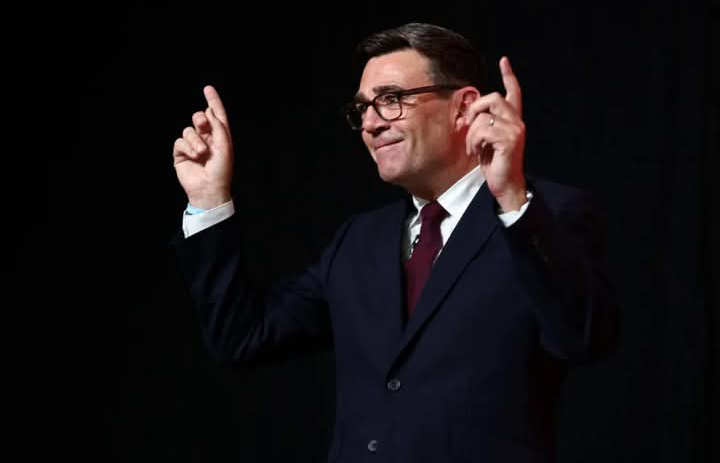
In his first address after securing the party leadership, Burnham pledged to “renew hope” across the United Kingdom, promising a government focused on rebuilding public confidence, strengthening the economy, improving healthcare, and creating greater opportunities for working families. His message centered on unity, pragmatic leadership, and restoring trust in public institutions after years of political uncertainty.
Burnham’s leadership marks one of the most significant transitions in British politics in recent years. A seasoned politician with decades of experience in Parliament and local government, he has built a reputation as an advocate for regional development, investment in public services, and greater devolution of powers to local authorities. Political analysts believe these priorities are likely to shape the agenda of the incoming Labour government.
Addressing party supporters, Burnham emphasized that his administration would prioritize economic growth that benefits all regions of the country rather than concentrating prosperity in a handful of major cities. He argued that every community deserves access to quality healthcare, affordable housing, better transport infrastructure, and secure employment opportunities.
“Our mission is to renew hope,” Burnham declared, adding that Britain requires leadership capable of bringing people together regardless of political affiliation or geographic location. He stressed that the next phase of Labour’s leadership would focus on practical solutions rather than political division.
A New Direction for Labour
Burnham’s victory reflects Labour’s effort to present a fresh vision capable of addressing the concerns of voters across England, Scotland, Wales, and Northern Ireland. Throughout his campaign, he emphasized policies designed to improve living standards while maintaining fiscal responsibility.
Among the issues expected to dominate the new government’s agenda are reducing NHS waiting times, expanding affordable housing, supporting businesses and innovation, improving educational opportunities, and accelerating investment in clean energy.
Economic recovery is also expected to remain a central priority. The United Kingdom continues to face inflationary pressures, cost-of-living concerns, and ongoing debates over productivity and public spending. Burnham has indicated that his government would seek to balance economic discipline with targeted investments aimed at stimulating growth and creating jobs.
Healthcare and Public Services
Healthcare remains one of the defining issues facing British politics. Burnham has consistently advocated stronger investment in the National Health Service (NHS), describing it as one of Britain’s most important public institutions.
He has pledged to reduce patient waiting lists, recruit additional healthcare professionals, modernize medical infrastructure, and improve access to mental health services. Education, policing, and local government services are also expected to receive renewed policy attention under his leadership.
Public service reform formed a key component of Burnham’s campaign, with promises to improve efficiency while ensuring that essential services remain accessible to citizens across the country.
Regional Development and Economic Equality
One of Burnham’s defining political themes has been reducing regional inequality. During his tenure as Mayor of Greater Manchester, he became widely known for advocating greater investment outside London and empowering local governments to make decisions tailored to regional needs.
His national agenda is expected to expand upon these ideas by encouraging infrastructure development, supporting local industries, improving public transport networks, and promoting balanced economic growth across all parts of the United Kingdom.
Political observers suggest that these policies could reshape the relationship between central government and regional authorities if implemented successfully.
International Relations
Burnham is also expected to oversee Britain’s engagement with international partners during a period of evolving geopolitical challenges. His foreign policy priorities are anticipated to include strengthening alliances with European partners, maintaining close cooperation with NATO allies, supporting international trade, and promoting global economic stability.
Analysts note that the United Kingdom’s international role continues to evolve following Brexit, making diplomatic engagement and trade relationships critical elements of the next government’s agenda.
For African nations, Burnham’s leadership could also influence future UK-Africa relations through trade, investment, climate cooperation, education partnerships, and development initiatives. As one of Africa’s largest trading partners outside the continent, Britain’s policy direction remains closely watched by governments and businesses across Africa.
Challenges Ahead
Despite widespread optimism among Labour supporters, Burnham inherits considerable challenges. Rising living costs, housing affordability, healthcare pressures, climate commitments, immigration debates, and public finances remain among the country’s most pressing concerns.
Political analysts caution that delivering meaningful reforms will require careful fiscal management alongside broad political consensus. Expectations from voters are high, particularly regarding improvements to everyday living standards and public services.
Business leaders have also called for policy certainty to encourage long-term investment, while labour organizations continue to advocate stronger worker protections and wage growth.
Reactions Across the Political Landscape
Burnham’s confirmation has generated reactions from across Britain’s political spectrum. Labour supporters describe the leadership change as an opportunity to restore confidence in government and introduce policies focused on fairness and opportunity.
Meanwhile, opposition figures have indicated they will closely scrutinize Labour’s proposals, arguing that ambitious promises must be matched by realistic funding strategies and measurable outcomes.
International observers have also welcomed the orderly political transition, noting Britain’s continued importance in global diplomacy, finance, and international security.
Implications Beyond Britain
The political direction of the United Kingdom carries implications beyond Europe. African governments, investors, students, and diaspora communities maintain strong economic and cultural ties with Britain. Changes in immigration policy, education, trade agreements, development cooperation, and foreign investment strategies under Burnham’s administration could have broader international significance.
As a long-standing partner to many African nations, the UK’s domestic and foreign policy choices are likely to influence bilateral relations, commercial partnerships, and multilateral cooperation in the years ahead.
Looking Forward
Andy Burnham now faces the task of translating campaign promises into effective governance. His commitment to renewing hope will ultimately be measured by tangible improvements in healthcare, economic performance, housing, education, and public confidence.
The coming months will reveal how Labour intends to implement its policy agenda and whether Burnham can unite the country while addressing the complex economic and social challenges confronting modern Britain.
For citizens across the United Kingdom and observers around the world, Burnham’s leadership represents a significant political milestone whose impact will extend well beyond Westminster.
Sources
- BBC News
- Reuters
- Sky News
- The Guardian
- Financial Times
- The Independent
- Associated Press (AP)