Reported by Weng Patrick Atokor | Journalist at Weng Global
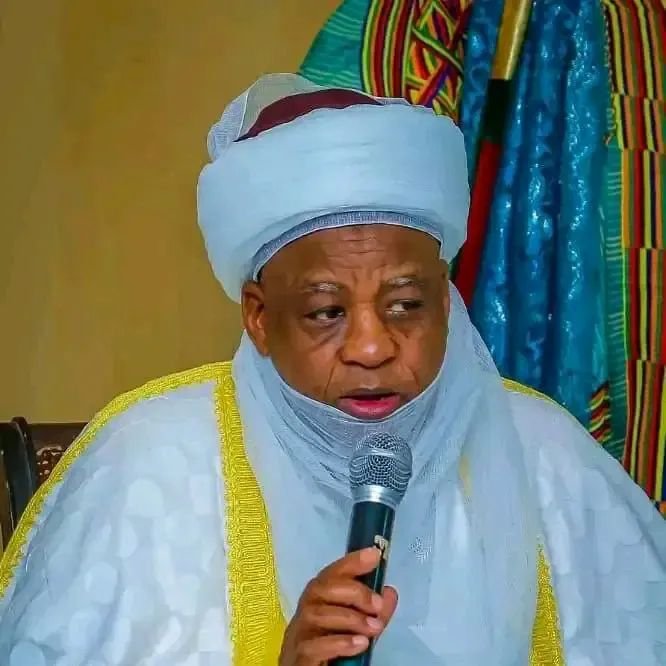
The Sultan of Sokoto and President-General of the Nigerian Supreme Council for Islamic Affairs (NSCIA), His Eminence Alhaji Muhammad Sa’ad Abubakar III, has officially declared Thursday, July 16, 2026, as the first day of Safar 1448AH, following the non-sighting of the new crescent moon across Nigeria.
The announcement was made after reports from the National Moon Sighting Committee and Islamic leaders from different parts of the country confirmed that the crescent moon marking the beginning of the second month of the Islamic calendar was not sighted on the evening designated for observation.
As a result, the month of Muharram completed its full 30 days in accordance with Islamic tradition, making Thursday the commencement of Safar.
The declaration provides clarity for millions of Muslims across Nigeria and beyond, who rely on the Sultan’s pronouncements to determine the beginning and end of Islamic lunar months.
Islamic Calendar Based on Lunar Observation
The Islamic (Hijri) calendar consists of 12 lunar months, each beginning with the sighting of the new crescent moon. When the moon is not sighted, the current month is completed as 30 days before the next month officially begins.
This method follows the teachings of Prophet Muhammad (peace be upon him), who instructed Muslims to begin and end lunar months based on moon sightings or by completing 30 days if visibility is not possible.
The Sultan’s announcement reflects this long-standing Islamic practice and ensures nationwide uniformity in observing the Islamic calendar.
Significance of Safar
Safar is the second month in the Islamic calendar and follows Muharram, one of Islam’s four sacred months.
Although some cultural misconceptions have historically associated Safar with misfortune, Islamic scholars consistently emphasize that Islam does not recognize any month as inherently unlucky. They encourage Muslims to continue their normal religious, social and economic activities while placing their trust in Allah.
During Safar, Muslims are encouraged to maintain regular acts of worship, including daily prayers, charity, fasting on recommended days, recitation of the Qur’an and seeking forgiveness.
Religious leaders also use the month to remind believers to strengthen their faith, uphold moral values and contribute positively to society.
Sultan Calls for Unity and Continued Prayers
In line with previous announcements, the Sultan urged Muslims to remain united and continue praying for peace, security and national development.
He encouraged faithful to promote tolerance, peaceful coexistence and mutual respect among people of different religious and ethnic backgrounds.
The Sultan also appealed to Nigerians to continue supporting efforts aimed at addressing the country’s economic and security challenges through prayers, lawful conduct and collective responsibility.
Importance of Moon Sighting Committees
Nigeria operates an extensive moon-sighting network involving Islamic scholars, traditional rulers and trained observers across the country.
These committees carefully observe the lunar horizon and submit verified reports to the National Moon Sighting Committee before any official declaration is made by the Sultan.
This process ensures that announcements regarding Islamic months are based on credible observations and accepted Islamic jurisprudence.
The Sultan’s office noted that despite extensive observations, no authentic sighting of the crescent moon was confirmed, necessitating the completion of Muharram as 30 days.
What the Declaration Means
With Thursday officially declared the first day of Safar 1448AH:
- Muharram concludes after completing 30 days.
- Religious institutions can align their Islamic calendars accordingly.
- Islamic schools and organizations will adjust their monthly programmes.
- Muslims across Nigeria will observe the beginning of Safar simultaneously.
The announcement also serves as an important reference for Islamic scholars, educational institutions and organizations that schedule religious activities according to the Hijri calendar.
National Religious Leadership
As the spiritual leader for many Nigerian Muslims, the Sultan’s monthly declarations remain an important aspect of Islamic life in the country.
His announcements are widely respected because they are based on consultations with Islamic jurists, astronomers, moon-sighting experts and traditional institutions.
The process reflects a balance between religious teachings and organized national coordination, helping to prevent confusion over Islamic dates.
Continuing the Hijri Year
The beginning of Safar marks another stage in the Islamic year 1448AH, following the observance of the Islamic New Year in Muharram.
Islamic scholars encourage believers to use the new month as an opportunity for renewed commitment to faith, family responsibilities, honesty, compassion and service to humanity.
Many mosques are also expected to organize lectures highlighting authentic Islamic teachings regarding Safar while discouraging superstitious beliefs associated with the month.
Conclusion
The declaration of Thursday, July 16, 2026, as the first day of Safar 1448AH provides certainty for Muslims across Nigeria and reinforces the importance of following established Islamic procedures for determining the lunar calendar.
As faithful enter the new month, religious leaders continue to encourage increased devotion, unity, peaceful coexistence and prayers for Nigeria’s progress.
The announcement underscores the enduring role of the Sultan of Sokoto as a unifying religious authority whose monthly declarations guide millions of Muslims in observing important dates within the Islamic calendar.
Sources: Nigerian Supreme Council for Islamic Affairs (NSCIA); Office of the Sultan of Sokoto.