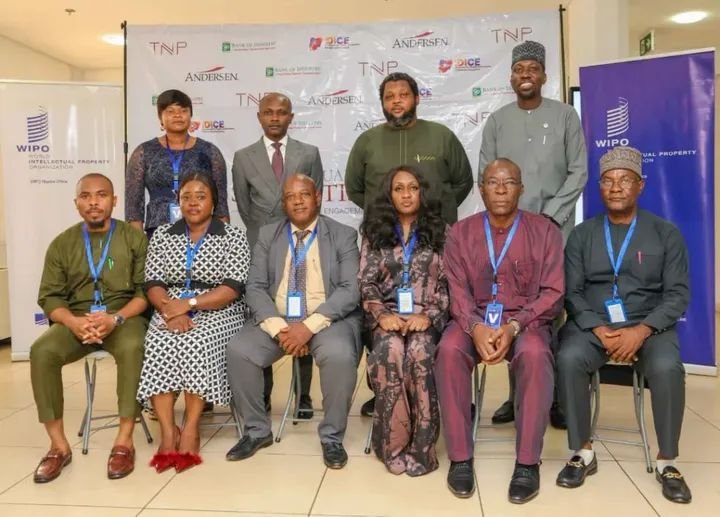
Reported by Weng Patrick Atokor | Journalist at Weng Global
Nigeria’s creative industry is poised for a major transformation as stakeholders advocate the adoption of intellectual property (IP)-backed financing, a model that would allow creators and creative enterprises to use their intellectual property assets as collateral for loans and investments.
The proposal, championed by policymakers, financial institutions, legal experts, development partners, and leaders in the creative ecosystem, is aimed at unlocking access to capital for thousands of Nigerian creatives whose most valuable assets exist in intangible forms such as copyrights, patents, trademarks, music catalogues, software, films, books, fashion designs, and digital innovations.
Industry leaders argue that despite Nigeria’s growing reputation as Africa’s creative powerhouse, access to affordable financing remains one of the biggest barriers preventing creatives from expanding their businesses and competing globally. Unlike conventional businesses with physical assets such as land, buildings, or machinery, many creators struggle to secure bank loans because financial institutions rarely recognize intellectual property as bankable collateral.
The renewed push comes as the Federal Government continues implementing reforms designed to strengthen the country’s creative economy through the Creative Economy Development Fund (CEDF), intellectual property reforms, and partnerships with international organizations including the World Intellectual Property Organization (WIPO). These initiatives seek to transform creativity into a significant contributor to national economic growth and job creation.
Experts say Nigeria’s creative economy—which includes film, music, publishing, fashion, gaming, software development, digital media, visual arts, advertising, and cultural tourism—has enormous untapped economic potential. They believe recognizing intellectual property as a financial asset would provide creators with easier access to funding while encouraging innovation and entrepreneurship.
According to stakeholders, countries such as Singapore, the United Kingdom, South Korea, China, and the United States have successfully integrated intellectual property into their financial systems, enabling businesses to leverage patents, trademarks, copyrights, and other intangible assets to obtain financing.
They argue that Nigeria should adopt similar models by establishing legal frameworks, standardized valuation systems, and risk-sharing mechanisms that give banks confidence to lend against intellectual property assets.
Creative entrepreneurs say the inability to secure funding has prevented many promising businesses from scaling operations, investing in technology, hiring skilled professionals, expanding into export markets, or commercializing innovative ideas.
Many Nigerian musicians, filmmakers, writers, software developers, fashion designers, digital artists, architects, photographers, and content creators own intellectual property worth millions of naira but remain excluded from traditional financing because these assets are not widely accepted as collateral.
Financial experts note that intellectual property now represents one of the fastest-growing asset classes globally, with many of the world’s largest companies deriving much of their value from intangible assets rather than physical infrastructure.
Stakeholders therefore believe Nigeria must modernize its financial system to reflect the realities of today’s knowledge-driven economy.
They also emphasize the importance of improving awareness about intellectual property registration. Thousands of creators still fail to register their copyrights, trademarks, patents, and industrial designs, making it difficult to establish ownership or determine commercial value.
Legal practitioners have called for stronger enforcement against piracy and copyright infringement, arguing that a robust intellectual property protection regime would increase investor confidence while ensuring creators receive fair returns from their innovations.
Banks and financial institutions are equally being encouraged to build internal capacity for evaluating intellectual property assets and develop specialized lending products tailored to the needs of the creative sector.
Industry observers believe collaboration among government agencies, regulators, commercial banks, valuation professionals, insurers, fintech companies, and development finance institutions will be critical to the success of IP-backed financing.
The Federal Government has already taken steps toward strengthening Nigeria’s intellectual property ecosystem through the National Intellectual Property Policy and Strategy and the Creative Economy Development Fund, both of which seek to improve commercialization of intellectual property and expand access to finance for creatives.
Experts say these reforms align with President Bola Tinubu’s economic diversification agenda, which seeks to reduce dependence on oil revenues by promoting innovation, technology, culture, tourism, and creative industries as alternative sources of growth.
Nigeria’s creative sector continues to attract global recognition. Nollywood remains one of the world’s largest film industries, Afrobeats has become an international cultural phenomenon, while Nigerian fashion designers, authors, software developers, game creators, and digital entrepreneurs continue expanding into international markets.
Despite these achievements, stakeholders insist that sustained growth will depend largely on improved financing mechanisms capable of supporting innovation from idea generation to commercialization.
Analysts believe IP-backed financing could unlock billions of naira in private investment, create thousands of jobs, stimulate exports, encourage startup development, and strengthen Nigeria’s position as Africa’s leading creative economy.
Development experts also note that enabling intellectual property to function as collateral could encourage more creators to formalize their businesses, maintain proper documentation, register their works, and protect valuable intellectual assets.
For investors, the model presents opportunities to diversify investment portfolios into high-growth creative industries while supporting entrepreneurship and youth employment.
Stakeholders maintain that intellectual property should no longer be viewed merely as a legal protection mechanism but as an economic asset capable of generating wealth, attracting investment, and driving sustainable development.
They urge policymakers to accelerate legislative reforms, improve institutional coordination, establish internationally accepted valuation standards, and strengthen judicial capacity for resolving intellectual property disputes.
If successfully implemented, stakeholders believe IP-backed financing could redefine Nigeria’s creative economy by expanding financial inclusion, encouraging innovation, supporting small and medium-sized enterprises, and positioning the country as a continental leader in intellectual property commercialization.
As global economies increasingly shift toward innovation and knowledge-based industries, industry leaders argue that Nigeria cannot afford to overlook the immense economic value embedded in its creative talents.
With appropriate policies, stronger institutions, and increased collaboration between the public and private sectors, intellectual property-backed financing could become one of the most significant reforms shaping the future of Nigeria’s creative economy.
Sources
- Federal Ministry of Art, Culture, Tourism and Creative Economy – Creative Economy Development Fund and IP initiatives.
- International Trade and Research Centre (ITRC) – Nigeria Launches Groundbreaking IP-Backed Financing for Creatives.
- StakeBridge IRPR – Creative Economy Ambition Outruns Institutional Readiness.