Reported by Weng Patrick Atokor l journalist at wengglobal
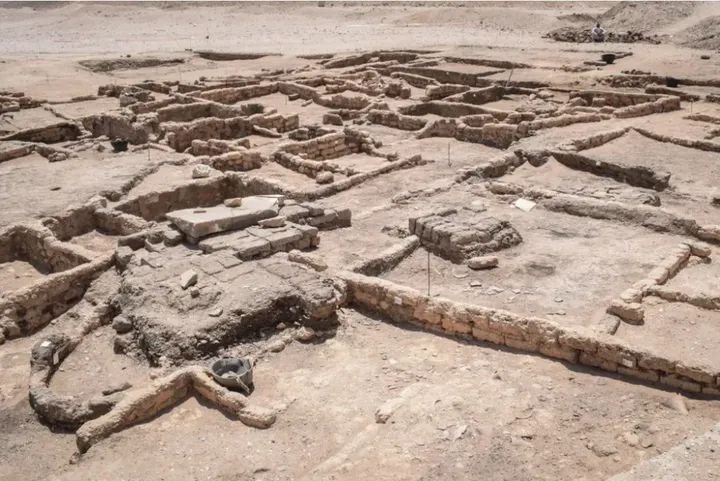
Archaeologists working on the West Bank of the Nile have uncovered a cluster of 3,000-year-old tombs near Luxor that date to Egypt’s New Kingdom, offering fresh insight into the lives of senior officials who served during the Ramesside period more than three millennia ago.
The discovery, announced by Egypt’s Ministry of Tourism and Antiquities, was made in the Dra Abu el-Naga necropolis, a burial ground located close to the Valley of the Kings and long associated with Theban elite from the 18th and 19th Dynasties.
According to the Ministry’s statement, the tombs belonged to three men who held influential administrative and religious roles: Amun-em-Ipet of the Ramesside period, Baki who supervised a grain silo in the 18th Dynasty, and an official identified only as who served as scribe, supervisor of the Temple of Amun in the oases, and mayor of the northern oases.
The find adds to a wave of archaeological announcements in 2025 and 2026 across Luxor, including the recent uncovering of the tomb of King Thutmose II by a British-Egyptian mission, and underscores Egypt’s continued efforts to document and preserve its Theban necropolis while supporting the country’s tourism economy.
The most intact of the three burials belongs to Amun-em-Ipet, who lived during the 19th Dynasty, circa 1295–1186 BCE. Inscriptions identify him as a servant in the temple or estate of Amun, one of the most powerful deities in ancient Thebes.
Although the tomb has suffered damage over time, archaeologists were able to trace its original layout: a small courtyard leading to a square hall that terminates in a niche. Fragments of wall painting still depict funerary processions, offerings to the gods, bearers of funerary furniture, and a banquet scene associated with the Beautiful Festival of the Valley.
“The surviving decoration, even in its fragmentary state, tells us a great deal about ritual practice among the non-royal elite during the Ramesside era,” said Dr. Mohamed Ismail Khaled, Secretary-General of Egypt’s Supreme Council of Antiquities, who oversaw the fieldwork.
The Ramesside period marked the height of imperial Egypt under rulers such as Ramesses II. Officials like Amun-em-Ipet were the administrative backbone of the state, managing temple estates that controlled vast agricultural lands, labor forces, and tax collection.
The first tomb belonged to Baki, titled “supervisor of the grain silo”. His chapel inscriptions confirmed both his name and position, helping archaeologists date the architectural style and painting techniques used in the tomb. The layout includes a corridor-shaped courtyard leading to a second courtyard, an entrance, and an unfinished chapel with a burial shaft.
Baki’s role points to the logistical heart of temple life. Grain silos were central to Egypt’s economy, storing surplus for redistribution, paying workers, and funding religious institutions. The presence of a silo supervisor buried near major temples reflects how economic management was intertwined with religious authority.
The third tomb whose titles indicate a career that stretched far beyond Thebes. He is recorded as a scribe, supervisor of the Temple of Amun in the oases, and mayor of the northern oases. That combination of religious and civic authority suggests direct state oversight of desert trade routes and settlements critical to Egypt’s western frontier.
His burial mirrors the others in basic form: a small courtyard, an entrance hall, and a series of unfinished chambers with a burial shaft. The fact that all three tombs feature courtyards is consistent with elite Theban burial architecture of the New Kingdom.
Dra Abu el-Naga sits on Luxor’s West Bank, directly across the Nile from ancient Thebes. For more than a thousand years it served as the preferred burial place for priests, scribes, viziers, and other high-ranking non-royal officials.
Its proximity to the Valley of the Kings and major temple complexes like Karnak and the Ramesseum made it both prestigious and practical. Officials buried here could remain close to the gods they served in life and ensure continued offerings after death.
Recent work in the area has been intense. In February 2025, a British-Egyptian team announced the tomb of Thutmose II, the first royal tomb discovered in the area in over a century. Other missions have reported cartouches of Ramesses II at the Ramesseum and new finds at Qubbet el-Hawa in Aswan.
Egyptian authorities say the concentration of discoveries is part of a broader strategy to map the Theban necropolis using modern surveying and to train an all-Egyptian generation of archaeologists.
While royal tombs dominate headlines, burials of officials provide historians with something royals rarely do: detail about how ancient Egypt actually functioned day to day.
- Administration: Titles like “grain silo supervisor” and “mayor of the northern oases” show a state that delegated power widely and relied on specialized bureaucrats.
- Religion: The banquet and offering scenes in Amun-em-Ipet’s tomb reflect the importance of temple festivals and the belief that the dead continued to participate in community rituals.
- Geography: “S’s” connection to the oases highlights Egypt’s reach into the Western Desert and its dependence on those routes for trade, gold, and security.
- Art and preservation: Even damaged paintings give conservators data on pigments, plaster techniques, and iconography used during the transition between the 18th and 19th Dynasties.
“The tombs are not just containers for the dead,” noted one Egyptologist not involved in the dig. “They are archives. Every inscription, every brushstroke, is data about economy, politics, and belief.
The Ministry of Tourism and Antiquities has begun documentation and stabilization work at the site. Because Dra Abu el-Naga is open to scholarly missions but not mass tourism, the new tombs are expected to be studied for several seasons before any decision on public access is made.
That careful approach reflects lessons from earlier discoveries. In 2017, Reuters reported the excavation of the tomb of Userhat, a New Kingdom judge at Dra Abu el-Naga, which also featured an open court, rectangular hall, and chambers with figurines and wooden masks. Officials at the time linked such finds directly to efforts to revive tourism following years of instability. cdea
Today, tourism remains a pillar of Egypt’s economy. The long-delayed Grand Egyptian Museum near the Giza pyramids is slated to become the centerpiece of that revival, but regional sites like Luxor continue to drive visitor interest. Each new tomb adds to Luxor’s reputation as what many scholars still call “the richest host of antiquities in the world.
Excavation at Dra Abu el-Naga is continuing. Archaeologists are clearing debris, recording inscriptions with 3D scanning, and analyzing pottery and organic remains found in the burial shafts.
The Japanese Waseda University mission, working nearby in the El-Khokha area, recently uncovered another Ramesside-era tomb likely belonging to a royal scribe named Khonsu, decorated with scenes of the solar boat of Ra-Atum and worship of Osiris and Isis. That parallel work suggests the entire hillside was densely used by elite families over several centuries.
For Egypt’s antiquities sector, the challenge now is balancing research, preservation, and public engagement. As Dr. Khaled’s team noted, each new name carved into a lintel Amun-em-Ipet, Baki, restores an individual voice to a civilization often remembered only through its kings.
In a region where history is measured in millennia, the uncovering of these three tombs is a reminder that much of ancient Egypt’s story was written not on obelisks, but in the chapels of the people who ran it.
Sources
- Egypt’s Ministry of Tourism and Antiquities
- Archaeology News Online Magazine
- Live Science
- Earth.com
- My Modern Met
- Reuters