Reported by Weng Patrick Atokor | journalist at wengglobal
Former Vice President Atiku Abubakar has condemned the Federal Government’s reported approval of a new ₦50,000 uniform examination fee for candidates sitting the West African Senior School Certificate Examination (WAEC) and the National Examinations Council (NECO) examinations, warning that the policy could deepen educational inequality and deny millions of Nigerian children access to secondary school certification.
The criticism comes amid widespread public debate following reports that the Federal Government approved an increase in examination fees to ₦50,000 per candidate beginning from the 2027 examination cycle. The proposed fee represents a significant increase over the current cost of registering for either examination and has triggered concerns among parents, educators, civil society groups, and student organizations.
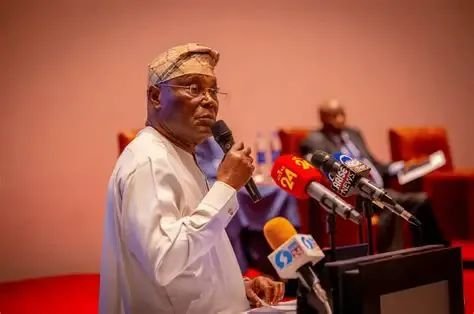
In a statement reacting to the development, Atiku described the reported fee hike as economically insensitive at a time when many Nigerian families are struggling with rising inflation, unemployment, and declining purchasing power.
“This is not merely a fee adjustment; it is a policy that risks shutting the door of opportunity on millions of children from low-income households,” Atiku said. “Education is a fundamental pathway out of poverty, and government policies should expand access, not restrict it.”
The former vice president argued that the proposed uniform fee could disproportionately affect rural communities and economically vulnerable families who already face difficulties meeting basic educational expenses such as tuition, transportation, textbooks, and feeding.
According to Atiku, many households with multiple school-age children may be forced to choose which child sits for the examinations, thereby increasing the number of out-of-school youths and worsening existing educational disparities.
Growing Public Concern
The controversy gained traction after several media platforms reported that the Federal Government had approved a uniform fee of ₦50,000 for both WAEC and NECO examinations from 2027. The reports suggested that the adjustment was intended to reflect rising operational costs and harmonize examination charges across the two examination bodies.
The development has sparked strong reactions across the country, with student leaders, parents’ associations, and education advocates questioning whether the policy adequately considered the economic realities facing ordinary Nigerians.
The National Association of Nigerian Students (NANS) was among the groups that publicly rejected the proposed increase, describing it as an additional financial burden on already struggling families. Student leaders argued that access to secondary school certification should not become a privilege reserved for wealthier households.
Education analysts say the debate reflects broader concerns about the affordability of education in Nigeria, where many families have seen their living costs rise sharply over the past two years.
Economic Context Behind the Debate
Nigeria has experienced persistent inflationary pressures, with food prices, transportation costs, and household expenses increasing significantly. Many families now spend a larger share of their income on essential needs, leaving less money available for education-related expenses.
For households with two or three children preparing for WAEC and NECO examinations, a ₦50,000 fee per candidate could translate into hundreds of thousands of naira in examination-related costs when additional registration and school charges are included.
Atiku argued that policymakers must recognize the cumulative financial burden on parents.
“The average Nigerian family is already under severe economic pressure,” he said. “Policies that make education more expensive will ultimately hurt the poorest citizens the most.”
Implications for Access to Education
Education experts warn that high examination fees can have long-term consequences for school completion rates. WAEC and NECO certificates are critical qualifications for admission into universities, polytechnics, colleges of education, and many employment opportunities.
If large numbers of students are unable to afford the examinations, analysts say the country could witness an increase in school dropouts and a reduction in the number of young people eligible for higher education.
Atiku emphasized that the government should focus on expanding educational opportunities rather than creating additional financial barriers.
“Every child who completes secondary school should have a fair chance to obtain the certification needed for further education and employment,” he said. “That opportunity should not depend solely on a family’s income level.”
Calls for Government Reconsideration
The former vice president called on the Federal Government to suspend the implementation of the proposed fee hike and engage with stakeholders, including parents, teachers, school owners, student groups, and education experts.
He also urged authorities to explore alternative funding mechanisms for examination bodies, including increased budgetary support, targeted subsidies for vulnerable students, and efficiency reforms that could reduce administrative costs.
“Government must prioritize policies that protect access to education,” Atiku stated. “Investing in education is investing in the future of the nation.”
Broader Education Policy Debate
The latest controversy comes less than two years after Atiku criticized another federal education policy involving age restrictions for WAEC and NECO candidates seeking admission into tertiary institutions. At the time, he described the policy as “absurd” and argued that it would discourage academic excellence and restrict educational opportunities for gifted students.
That earlier criticism was widely reported by national media organizations and highlighted Atiku’s broader position that education policies should be designed to encourage learning, merit, and accessibility rather than create additional barriers.
The current examination fee debate has therefore become part of a larger national conversation about the direction of Nigeria’s education system and the role of government in ensuring equitable access to learning opportunities.
Government Yet to Issue Detailed Clarification
As of the time of filing this report, education authorities had not released a detailed public clarification explaining the rationale, implementation framework, or possible exemptions associated with the reported ₦50,000 uniform fee.
Policy analysts say such clarification will be essential to determine whether the fee will apply equally across all categories of candidates and whether any subsidy mechanisms will be introduced for students from disadvantaged backgrounds.
Several stakeholders have called for a transparent consultation process before any final implementation decision is made.
Why the Debate Matters
Nigeria already has one of the world’s largest populations of out-of-school children. Education advocates warn that policies that increase the cost of completing secondary school could undermine efforts to improve enrollment, retention, and transition to higher education.
For many Nigerian families, WAEC and NECO examinations represent the final gateway to future opportunities. Any significant increase in examination costs therefore carries implications not only for individual students but also for national human capital development.
Atiku’s intervention has added political weight to the growing public debate, placing additional pressure on policymakers to justify the proposed fee increase and address concerns about its potential impact on millions of Nigerian students.
Whether the government proceeds with the implementation, modifies the proposal, or introduces relief measures for vulnerable candidates will likely remain a major education policy issue in the months ahead.
Sources
- TheCable – Reports on the Federal Government’s approval of a ₦50,000 uniform WAEC and NECO examination fee and Atiku Abubakar’s reaction.
- Channels Television – Previous reports on Atiku Abubakar’s criticism of federal education policies affecting WAEC and NECO candidates.
- Statements and reactions from the National Association of Nigerian Students (NANS) regarding the proposed examination fee increase.