Reported by Weng Patrick Atokor | Journalist at WengGlobal
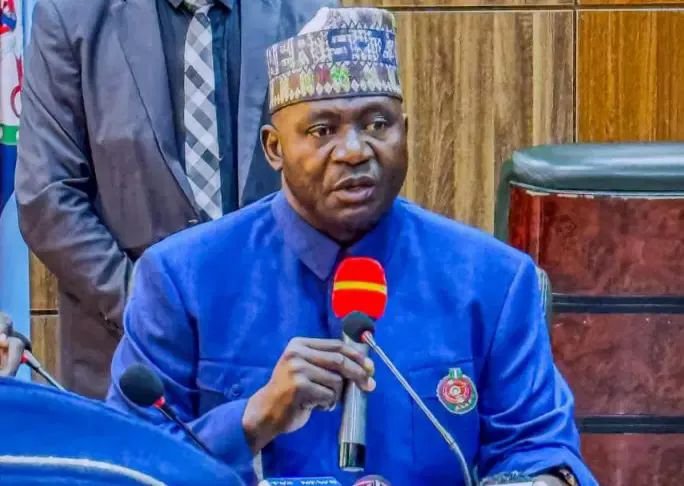
Nigeria’s Minister of Defence, Christopher Musa, has disclosed that the armed bandits responsible for the abduction of dozens of pupils and teachers in Oriire Local Government Area of Oyo State threatened to kill their captives if security forces attempted a military rescue operation.
The revelation provides fresh insight into the difficult security decisions confronting Nigerian authorities as they work to secure the safe return of the victims without triggering further violence. According to the minister, the kidnappers are using the children as bargaining tools in an attempt to force the government to release some of their commanders currently being held in military custody.
Speaking in a preview of an interview scheduled for broadcast on News Central, Musa explained that intelligence gathered by security agencies indicated the armed group had issued direct threats to execute the abducted pupils and teachers if troops moved closer to their hideout.”For whatever reason, they are looking for leverage because we have some of their commanders with us, and they feel taking these kids and holding them to ransom will make us release their commanders,” the minister said. He added that the kidnappers warned that any attempt by troops to launch an assault would result in the deaths of the children.
The abducted victims were taken during coordinated attacks on Baptist Nursery and Primary School, Yawota, alongside two other schools in the Esinle community of Oriire Local Government Area on May 15, 2026. According to official reports, 39 pupils and seven teachers were kidnapped during the raid, sending shockwaves across Oyo State and renewing national concern over the spread of mass school abductions beyond Nigeria’s traditional conflict zones.
The attack marked one of the most serious incidents of school kidnapping in southwestern Nigeria, a region that has historically experienced fewer such attacks than parts of the country’s northwest and north-central zones. Security experts say the development illustrates how armed criminal groups are expanding their operations into new territories, posing fresh challenges for law enforcement agencies.
Musa’s remarks underscore the complexity of hostage rescue operations involving children. Military commanders often face the difficult task of balancing swift action against the risk of provoking captors into harming hostages. While security agencies continue to gather intelligence and monitor the kidnappers’ movements, officials have indicated that protecting the lives of the victims remains the overriding priority.
The Defence Minister also reiterated his long-standing call for stricter penalties against kidnappers, terrorists and bandits. He argued that Nigeria’s existing legal framework has failed to provide sufficient deterrence, allowing violent criminal networks to continue targeting vulnerable communities, schools and highways.According to Musa, tougher punishments—including the death penalty for convicted kidnappers and terrorists—should be considered as part of broader reforms aimed at strengthening national security. He maintained that criminals have become emboldened because the consequences of their actions are not severe enough.
His comments are likely to reignite national debate over the effectiveness of capital punishment as a deterrent to violent crime. While some political leaders have supported stronger penalties for kidnapping, human rights advocates continue to argue that improvements in intelligence gathering, policing, prosecution and judicial efficiency would have a greater long-term impact than harsher sentencing alone.
The Oyo school abduction has also intensified concerns about the safety of educational institutions across Nigeria. Since the 2014 kidnapping of schoolgirls from Chibok, numerous schools have been targeted by armed groups seeking ransom payments or political leverage. Although security has been strengthened in many high-risk regions, attacks continue to expose significant gaps in rural security infrastructure.Parents, education stakeholders and civil society organisations have repeatedly called on both federal and state governments to improve security around schools, particularly in remote communities where security personnel are scarce.
The Nigerian military has continued to conduct operations against terrorist groups and criminal gangs across several regions of the country. Authorities say a number of high-profile commanders have been arrested or neutralised in recent months, a development that may explain why the kidnappers are reportedly demanding the release of detained leaders.
Security analysts note that hostage-taking has become an increasingly common tactic among criminal groups seeking financial gain, prisoner exchanges or protection from military offensives. The use of schoolchildren as bargaining chips has drawn widespread condemnation from local communities, international organisations and human rights groups.Meanwhile, families of the abducted pupils continue to endure weeks of uncertainty as efforts to secure their release continue. Community leaders have appealed for sustained government action while urging authorities to prioritise the safe return of every victim.The incident has once again highlighted the broader security challenges facing Africa’s most populous nation. Beyond school abductions, Nigeria continues to battle terrorism, banditry, communal violence and organised criminal networks operating across several states.
Experts argue that addressing these threats requires a combination of military operations, improved intelligence sharing, stronger border security, economic development and closer cooperation between federal, state and local authorities.The federal government has repeatedly pledged to restore security nationwide and dismantle criminal networks responsible for mass kidnappings. However, continued attacks have prompted renewed calls for comprehensive reforms aimed at improving intelligence capabilities, increasing police presence in vulnerable communities and expanding surveillance technology.As investigations and rescue efforts continue, authorities have not publicly disclosed operational details, citing the need to protect the ongoing mission and safeguard the lives of the abducted children and teachers.The fate of the victims remains a matter of national concern, with Nigerians hoping that security agencies will secure their safe release while preventing similar attacks in the future. The incident also serves as a stark reminder of the evolving security landscape confronting the country and the urgent need for coordinated strategies capable of protecting civilians, particularly schoolchildren, from violent criminal groups.
Sources
Punch NigeriaVanguard NigeriaThe Guardian NigeriaNews Central TVOyo AffairsNaija News Punch Newspapers