Reported by Simon Daniel Yusuph l Journalist at Weng Global
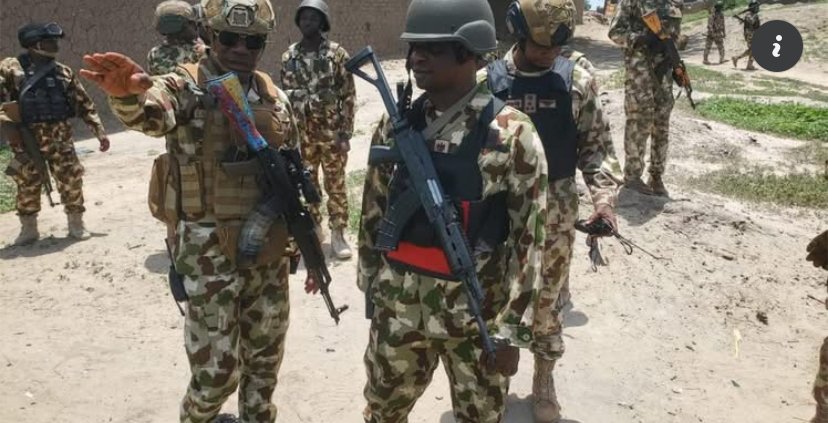
Troops of the Joint Task Force (North West), Operation FANSAN YAMMA, have neutralised two suspected terrorists, intercepted a consignment of military clothing allegedly intended for terrorist use and rescued a kidnapped victim during separate security operations in Zamfara and Kaduna states.
The operations, conducted on Friday, November 27, 2026, also resulted in the recovery of logistical materials believed to be connected to terrorist activities in the two states.
The Acting Media Information Officer of the Joint Task Force, Captain Tamuno Sinivie, disclosed the developments in a statement issued on Saturday, November 28.
According to the statement, the operations involved troops of Sector 2 in Zamfara State and Sector 1 in Kaduna State, following intelligence reports and a distress call over the abduction of residents.
The military said the Zamfara operation targeted the movement of military uniforms and other accessories allegedly being transported by suspected terrorists, while the Kaduna operation focused on responding to a kidnapping incident in Kutura community, Kajuru Local Government Area.
Although the operations recorded the interception of supplies and the rescue of one abducted person, the task force said efforts were continuing to secure the release of other victims and apprehend those responsible.
Two Suspected Terrorists Killed in Zamfara Operation
In Zamfara State, troops of Sector 2 conducted an operation in Kucheri, within Tsafe Local Government Area, after receiving intelligence about the movement of military uniforms and other military-related accessories by suspected terrorists.
Captain Sinivie said the troops acted on credible intelligence and moved to the area to disrupt the suspected movement of the materials.
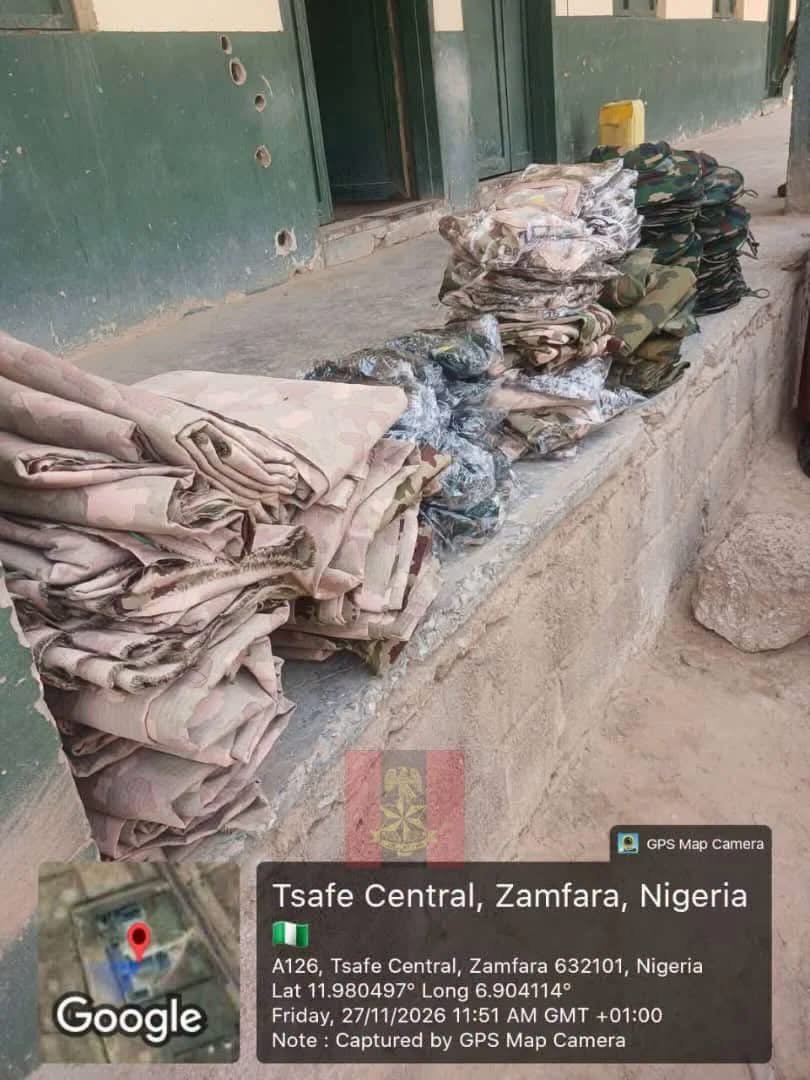
During the operation, two suspected terrorists were neutralised, while a consignment of military clothing and accessories was recovered.
The recovered items included 26 assorted military camouflage uniforms, 26 military camouflage T-shirts and 54 camouflage jungle hats.
The quantity and nature of the recovered materials are significant because military-style clothing can potentially be exploited by armed groups to disguise their identities, create confusion during security operations or facilitate movement in areas where military personnel operate.
However, the military statement did not provide further details about the identities of the two suspects, the circumstances surrounding their deaths or whether any other individuals were arrested during the operation.
It also did not disclose the intended destination of the recovered materials or identify the individuals or network responsible for arranging their movement.
The task force described the operation as part of ongoing intelligence-led efforts to dismantle terrorist logistics networks and deny armed groups access to supplies that could support their activities.
Disrupting the supply chains of armed groups is an important component of counterterrorism operations. Beyond confronting fighters directly, security agencies also seek to restrict their access to clothing, equipment, transportation, communication materials and other resources required to sustain operations.
The recovery of the uniforms and accessories could therefore provide security agencies with information that may assist investigations into the movement and distribution of materials intended for criminal use.
Further details about the origin of the recovered items and the investigation into their suspected recipients were not provided in the military’s announcement.
Troops Rescue Kidnap Victim in Kaduna
In a separate operation in Kaduna State, troops of Sector 1 responded to a distress call following the abduction of residents of Kutura community in Kajuru Local Government Area.
The military said troops mobilised after receiving information about the incident and pursued the suspected kidnappers.
According to Captain Sinivie, the soldiers engaged the fleeing suspects, forcing them to retreat.
A subsequent search of the surrounding area led to the rescue of one kidnapped victim and the recovery of logistical materials from a hideout allegedly used by the suspected terrorists.
The rescue represents an important development for the victim and the affected community, particularly amid persistent concerns about kidnapping and insecurity in parts of Kaduna State.
However, the military did not disclose the identity, age or gender of the rescued person. It also did not provide information about the victim’s condition or whether medical attention was required after the rescue.
More importantly, the task force confirmed that the operation had not yet resulted in the recovery of all the abducted residents.
It said efforts were ongoing to rescue the remaining victims and bring those responsible for the abduction to justice.
The statement did not specify the number of people initially kidnapped in Kutura or provide further details about the suspected abductors.
The military’s confirmation that other victims were still being sought means the situation remained an active security concern at the time of the announcement.
Kajuru and the Wider Security Challenge in Kaduna
The operation in Kutura highlights the continuing security challenges facing communities in parts of Kaduna State.
Kidnapping has remained a major concern for residents, families, businesses and travellers in several parts of the North-West, where armed groups have carried out abductions for ransom and other criminal activities.
Such incidents can have consequences beyond the immediate victims. Families may face financial pressure while communities experience fear, disrupted economic activities and restrictions on movement.
Farmers, traders and other residents can also be affected when insecurity makes it difficult to access farms, markets, schools and other essential services.
In communities affected by repeated attacks, the fear of abduction can influence daily decisions, including when residents travel, where they conduct business and whether children can attend school safely.
The rescue of one victim in Kutura is therefore a positive development for the affected individual. Nevertheless, the continued search for the remaining abductees underlines the importance of sustaining security operations until all victims are accounted for.
The military has not released further information about the location of the suspected kidnappers or whether additional arrests have been made.
Military Targets Terrorist Logistics Networks
The Zamfara operation also draws attention to the role of logistics networks in sustaining armed groups.
While military operations frequently focus on locating and confronting armed fighters, the ability of security agencies to identify and disrupt supply channels can also affect the operational capacity of criminal organisations.
Military uniforms and other accessories are particularly sensitive items because unauthorised possession or distribution could create security risks.
Individuals wearing clothing resembling official military uniforms may potentially cause confusion among civilians and security personnel, particularly in communities where residents depend on visual identification to distinguish security operatives from armed criminals.
The interception of the 26 camouflage uniforms, 26 camouflage T-shirts and 54 jungle hats could therefore help prevent the materials from reaching their suspected recipients.
However, the military has not established publicly in its statement how the recovered items were obtained, who financed their purchase or the precise manner in which they were intended to be used.
Those questions may require further investigation to determine whether the recovered materials were connected to a wider supply network.
The task force said its operations were designed to dismantle terrorist logistics structures and deny armed groups access to resources that could facilitate their activities.
For counterterrorism efforts to produce sustained results, security agencies generally need to combine intelligence gathering, field operations, investigation and cooperation with affected communities.
The recovery of supplies can provide useful leads, but identifying the people responsible for procuring, transporting and distributing such materials is also important to disrupting the networks behind them.
Operation FANSAN YAMMA Sustains Security Operations
Operation FANSAN YAMMA is the military’s joint task force operating in Nigeria’s North-West, a region that has faced persistent threats from armed groups, kidnappers and other criminal networks.
Its operations cover security challenges across the region, including attacks on communities, abductions, armed violence and the movement of suspected criminal groups.
The latest operations in Zamfara and Kaduna form part of the wider security effort to respond to threats affecting residents and disrupt the activities of armed groups.
The task force has continued to emphasise intelligence-led operations and cooperation with members of the public.
In his statement, Captain Sinivie urged residents to support ongoing military activities by providing timely and credible information about suspicious movements and activities within their communities.
Such information can assist security personnel in identifying potential threats, locating suspected criminal hideouts and responding to emergencies.
Community cooperation is particularly important in rural areas, where residents may observe unusual movements or activities before security agencies receive formal reports.
However, the provision of information must be handled responsibly. Residents should communicate credible intelligence through appropriate security channels rather than attempting to confront suspected armed individuals themselves.
Remaining Kidnap Victims Still Await Rescue
Despite the reported successes, the situation in Kaduna remains unresolved because the military has confirmed that efforts to rescue the remaining kidnapped residents are continuing.
The priority for security agencies will be to locate the victims, secure their safe release and identify those responsible for the abduction.
The authorities will also need to establish the circumstances surrounding the incident and determine whether the recovered logistical materials can provide useful investigative leads.
In Zamfara, further investigations may also be required to establish the source and intended destination of the recovered military clothing and identify any individuals or groups connected to the suspected supply operation.
The military has not announced additional arrests or provided a timeline for the conclusion of the ongoing operations.
The latest developments demonstrate activity by troops in two North-West states, but the broader security challenges facing the region remain significant.
For affected communities, the immediate concern is the safety of those still being held by kidnappers and the prevention of further attacks.
The task force’s appeal for public cooperation also reinforces the importance of communication between security agencies and residents as operations continue.
As of the military’s November 28 announcement, two suspected terrorists had been neutralised in Zamfara, military clothing and accessories had been recovered, and one kidnapped victim had been rescued in Kaduna. Efforts to secure the freedom of the remaining abductees and pursue those responsible were still ongoing.
Weng Global – stories beyond borders
Sources
- Joint Task Force (North West), Operation FANSAN YAMMA — statement by Acting Media Information Officer, Captain Tamuno Sinivie.
- Channels Television.
- African Independent Television (AIT).
- TVC News.
- Daily Post Nigeria.