Reported by Weng Patrick Atokor l Journalist at Weng Global
Nigeria’s Federal Government is stepping up efforts to mobilise more than $600 million in financing for the country’s digital technology and creative industries, as it seeks to attract private investment, expand businesses and create employment opportunities for young Nigerians.
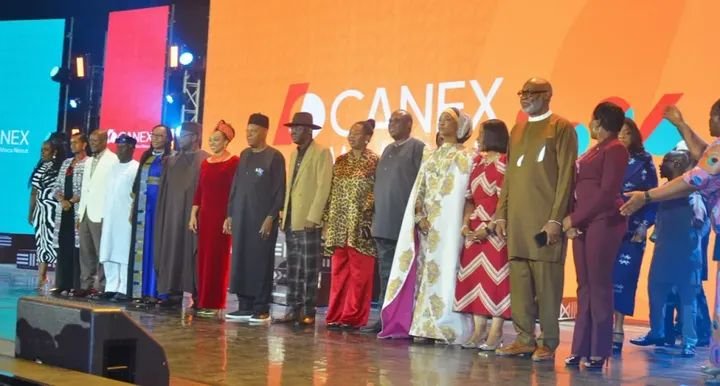
The financing initiative, being implemented through the Investment in Digital and Creative Enterprises (iDICE) Programme, was highlighted on November 5, 2026, during the opening of the Creative Africa Nexus (CANEX) Weekend in Lagos.
Minister of Industry, Trade and Investment, Dr Jumoke Oduwole, disclosed the funding initiative, explaining that the government was working to strengthen access to capital for businesses operating across Nigeria’s creative and digital economy.
The programme is being driven through collaboration involving the Federal Government, the Office of the Vice-President and the Bank of Industry (BOI), alongside international development finance institutions.
The initiative is intended to help Nigerian entrepreneurs move beyond the early stages of business development by providing access to investment capital, strengthening enterprise capacity and attracting institutional investors.
However, the financing should not be interpreted as a newly announced $600 million cash disbursement. The iDICE Programme is an existing government-backed financing initiative with a total programme value of approximately $618 million.
What the iDICE Programme Covers
The iDICE initiative is designed to address one of the biggest challenges facing Nigerian technology startups and creative businesses: limited access to affordable financing and investment capital.
According to the programme’s official information, its total funding envelope is approximately $618 million, bringing together contributions from the Federal Government and international development partners.
The programme involves financing support from:
- African Development Bank (AfDB).
- Agence Française de Développement (AFD).
- Islamic Development Bank (IsDB).
- Bank of Industry (BOI), representing the Federal Government’s contribution.
The initiative also seeks to attract private-sector investment to expand the amount of capital available to businesses.
Its intervention covers three broad areas: skills and enterprise development, access to finance, and ecosystem development. Investment in Digital and Creative Enterprises +2
Businesses operating in the following sectors are among those targeted:
- Film and television production.
- Music and entertainment.
- Fashion and design.
- Gaming and animation.
- Software development.
- Financial technology (FinTech).
- Health technology (HealthTech).
- Educational technology (EdTech).
- Artificial intelligence.
- Digital services and other technology-driven enterprises.
The programme is particularly focused on strengthening businesses with the potential to grow, attract investment and create employment.
$110 Million Debt Financing Window for Startups
One of the significant developments under the iDICE initiative is the introduction of dedicated debt-financing facilities for eligible technology and creative startups.
The Bank of Industry announced that its conventional debt fund and the Islamic Development Bank-supported Murabaha financing facility have a combined financing allocation of $110 million.
The two facilities are structured to provide businesses with access to capital for expansion, operations and other eligible business requirements.
According to the iDICE programme’s published frequently asked questions, eligible businesses can seek financing ranging from ₦10 million to ₦1 billion under the BOI-iDICE Debt Fund, subject to assessment and approval.
The conventional facility carries a maximum interest rate of 10 per cent annually, with repayment periods of up to five years and possible moratoriums of up to six months, depending on the approved terms.
The IsDB-supported facility operates under a non-interest, Sharia-compliant Murabaha financing structure.
Importantly, these facilities are not automatic grants. Businesses must satisfy the programme’s eligibility requirements and undergo the relevant assessment process. Bank of Industry +2
Government Seeks Greater Returns From Nigeria’s Creative Economy
Beyond providing financing, the Federal Government is seeking to ensure that Nigeria retains a greater share of the economic value generated by its creative industries.
Nigerian music, films, fashion, literature and digital content have attracted significant international attention. However, the commercial infrastructure required to distribute, market and monetise these products remains an important challenge for local businesses.
Minister of Industry, Trade and Investment Jumoke Oduwole said the government’s objective was to transform the country’s creative industry into a more structured investment ecosystem capable of generating sustainable returns for investors and higher earnings for Nigerian creators.
She identified film, music, literature, fashion, gastronomy, gaming, sports, crafts, design and creative technology as areas with investment potential.
The minister also pointed to the investment in Mavin Records as an example of the commercial opportunities available in Nigeria’s entertainment industry.
The broader objective is to ensure that Nigerian creators and businesses capture more of the value generated by their intellectual property rather than depending heavily on external companies and distribution networks. Voice of Nigeria +1
AfCFTA and Intellectual Property Protection
The government is also looking beyond domestic financing by positioning Nigeria’s creative and digital businesses to benefit from opportunities across African markets.
Oduwole highlighted Nigeria’s participation in the African Continental Free Trade Area (AfCFTA) Protocol on Digital Trade, which could create opportunities for cross-border services involving music licensing, film distribution and digital production.
Such arrangements could help Nigerian businesses reach customers across the continent without being restricted to the domestic market.
Another important component of the government’s strategy is intellectual property protection.
The Federal Executive Council approved Nigeria’s first National Intellectual Property Policy and Strategy in November 2025. The policy is intended to strengthen the protection and commercial value of intellectual property, helping creators secure better economic returns from their work.
The minister also referenced the Creative Sector Investment Playbook, unveiled at the World Economic Forum in Davos in January 2026.
The document is designed to guide investors towards opportunities in Nigeria’s creative economy, including studio financing and the distribution of locally produced content. Voice of Nigeria +1
CANEX 2026 Attracts 17,000 Registrations
The funding announcement came during the 2026 Creative Africa Nexus (CANEX) Weekend in Lagos, organised to strengthen investment, trade and collaboration across Africa’s creative industries.
The event, taking place from November 5 to 8 at the Wole Soyinka Centre for Culture and Creative Arts, brought together creative professionals, investors, policymakers and financial institutions.
According to Oduwole, registration increased to 17,000 participants, compared with 6,000 at the previous edition.
Afreximbank President, Dr George Elombi, also discussed the bank’s growing commitment to financing Africa’s creative economy.
He explained that Afreximbank initially committed $500 million to the sector through its CANEX initiative before increasing the commitment to $1 billion and subsequently raising it to $2 billion in 2024.
The financing is intended to support businesses and infrastructure across the creative value chain, including film studios, recording facilities, fashion manufacturing, entertainment venues and distribution networks.
Elombi also encouraged creative professionals to register and protect their intellectual property, explaining that properly documented creative rights could be valued and potentially used as collateral to obtain financing.
The bank’s position reflects a wider effort to increase African ownership of the infrastructure and commercial systems through which the continent’s creative products reach international audiences. Voice of Nigeria +1
Why the $600 Million Financing Matters
Nigeria’s creative and digital industries have become important areas of opportunity for economic diversification, particularly as the country seeks to expand employment and reduce dependence on traditional sources of economic growth.
For young entrepreneurs, access to capital can determine whether a promising business remains small or develops into a company capable of competing internationally.
In the technology sector, funding can support software development, infrastructure, product expansion and recruitment.
For filmmakers, musicians, fashion designers and other creative professionals, financing can help cover production costs, purchase equipment, develop distribution networks and protect intellectual property.
The initiative could also encourage more institutional investors to consider Nigerian startups and creative enterprises.
However, access to financing alone will not guarantee the success of these businesses.
The effectiveness of the programme will depend on transparent selection procedures, appropriate financing conditions, responsible fund management and the ability of beneficiaries to turn investment into sustainable commercial activity.
There is also a need to ensure that financing opportunities reach businesses outside major commercial centres such as Lagos and Abuja.
The Bank of Industry’s announcement that the DICE Fund of Funds will target investments across Nigeria’s 36 states and the Federal Capital Territory is an important part of that ambition. Bank of Industry +1
What Happens Next?
The Federal Government’s next challenge will be to translate the financing commitments into actual investments, business expansion and employment opportunities.
The iDICE programme already has several financing and enterprise-development mechanisms, including its startup support initiatives, venture capital investments and dedicated debt facilities.
In July 2026, the Bank of Industry announced the appointment of Kuramo Capital Management to manage the DICE Fund of Funds, which is structured to reach a minimum capitalisation of $170.6 million.
The government committed $85.3 million as anchor capital, with Kuramo Capital mandated to raise an equivalent amount from private-sector investors.
The Bank of Industry also disclosed that the programme had introduced innovation and creative hubs in 66 tertiary institutions, comprising 36 universities and 30 polytechnics.
These interventions are intended to strengthen the pipeline of businesses and entrepreneurs capable of attracting investment. Bank of Industry
For Nigerian entrepreneurs and creative professionals, the key issue will be understanding the eligibility requirements and identifying the appropriate financing opportunities under the programme.
The official iDICE platform provides information about its programmes, financing arrangements and opportunities for eligible businesses.
Ultimately, the success of the Federal Government’s $600 million financing initiative will not be measured simply by the amount of money announced, but by how much reaches viable businesses, how many jobs are created and whether Nigerian entrepreneurs can build competitive companies that retain more economic value within the country.
Weng Global – Stories beyond borders
Sources
- Voice of Nigeria – Nigerian Government Unlocks $600m For Creative Economy.
- The Guardian Nigeria – FG Moves to Unlock $600m for Creative Businesses as CANEX Opens.
- Investment in Digital and Creative Enterprises (iDICE) – Official Programme Information and FAQs.
- Bank of Industry – Appointment of Kuramo Capital to Manage $170.6m DICE Fund of Funds.
- Bank of Industry – iDICE Financing and Enterprise Development Updates.