Reported by Simon Daniel Yusuph l Journalist at Weng Global
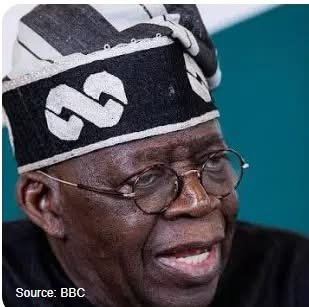
President Bola Ahmed Tinubu has called on Nigerians to rise above ethnic and regional divisions, declaring that citizens must recognise their shared identity and responsibility for the country’s future during a meeting with Igbo community leaders and business stakeholders in Lagos.
Tinubu made the appeal on Monday, November 23, 2026, at a town hall meeting organised by the Ndigbo National Dialogue and Development Initiatives at the Wole Soyinka Centre for Culture and Creative Arts in Iganmu, Lagos State.
The gathering brought together Igbo elders, traders, business owners, political figures and government officials. However, beyond its message of national unity, the meeting also carried a clear political dimension, as the President and other speakers sought support for his re-election campaign ahead of the 2027 general election.
According to a statement issued by the Presidency, Tinubu assured the community that his administration remained committed to inclusive governance, national unity and equal opportunities for Nigerians, irrespective of their ethnic backgrounds.
He urged the Igbo community to strengthen its unity, participate more actively in national politics and build relationships with other ethnic groups to promote a peaceful and prosperous Nigeria.
Tinubu Emphasises Shared Nigerian Identity
Addressing participants, the President said Nigerians should not allow differences in language, tribe or place of birth to undermine their common national identity.
He argued that no citizen chose the ethnic or linguistic background into which they were born and that every Nigerian should therefore be treated as an equal member of the country.
The Presidency quoted him as saying: “I can commit to one thing: the unity of Nigeria. Though tribes and tongues may differ, in brotherhood we stand.”
He further urged Nigerians to see themselves as people living together in one country, describing Nigeria as a shared home whose development requires the contributions of all its citizens.
To reinforce his message, Tinubu joined members of the gathering in singing the national anthem for a second time.
The President also acknowledged the contribution of Igbo communities to Nigeria’s economic growth, particularly through business, trade and entrepreneurship.
He said no part of the country should be excluded from the Federal Government’s Renewed Hope Agenda, adding that national development depended on cooperation and collective responsibility.
The message was significant because the Igbo community has a substantial presence in Lagos, particularly in commercial activities, markets, transportation, manufacturing and other areas of the informal and formal economy.
2027 Election Support Becomes a Major Focus
Although national unity was central to the President’s address, the town hall meeting also provided an opportunity for political mobilisation ahead of the January 16, 2027 presidential election.
Tinubu openly sought another term in office, telling participants that the Nigerian Constitution allowed him to seek re-election.
He urged Igbo residents in Lagos to participate in the election and vote for him, the All Progressives Congress (APC) governorship candidate, Obafemi Hamzat, and other APC candidates.
The President also expressed appreciation for the turnout, particularly the presence of traders and market leaders who had left their businesses to attend the meeting.
He said the gathering encouraged him and expressed his determination to continue serving the country.
The Presidency reported that Tinubu told participants that governors from the South-East were working with him towards making Nigeria better and supporting his re-election effort.
His appeal reflects the importance of political alliances across Nigeria’s ethnic and regional communities as parties prepare for the 2027 elections.
For the President, securing support beyond his traditional political base in the South-West is an important part of his re-election strategy. For the Igbo community, engagement with the Federal Government offers an opportunity to raise concerns, seek greater political participation and negotiate policies that affect residents and businesses.
However, the support expressed by leaders and participants at the meeting should not automatically be interpreted as the position of every Igbo resident in Lagos or every member of the wider Igbo community. Political preferences within any ethnic group are diverse, and electoral support will ultimately be determined by individual voters.
Sanwo-Olu Rallies Support for Tinubu
Lagos State Governor Babajide Sanwo-Olu also used the occasion to encourage the Igbo community to support Tinubu’s re-election bid.
According to the Presidency, Sanwo-Olu described the turnout as evidence of cooperation among residents from different ethnic backgrounds and presented the gathering as an expression of the state’s “One Lagos” identity.
He praised the President for what he described as his commitment to national unity and development across Nigeria’s six geopolitical zones.
Sanwo-Olu also expressed confidence that Lagos would deliver substantial electoral support for Tinubu in the 2027 presidential election.
His remarks highlighted the political significance of Lagos, Nigeria’s commercial centre and one of the country’s most diverse states.
The state is home to people from different parts of Nigeria and has a large population of residents whose economic and social activities connect Lagos to other regions.
The governor’s appeal therefore placed the meeting within a broader effort to build political cooperation among communities whose voting decisions could influence the outcome of the next election.
Doris Uzoka-Anite Announces Grassroots Mobilisation
The meeting was convened by the Minister of State for Budget and Economic Planning, Dr Doris Uzoka-Anite, who declared the Igbo community’s support for Tinubu’s second-term ambition.
She said mobilisation efforts had begun across Lagos State, with structures reportedly established at polling-unit level ahead of the 2027 presidential election.
Her remarks suggested that the engagement was not simply a ceremonial meeting but part of an organised political effort to secure support for the President.
Former Minister of State for Labour and Employment Nkeiruka Onyejeocha also assured Tinubu of the community’s support.
Onyejeocha said political cooperation with other geopolitical zones was important, particularly in view of the Igbo community’s long-term aspirations for greater participation in Nigeria’s national leadership.
She also commended some of the administration’s policies, including the removal of the petrol subsidy and the introduction of a N70,000 national minimum wage.
Her comments reflected the position of the political figures who spoke at the meeting. They did not, however, establish a consensus among all Igbo political organisations, residents or voters.
Igbo Traders Request Five Per Cent Loans
Economic concerns also featured prominently during the engagement.
The leader of the Ndigbo Traders Association in Lagos, Prince Tony Nwakeze, pledged the support of traders from major commercial centres, including Alaba, Trade Fair and Ladipo markets.
However, he also presented a specific request to the Federal Government: access to loans at an interest rate of five per cent.
According to the Presidency, the traders want affordable financing to help businesses move beyond importation towards local manufacturing, expand their operations and create opportunities for young people.
Nwakeze said traders were prepared to organise themselves under a cross-guarantee arrangement to strengthen loan repayment commitments.
Such an arrangement could allow participating traders to provide mutual guarantees for loans obtained by members, although the practical conditions, eligibility requirements and financial risks would depend on the eventual lending framework.
The request is important because many small and medium-sized businesses in Nigeria face difficulties accessing affordable credit.
High borrowing costs, limited collateral, foreign exchange pressures, inflation and operating expenses can make it difficult for traders to expand their businesses or invest in local production.
A lower-interest financing arrangement could help eligible businesses acquire equipment, increase production capacity and employ more workers if it is properly designed and implemented.
However, the request remains a proposal from the traders. The Presidency’s statement did not announce an approved five per cent loan facility or provide details of a government agreement to introduce one.
Nwakeze also pledged that market leaders would honour agreements reached with the government and maintain a cordial relationship with the Lagos State Government.
Tinubu Defends Education and Economic Policies
The President also used the meeting to explain aspects of his administration’s economic and social policies.
On education, he said the government was working to reduce disruptions in tertiary institutions and improve access to university education.
He referred to the Nigerian Education Loan Fund (NELFUND), which provides financial support to eligible students pursuing higher education.
Tinubu argued that poverty should not prevent young Nigerians from attending university or developing their skills.
He also referred to government financing opportunities for traders and farmers through the Bank of Industry and agricultural lending programmes.
The President said investments in education, agriculture and commerce were necessary for long-term national development.
His remarks placed the administration’s economic agenda within the wider discussion about opportunity and inclusion. However, the effectiveness of these programmes will ultimately depend on their accessibility, implementation, funding and measurable impact on citizens.
For traders seeking affordable loans, for example, the central question will be whether available financing can reach businesses that need it under conditions they can realistically meet.
Similarly, the impact of student loans will depend on how effectively the programme reaches eligible students and supports their ability to complete their education.
The Significance of the Igbo Community in Lagos
The engagement also drew attention to the economic and social importance of the Igbo community in Lagos.
Igbo residents have long participated in the state’s commercial activities, operating businesses across several sectors and contributing to employment, distribution networks, manufacturing and trade.
Markets such as Alaba, Trade Fair and Ladipo are important commercial centres with connections to supply chains across Nigeria and beyond.
Their activities illustrate how Lagos functions as a meeting point for different communities whose economic interests extend beyond state and regional boundaries.
Consequently, discussions about inclusion, security, access to credit and political participation have implications beyond the immediate participants at the town hall.
For the Federal Government, maintaining constructive relationships with business communities can support efforts to improve economic activity and encourage investment.
For Lagos State, cooperation among residents from different ethnic backgrounds remains important to its commercial development and social stability.
Nevertheless, calls for national unity must be accompanied by policies and institutions that protect the rights of all citizens and provide equal opportunities in practice.
Political Promises and the Question of Inclusive Governance
Tinubu’s appeal comes as political parties and their supporters prepare for the 2027 general election.
His assurance that no section of the country would be left behind is a political commitment that will be judged not only by speeches but also by government decisions, public services, economic opportunities and the treatment of citizens across the federation.
The town hall also provided an example of how political candidates and community leaders are using direct engagement to build alliances ahead of an election.
For such engagements to produce lasting results, discussions must extend beyond electoral support to address practical concerns raised by the communities involved.
The traders’ request for five per cent loans is one example. Other issues that may require sustained attention include access to business financing, market infrastructure, transportation, security, taxation and the protection of legitimate commercial activities.
The meeting did not establish that all these concerns had been resolved. Rather, it created a platform through which community representatives presented their interests and expressed their political expectations.
The next test will be whether the commitments and requests raised during the engagement translate into specific government actions.
What Happens Next?
With the 2027 presidential election scheduled for January 16, political mobilisation is expected to intensify as parties seek support across Nigeria’s regions and communities.
The Ndigbo National Dialogue and Development Initiatives, according to the Presidency, has begun grassroots mobilisation in Lagos through polling-unit structures.
The President’s campaign will also depend on how effectively his administration communicates its policies and responds to economic and social concerns raised by voters.
For the traders who attended the meeting, attention will likely turn to whether the Federal Government responds to their request for affordable financing and provides a clear framework for accessing business loans.
The political support announced by community representatives will also face the test of the ballot box. The views expressed at a town hall meeting cannot substitute for the decisions voters will make individually during the election.
Ultimately, Tinubu’s message of unity carries significance beyond the 2027 campaign. Nigeria’s ethnic and regional diversity is a defining feature of the country, and national cohesion requires citizens to recognise one another as equal stakeholders in its future.
The Lagos meeting offered an opportunity to promote that message while also advancing political and economic interests. Whether the assurances of inclusion and cooperation produce tangible outcomes will be determined by the actions that follow.
Weng Global – stories beyond borders
Sources
- The State House, Abuja — Presidential statement, November 23, 2026.
- The Punch — “Tinubu woos Igbo voters in Lagos,” November 24, 2026.
- Channels Television — “2027: ‘As You Do For Me, I Do For You,’ Tinubu Seeks Igbo Support In Lagos,” November 23, 2026.
- Radio Nigeria Lagos — “Tinubu, Sanwo-Olu Call for Unity, Inclusion at Ndigbo Lagos Town Hall,” November 23, 2026.