Reported by Weng Patrick Atokor l Journalist at Weng Global
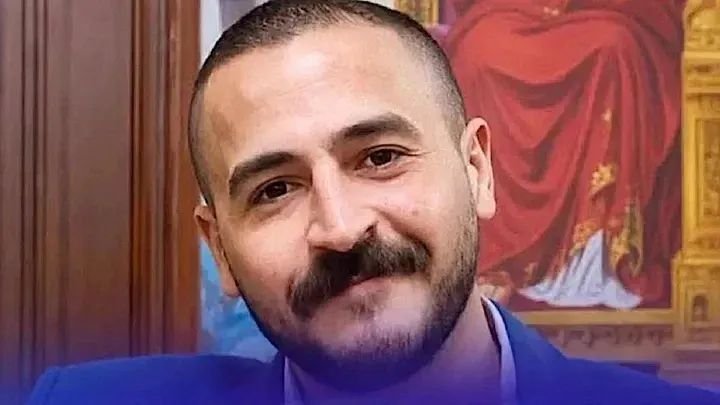
The United States Department of State says it is closely monitoring the trial of Said Mansour Rezk Abdelrazek, an Egyptian Christian convert facing a possible death sentence after prosecutors reportedly requested the maximum penalty in a case involving allegations linked to terrorism, religious expression and contempt for Islam.
The case has attracted international attention, raising concerns among religious freedom advocates and human rights organisations over the treatment of people who convert from Islam to Christianity in Egypt.
A State Department spokesperson told Fox News Digital that Washington was following the proceedings closely and urged the Egyptian government to protect the religious freedom rights of all its citizens.
The spokesperson said: “We are monitoring his trial closely. Religious freedom is a fundamental human value and we encourage the Egyptian government to protect the religious freedom rights of all its citizens.”
The American government’s intervention comes as Abdelrazek’s legal battle enters a critical stage, with prosecutors seeking the maximum punishment available under the charges against him.
According to information released by his lawyer’s office, the prosecution presented its closing arguments in early November 2026 and requested the maximum penalty. His defence team is expected to present its arguments on December 8, 2026.
The case has become a significant test of concerns surrounding freedom of religion, freedom of expression and the protection of religious minorities in Egypt.
Prosecutors seek maximum penalty
Abdelrazek is facing prosecution before the Terrorism Circuit of the First Criminal Court in Badr, Egypt.
According to reports on the proceedings and statements from his legal representatives, the charges include contempt for Islam, joining a banned terrorist organisation, inciting unrest and spreading false information.
These remain allegations and have not been established as findings of guilt.
The prosecution’s request for the maximum penalty has heightened concern among organisations monitoring the case. His lawyer’s office says the potential punishment could include a death sentence or a lengthy prison term of up to 25 years.
The request does not mean that a death sentence has already been imposed. The court must still consider the defence’s arguments and reach a decision through the judicial process.
The December 8 hearing is therefore an important next stage in determining how the case proceeds.
Arrest and detention in Cairo
Abdelrazek was arrested by security officers at his home in Cairo on July 15, 2025, according to Amnesty International.
The organisation said he spent approximately nine months in pretrial detention before being referred to the Terrorism Circuit of the First Criminal Court in Badr.
His first court hearing took place on April 21, 2026, after which proceedings were adjourned.
Amnesty International has expressed concern about his detention conditions and reported that he was being held at the 10th of Ramadan prison.
In its May 2026 urgent action, the organisation said Abdelrazek had raised allegations of mistreatment following his arrest and that there were growing concerns about his health.
Amnesty has called on Egyptian authorities to release him immediately and unconditionally, arguing that he is being detained for exercising his right to freedom of religion and belief.
The organisation’s position reflects its assessment of the case. The Egyptian authorities’ response and the court’s eventual findings remain important to the proceedings.
Religious conversion at the centre of the case
Abdelrazek’s conversion to Christianity is a central part of the concerns raised by human rights organisations.
Information published by Amnesty International indicates that he converted from Islam to Christianity in 2016 after studying comparative religions.
His religious activities and public expression of his beliefs subsequently became a source of conflict with authorities, according to accounts documented by rights advocates.
The case has raised questions about the extent to which individuals in Egypt can publicly express religious beliefs that differ from those of their families or the wider community.
Egypt recognises religious freedom in its constitutional framework, although the practical treatment of people who leave Islam for another religion has remained a subject of concern for international rights organisations.
The distinction between private religious belief, public religious expression and activities that authorities classify as threats to national security is particularly important in Abdelrazek’s prosecution.
Human rights advocates argue that peaceful religious expression should not be treated as a criminal or security threat.
International concerns over religious freedom
The United States’ decision to publicly acknowledge its monitoring of the proceedings has added an international dimension to the case.
Washington’s statement signals diplomatic attention but does not amount to an announcement of sanctions or other punitive measures against Egypt.
The United States and Egypt maintain longstanding diplomatic, security and economic relations. Egypt is an important American partner in the Middle East and North Africa, making human rights concerns an issue within a broader bilateral relationship.
The United States provides Egypt with approximately $1.3 billion in annual assistance, according to reporting by Fox News.
The scale of that relationship gives Washington several diplomatic channels through which it can raise concerns about human rights and religious freedom.
However, the State Department has not publicly announced any specific action beyond confirming that it is monitoring Abdelrazek’s trial and encouraging Egypt to protect religious freedom.
Other international organisations have also documented concerns about the treatment of religious converts in Egypt.
The United States Commission on International Religious Freedom (USCIRF), in its 2026 country update on Egypt, highlighted Abdelrazek’s case as an example of concerns involving religious expression, detention and the treatment of Christian converts.
The commission reported that he had faced difficulties accessing religious materials, including a Bible, while in detention. It also documented allegations that security personnel subjected him to beatings following his arrest.
These allegations underline the importance of independent scrutiny of the proceedings and the conditions under which the defendant is being held.
Egypt’s legal framework and the right to religious belief
Egypt’s constitutional and legal framework presents an important dimension of the controversy.
Article 64 of the Egyptian Constitution guarantees freedom of belief. However, the country’s legal system also contains provisions that criminalise certain forms of religious expression.
According to the USCIRF’s April 2026 country update, Article 98(f) of Egypt’s Penal Code criminalises insulting the recognised heavenly religions under the offence of contempt for religion.
The commission says authorities continue to use the provision to investigate, arrest and prosecute individuals accused of violating the law.
This creates an important distinction in Abdelrazek’s case: the prosecution is not simply about whether he converted to Christianity. Authorities have brought several charges against him, including alleged terrorism-related offences and contempt for Islam. Whether the evidence establishes those offences is a matter for the court.
A separate August 2026 assessment published by the United Kingdom’s Home Office also identifies Christian converts as a group that may face increased risks in Egypt.
The assessment notes that conversion is not prohibited under Egyptian law, but acknowledges reports of legal, social and civil difficulties affecting people who change their religion.
It also refers specifically to Abdelrazek’s case, including his detention, allegations of mistreatment and the charges brought against him.
The different assessments demonstrate why the proceedings require careful scrutiny, particularly regarding the evidence supporting the charges and the defendant’s ability to exercise his legal rights.
Concerns over treatment in detention
Conditions surrounding Abdelrazek’s detention have also become a significant part of the international attention.
Amnesty International has reported allegations of torture and other ill-treatment, including claims that he was physically abused following his detention.
The organisation has also raised concerns about his access to legal representation, healthcare and religious materials.
The USCIRF separately documented reports that prison authorities repeatedly denied his requests for a Bible and other materials needed for religious worship.
His lawyer was reportedly granted permission to meet him in January 2026 after earlier requests had been denied.
These accounts have prompted calls for Egyptian authorities to ensure that Abdelrazek receives appropriate medical care, access to legal representation and protection against mistreatment.
The allegations have not been independently established through a publicly available judicial finding. Nevertheless, they raise questions that human rights organisations say should be investigated independently.
International human rights standards protect individuals against torture and arbitrary detention and recognise the right to freedom of thought, conscience and religion.
The right to a fair trial also requires that defendants have a meaningful opportunity to challenge the evidence presented against them.
Egypt’s Christian community and wider implications
The case has wider significance because of Egypt’s religious and social composition.
Christians account for approximately 10 per cent of Egypt’s population, according to the United Kingdom’s August 2026 country assessment. Most belong to the Coptic Orthodox Church, one of the oldest Christian communities in the world.
The Egyptian Constitution formally recognises freedom of belief, while the government has publicly supported the country’s Christian community.
However, international assessments continue to identify challenges involving religious minorities, sectarian discrimination and the treatment of people who convert from Islam to Christianity.
The USCIRF has argued that restrictions on religious expression affect several religious communities and non-believers in Egypt.
For Christian converts, the challenges can extend beyond the courtroom. Reports cited in the British government’s assessment describe instances of family rejection, social isolation, intimidation and pressure to conceal religious beliefs.
Abdelrazek’s prosecution has therefore become an important case for organisations examining how religious freedom is protected in practice.
It also raises broader questions about the use of terrorism and national security legislation in cases involving religious expression.
For Egypt, the proceedings could attract further international scrutiny over its treatment of religious minorities and its compliance with international human rights commitments.
For the United States and other governments monitoring the case, the central concern is whether the defendant’s rights will be protected throughout the judicial process.
US diplomatic position and Egypt’s response
The State Department’s statement represents a public expression of concern, but Washington has not announced sanctions, restrictions on military assistance or other specific punitive measures in connection with the case.
The United States and Egypt maintain significant diplomatic, military and economic ties.
Egypt remains an important regional partner for Washington, particularly on Middle Eastern security, counterterrorism and diplomatic efforts involving regional conflicts.
The reported $1.3 billion in annual US assistance to Egypt also gives the relationship considerable economic and strategic importance.
The State Department’s intervention therefore places religious freedom within the broader discussion of American engagement with Cairo.
According to Fox News, the Egyptian Embassy in Washington and Egypt’s Foreign Ministry were contacted several times for comment on the case.
The report did not include an official Egyptian government response to the questions raised.
Egypt’s position on the specific allegations and the prosecution’s case will remain important as the proceedings continue.
What happens next?
The next major development is expected on December 8, 2026, when Abdelrazek’s defence team is scheduled to present its closing arguments.
The prosecution completed its closing submissions at the November 3 hearing and requested the maximum penalty, according to the lawyer’s office and Coptic Solidarity.
The defence is expected to challenge the prosecution’s case and address the evidence and legal arguments presented against its client.
The court will then have to consider the submissions before determining the next stage of the proceedings.
As of November 19, 2026, no final death sentence had been reported.
The case remains under judicial consideration, and the prosecution’s request should not be confused with a final conviction or sentence.
For human rights organisations, the December hearing will be an important opportunity to assess whether the proceedings meet fair-trial standards and whether Abdelrazek’s religious freedom and other fundamental rights are respected.
The United States has confirmed that it is monitoring the trial, while Amnesty International and religious freedom advocates continue to call attention to his detention and treatment.
The outcome could have implications beyond one defendant, particularly for discussions about freedom of religion, religious conversion and the limits of national security legislation in Egypt.
Weng Global – Stories beyond borders
Sources
- Fox News – US State Department presses Egypt over Christian convert’s trial. Fox News
- Amnesty International – Egypt: Tortured Convert on Trial for His Religious Beliefs. Amnesty International USA
- United States Commission on International Religious Freedom – Egypt Country Update, April 2026. USCIRF
- UK Home Office – Country Policy and Information Note: Christians, Egypt, August 2026. GOV.UK
- Coptic Solidarity – Prosecutors Seek Maximum Penalty for Convert. Coptic Solidarity