Reported by Weng Patrick Atokor l Journalist at Weng Global
The United States has commended the Nigerian military for rescuing 125 kidnapped victims, dismantling terrorist camps and recovering weapons during security operations conducted across the country between November 6 and 12, 2026.
The commendation, issued by the US Department of State’s Bureau of African Affairs on Wednesday, November 18, also recognised Nigerian troops for clearing explosive devices during operations targeting terrorist groups and armed criminal networks.
Washington reaffirmed its support for the Nigerian government’s efforts to prevent kidnappings and ensure that those responsible for acts of violence are held accountable.
In its statement published on its official X account, the Bureau of African Affairs said: “The United States commends Nigerian military operations this month that have rescued 125 kidnapping victims, along with the dismantling of Islamic terrorist camps, the recovery of weapons, and clearance of explosive devices.”
The bureau added that the United States supported all efforts by the Nigerian government to prevent kidnappings and hold perpetrators accountable.
The recognition comes as Nigeria continues to confront persistent security threats, including terrorism, banditry, mass abductions and attacks on communities and travellers across several regions.
Nigerian Military Reports Rescue of 125 Kidnap Victims
The US commendation followed an operational briefing by Nigeria’s Defence Headquarters, which disclosed that troops rescued 125 kidnapped people during coordinated military operations conducted between November 6 and 12.
According to the military, the operations also resulted in the killing of eight suspected terrorists, the arrest of 10 suspected collaborators and logistics suppliers, and the surrender of 12 terrorist fighters and members of their families.
The figures were disclosed by the Director of Defence Media Operations, Major General Michael Onoja, during a briefing on the activities of the armed forces across the country’s various operational theatres.
The operations involved military personnel deployed in different parts of Nigeria to tackle insurgency, kidnapping, banditry and other security threats.
The military’s announcement represents a significant number of reported rescues within a seven-day operational period. However, the scale of the operations also reflects the continuing security challenges facing communities and road users in parts of the country.
Borno Operation Accounts for 119 Rescued Travellers
The largest rescue operation took place in Borno State, where troops rescued 119 travellers who had been abducted along the Dutsen Kura-Bulazarma-Kamuya Road in Buratai, Biu Local Government Area.
The victims were reportedly abducted on November 6 while travelling along the route.
According to the military briefing, troops pursued the attackers along the Mangari-Dora Road, forcing them to abandon the captives and flee.
The rescued group comprised 69 men, 35 women and 15 children.
The operation was particularly significant because of the number of civilians involved, including women and children who had been exposed to the risks associated with armed abductions.
Troops also discovered improvised explosive devices planted in the area, highlighting the additional danger posed by explosive materials used by armed groups during attacks and military engagements.
The military’s account indicates that the pursuit of the attackers contributed to the abandonment and subsequent recovery of the victims.
However, the reported rescue does not by itself establish that the wider security threat along the route has been eliminated.
Additional Rescues Reported in Zamfara State
Beyond Borno, Nigerian troops also rescued kidnapped victims during separate operations in Zamfara State.
The military reported that five kidnapped people were freed during the operations.
In another incident, troops rescued three victims following an attack on commuters along the Kombo-Gurusu Road in Bukkuyum Local Government Area.
However, the military disclosed that the driver abducted alongside the commuters was later found dead.
The incident illustrates the continuing danger faced by motorists and passengers travelling through areas affected by kidnapping and armed attacks.
Although the rescue of the surviving victims represents an important outcome, the death of the driver demonstrates that military interventions do not always prevent fatalities during kidnapping incidents.
Zamfara remains among the states in north-western Nigeria affected by banditry, kidnappings and attacks on rural communities.
The security situation has repeatedly raised concerns about the safety of road networks, particularly routes connecting rural settlements and commercial centres.
Military Dismantles Camps and Recovers Weapons
The operations also extended beyond hostage rescues, with troops targeting suspected terrorist camps, armed group hideouts and logistics networks.
In Bauchi State, the military reported clearing terrorist camps at Dajin Madam in Alkaleri Local Government Area.
Items recovered during the operation included ammunition, motorcycles, communication radios, mobile phones and camouflage uniforms.
The recovery of such materials is relevant to military efforts to disrupt the operational capacity of armed groups.
Motorcycles are frequently used by armed groups to move through difficult terrain, while communication equipment can support coordination between members operating across different locations.
The military also reported operations in Plateau, Taraba, Benue, Nasarawa, Niger, Kwara, Oyo and Imo states.
These activities involved raids on suspected hideouts, the recovery of weapons and ammunition, and efforts to disrupt criminal networks operating in different parts of the country.
In Niger State, troops operating within Kainji Lake National Park detonated five improvised explosive devices, repelled two attacks and killed two suspected terrorists, according to the military’s account.
The operation highlights the security challenges associated with protecting large forested and protected areas that can be exploited by armed groups.
The military also reported arrests involving individuals suspected of collaborating with armed groups.
Such arrests form part of wider efforts to identify and disrupt the logistical and support networks that enable armed organisations to sustain their activities.
Twelve Terrorist Fighters Reportedly Surrender
Another development disclosed during the military briefing was the surrender of 12 terrorist fighters and members of their families during the reporting period.
The surrender of fighters can contribute to security operations by reducing the number of active combatants and potentially providing information about the organisation and activities of armed groups.
However, the circumstances surrounding the reported surrenders, including the identities of those involved and the arrangements for their processing, were not fully detailed in the available reports.
The development also raises questions about the rehabilitation, reintegration and accountability procedures applied to individuals who leave armed groups.
Nigeria has previously pursued various approaches to managing the surrender of former insurgents, including programmes aimed at screening, rehabilitation and reintegration.
The effectiveness of such programmes depends on proper assessment, accountability and safeguards for communities affected by violence.
US-Nigeria Security Cooperation Gains Attention
The American commendation comes amid continued security cooperation between Washington and Abuja as Nigeria seeks international support in addressing terrorism and other security threats.
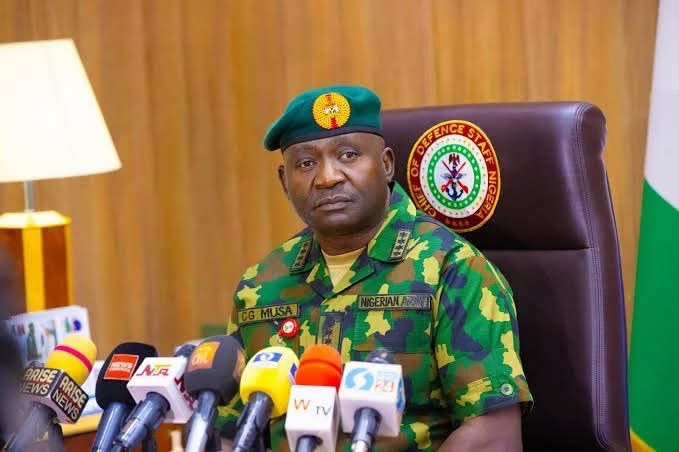
Nigeria’s Defence Minister, Christopher Musa, said on Monday that American intelligence support, including satellite imagery and military training, was assisting Nigerian forces in operations against insurgents and armed groups.
Intelligence-sharing can help security agencies identify movements, assess threats and improve operational planning.
Satellite imagery can also support surveillance across difficult terrain, particularly in areas where armed groups use forests, remote settlements and other locations to avoid detection.
Military training and technical assistance may further strengthen operational capabilities, although their effectiveness depends on how the support is integrated into Nigeria’s broader security strategy.
The US statement therefore carries significance beyond diplomatic recognition. It reflects Washington’s public support for Nigeria’s efforts to tackle kidnapping and terrorism.
Nevertheless, the commendation does not mean that Nigeria’s security crisis has been resolved or that the threat posed by armed groups has disappeared.
Nigeria Continues to Face Multiple Security Threats
Nigeria’s security challenges extend across several regions and involve different armed groups and criminal networks.
In the North-East, the country continues to confront a prolonged insurgency involving Boko Haram and Islamic State West Africa Province.
In the North-West, banditry and mass kidnappings have affected communities, travellers and rural economic activities.
Other parts of the country have also experienced attacks, communal violence, kidnapping and criminal activity.
These threats have consequences beyond immediate casualties and abductions.
Persistent insecurity can disrupt farming, trade, education, transportation and investment. Communities affected by repeated attacks may also experience displacement, reduced economic opportunities and limited access to essential services.
For travellers, the threat of kidnapping can undermine confidence in road transportation and increase the risks associated with movement between communities.
The recovery of 125 kidnapped people is therefore important not only for the victims and their families but also for broader efforts to restore public confidence in the country’s security institutions.
Why the US Commendation Matters
The recognition from Washington provides diplomatic encouragement for Nigeria’s military at a time when the country is seeking stronger international cooperation against armed groups.
It also draws attention to the importance of coordinated security operations, intelligence-sharing and efforts to disrupt the infrastructure supporting kidnapping and terrorism.
However, operational successes must translate into sustained improvements in public safety.
The rescue of abducted people, recovery of weapons and dismantling of camps are important measures of military activity, but the longer-term test remains whether communities can live, travel, farm and conduct business without the constant threat of attacks.
For the Nigerian government, the challenge is to sustain military pressure on armed groups while strengthening intelligence gathering, policing, local security arrangements and the justice system.
Authorities must also ensure that suspected collaborators are investigated through lawful procedures and that victims receive appropriate support after their release.
What Happens Next?
The Nigerian military is expected to continue operations against terrorist groups, bandits and kidnapping networks across the country’s security theatres.
The latest figures provide an account of the military’s reported achievements between November 6 and 12, but sustained operations will be necessary to prevent armed groups from rebuilding their camps and returning to previously targeted areas.
Continued cooperation with international partners, including the United States, could also remain an important part of Nigeria’s counterterrorism efforts.
For communities affected by insecurity, the priority will be to see whether these operations produce lasting improvements rather than temporary relief.
The rescue of 125 kidnapped victims represents an important development, but the wider measure of success will be the ability of Nigerian authorities to prevent further abductions, protect vulnerable communities and hold those responsible for violence accountable.
The US commendation recognises the latest reported military achievements. Nigeria’s next challenge is to turn those operational gains into lasting security for its citizens.
Weng Global — Stories beyond borders
Sources
- Nigeria’s Defence Headquarters – Operational briefing by the Director of Defence Media Operations, Major General Michael Onoja, covering military operations from November 6 to 12, 2026, as reported by established Nigerian media.
- Premium Times – US commends Nigerian military for rescuing 125 kidnap victims and dismantling terrorist camps, November 18, 2026.
- Punch – US hails Nigerian military over rescue of 125 kidnap victims, November 18–19, 2026.
- TheCable – US commends Nigeria for rescuing 125 kidnap victims, dismantling terrorist camps, November 18, 2026.
- Vanguard – US applauds Nigerian troops for rescuing 125 kidnap victims, November 18, 2026.