Reported by Weng Patrick Atokor l Journalist at Weng Global
Uganda has approached Nigeria’s Dangote Group to explore investment opportunities in its proposed 60,000-barrel-per-day oil refinery, fertiliser production and salt manufacturing projects, as the East African country intensifies efforts to expand domestic industries and reduce dependence on imported finished products.
The proposed partnership is part of Uganda’s broader industrialisation strategy, which seeks to attract experienced African investors, process locally available natural resources and strengthen the country’s position in the regional energy and manufacturing sectors.
The engagement also highlights growing economic cooperation between African countries, particularly as governments increasingly look towards major continental businesses to support industrial development, infrastructure investment and employment creation.
According to reports published on November 15, 2026, a Ugandan ministerial delegation visited facilities operated by the Dangote Group in Lagos, Nigeria, where discussions focused on possible collaboration in petroleum refining, fertiliser production and mineral processing.
The discussions represent an investment approach rather than a confirmed agreement. No final investment commitment, financing arrangement or construction contract involving Dangote Group and the Ugandan government has been announced.
Uganda Targets Domestic Oil Refining and Industrial Expansion
The proposed refinery is expected to be located in the Hoima area of western Uganda, close to the country’s oil reserves in the Albertine Graben.
Uganda has been developing plans to establish domestic refining capacity as part of its strategy to transform its oil discoveries into economic opportunities.
According to the Uganda National Oil Company (UNOC), the proposed refinery has a processing capacity of 60,000 barrels of crude oil per day and is estimated to cost approximately $4 billion.
The project is planned for the Kabalega Industrial Park, with the government-owned UNOC holding a 40 per cent stake and UAE-based Alpha MBM Investments holding the remaining 60 per cent under the previously announced project structure.
UNOC has also disclosed that an implementation agreement was signed between the Ugandan government, the national oil company and Alpha MBM Investments to establish the framework for the refinery’s development.
The agreement provides for the finalisation of project design, construction arrangements and eventual operations. Construction was initially expected to take approximately three years.
The latest approach to Dangote therefore introduces another potential industrial partner into Uganda’s refining ambitions, although it remains unclear whether the Nigerian conglomerate would participate in the existing ownership arrangement, assume an operational role or pursue a separate investment structure.
No announcement has established that the earlier agreement with Alpha MBM has been replaced or amended.
Why Uganda Wants Dangote Group Involved
Uganda’s interest in Dangote Group reflects the Nigerian conglomerate’s experience in developing large-scale industrial facilities across Africa.
Founded by Nigerian businessman Aliko Dangote, the Dangote Group operates across several sectors, including cement, fertiliser, food production, petrochemicals and petroleum refining.
Its industrial operations in Nigeria provide a practical example of how investment in domestic production can support import substitution and expand manufacturing capacity.
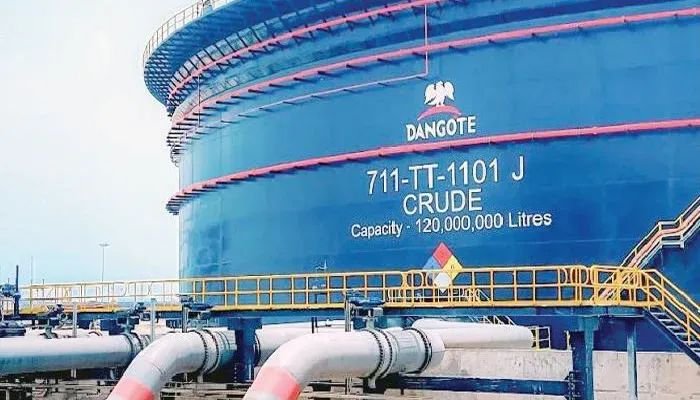
The group’s petroleum refinery and petrochemical complex in Lekki, Lagos, has become an important part of Nigeria’s efforts to increase local petroleum processing.
Its fertiliser business also provides experience in producing agricultural inputs for domestic and international markets.
For Uganda, attracting a company with experience in these industries could potentially accelerate the development of its own manufacturing capabilities.
The Ugandan delegation’s visit was therefore not limited to petroleum refining. It also explored opportunities involving fertiliser blending, phosphate processing and salt manufacturing.
The discussions suggest that Uganda is seeking a broader industrial partnership capable of supporting several interconnected sectors rather than focusing exclusively on the oil industry.
However, the commercial viability of each proposed investment would still require separate technical and financial assessments.
Fertiliser Production and Phosphate Processing Form Part of the Plan
One of the major areas discussed during the engagement was fertiliser production.
Agriculture remains an important part of Uganda’s economy, supporting employment, rural livelihoods and domestic food production.
Access to affordable fertiliser is important for improving agricultural productivity, maintaining soil nutrients and supporting farmers who depend on commercial crop production.
Uganda’s proposal to involve Dangote Group in fertiliser blending and phosphate processing is aimed at strengthening the domestic supply of agricultural inputs.
Phosphate is an important raw material used in the production of phosphate-based fertilisers.
Processing such resources locally could allow Uganda to develop additional manufacturing activities instead of depending entirely on imported finished products.
The proposal also creates an opportunity to connect the country’s agricultural sector with its wider industrial development plans.
If successfully developed, domestic fertiliser production could support local distributors, agricultural businesses and farmers while creating opportunities for employment in manufacturing, logistics and supply chains.
Nevertheless, the proposed facilities would require assessments of available raw materials, production costs, energy requirements, transportation infrastructure and market demand.
The latest discussions have not established the proposed production capacity, investment value or construction timetable for the fertiliser projects.
Salt Manufacturing Adds Another Dimension to Uganda’s Investment Strategy
Salt manufacturing was another area included in the investment discussions.
The proposal reflects Uganda’s intention to expand the processing of locally available resources and develop industries capable of supplying domestic and regional markets.
Salt is widely used in food processing, household consumption, chemical manufacturing and several industrial applications.
Developing domestic processing capacity could support value addition, create manufacturing jobs and strengthen the country’s industrial supply chains.
However, the success of such an investment would depend on the availability and quality of raw materials, processing technology, production costs and the ability of locally manufactured products to compete with imported alternatives.
The Ugandan government has indicated its willingness to support investors in addressing obstacles that could affect the development of the proposed projects.
For Dangote Group, the salt and phosphate proposals could provide opportunities to explore additional business activities within East Africa.
The company has not publicly announced a commitment to establish the proposed facilities.
Uganda’s Dependence on Imported Petroleum Products
The refinery proposal comes against the background of Uganda’s dependence on imported petroleum products.
According to information published by the Uganda National Oil Company, the country imports petroleum products costing approximately $2 billion annually.
UNOC has estimated domestic demand at around seven million litres per day, with demand historically growing alongside economic activity and transportation requirements.
The proposed 60,000-barrel-per-day refinery is intended to help address this dependence by processing crude oil domestically and supplying refined products to the local market.
The government also sees the project as an opportunity to strengthen energy security and reduce exposure to international supply disruptions.
For an economy that depends heavily on road transportation, commercial logistics and imported energy products, fluctuations in international petroleum prices can have wider consequences for businesses and consumers.
A domestic refinery could provide an additional source of supply, although its actual impact on fuel prices would depend on production costs, crude pricing, operating efficiency, taxation and market conditions.
The project could also create opportunities for petrochemical manufacturing, storage, transportation and other supporting industries.
UNOC has previously cited a macroeconomic study conducted with Stanbic Bank that projected substantial economic benefits from the refinery, including additional contributions to gross domestic product and employment.
These figures are projections associated with the planned project rather than realised economic outcomes.
East Africa’s Growing Interest in Energy Cooperation
Uganda’s engagement with Dangote Group also comes at a time when East African countries are exploring greater cooperation in energy infrastructure and petroleum processing.
The region remains dependent on imported refined petroleum products, exposing its economies to international market fluctuations, transportation costs and supply disruptions.
In recent months, discussions involving Uganda, Kenya, Tanzania and other regional economies have increasingly focused on developing larger refining capacity and strengthening cross-border energy infrastructure.
In April 2026, Reuters reported that East African countries were discussing a possible regional refinery, with Dangote expressing interest in leading its development if participating governments supported the proposal.
The regional discussions have also included the possibility of processing crude oil from different countries to serve a wider East African market.
Uganda’s separate 60,000-barrel-per-day refinery proposal is part of this broader industrial and energy strategy.
The country is also developing the East African Crude Oil Pipeline (EACOP), which is designed to transport crude oil from Uganda’s oilfields to Tanzania’s port of Tanga for export.
These developments demonstrate the importance of energy infrastructure to Uganda’s long-term economic plans.
They also highlight the potential for African industrial groups to participate in projects that extend beyond their home markets.
For Dangote Group, a possible investment in Uganda could strengthen its presence in East Africa and create opportunities across petroleum refining, fertiliser production and other industrial activities.
However, the proposed investments would need to be evaluated independently, particularly because large-scale industrial projects require significant financing, infrastructure and long-term commercial commitments.
Investment Opportunities and the Challenge of Financing
Although Uganda’s invitation represents an important development in its efforts to attract industrial investment, translating the proposals into operational facilities will require several stages of negotiation and preparation.
Large refineries require substantial capital, access to reliable crude supplies, specialised equipment, electricity, water, storage facilities and transportation networks.
The commercial arrangements must also establish how the finished products will be distributed and whether the facilities can compete with imported alternatives.
For the proposed Hoima refinery, the existing project structure involving UNOC and Alpha MBM provides an established framework that would need to be considered in any new discussions involving Dangote.
The government and potential investors would also need to clarify ownership arrangements, financing responsibilities, construction obligations and operational control.
Similar considerations apply to fertiliser, phosphate and salt production.
Each facility would require an assessment of raw material availability, production costs, environmental requirements and potential customers.
The availability of government support could help investors navigate administrative and regulatory processes, but it would not remove the need for commercially sustainable investment arrangements.
Uganda’s ability to establish a clear investment framework will therefore be important in determining whether the latest discussions progress beyond an expression of interest.
What the Development Could Mean for African Industrialisation
The proposed engagement reflects a wider conversation about Africa’s ability to develop its industrial capacity through investment, technology transfer and stronger cooperation between African businesses.
For decades, many African economies have exported raw materials while importing finished petroleum products, fertilisers, chemicals and manufactured goods.
This arrangement has limited opportunities for domestic processing and left several countries exposed to international supply disruptions.
Uganda’s proposals seek to address part of this challenge by encouraging investment in facilities that can convert natural resources into finished products.
The potential involvement of Dangote Group is significant because it demonstrates how an established African industrial company could become a partner in another African country’s development strategy.
If the projects eventually materialise, they could create opportunities for local workers, engineers, contractors, suppliers and manufacturing businesses.
They could also support the development of technical skills and encourage smaller businesses to participate in industrial supply chains.
For Nigeria, the discussions offer another example of the potential international reach of its private sector.
For Uganda, they represent an opportunity to attract investment and industrial expertise while advancing its economic diversification agenda.
However, the wider benefits will depend on how the projects are structured and whether local communities and businesses can participate meaningfully in their development.
Environmental protection, responsible resource management and transparent investment agreements will also remain important considerations.
What Happens Next?
The immediate next step is expected to involve further technical and commercial discussions between Uganda and Dangote Group.
The Ugandan delegation has invited Aliko Dangote to visit the country for additional engagement, although no date for the proposed visit was disclosed in the published report.
Dangote’s team will need to assess the proposals and determine whether the refinery, fertiliser and mineral-processing opportunities align with the group’s investment strategy.
Further discussions will also need to establish the technical requirements, financing arrangements, potential ownership structures and commercial viability of the proposed facilities.
As of November 16, 2026, no publicly announced agreement confirms that Dangote Group has accepted the invitation or committed funds to the proposed Ugandan projects.
The distinction is important because an investment invitation does not automatically translate into construction or operational activity.
Uganda’s existing refinery arrangements, particularly the agreement involving Alpha MBM Investments and UNOC, will also be relevant to determining how any additional partnership could be structured.
The outcome of these discussions could shape the next phase of Uganda’s industrialisation programme and its ambition to become a more significant energy and manufacturing player in East Africa.
For now, the engagement represents a new opportunity for African industrial cooperation, with the next challenge being to convert investment discussions into financially viable projects capable of delivering measurable economic benefits.
Weng Global – Stories beyond borders
Sources
- Okay News – Uganda Seeks Dangote Investment in Refinery, Fertiliser and Salt, November 15, 2026. Okay News
- Uganda National Oil Company (UNOC) – Uganda Refinery Implementation Agreement Signed. UNOC: Uganda National Oil Company
- Mwenendo News – Uganda Courts Dangote for Hoima Refinery and Fertiliser Investments, November 16, 2026. Mwenendo News
- Reuters – Kenya, Tanzania and Neighbours Discuss Joint Refinery as Dangote Offers to Build It. Reuters
- The EastAfrican – Lamu Refinery Races Ahead of Uganda’s as Dangote Eyes September 30 Groundbreaking. The EastAfrican