Reported by Weng Patrick Atokor l Journalist at Weng Global
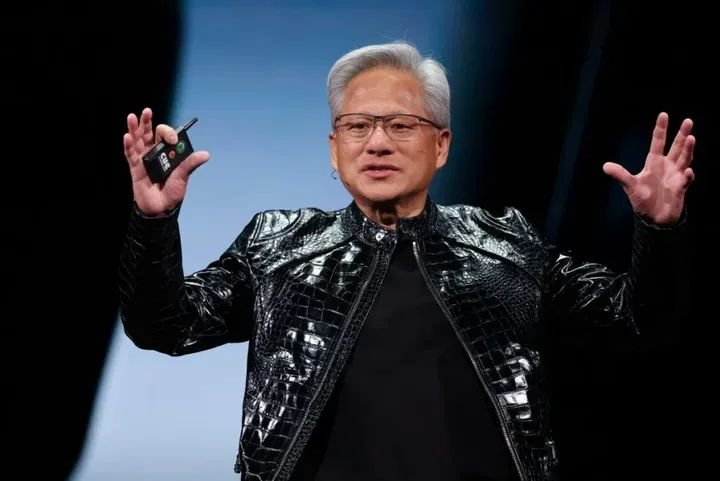
Nvidia chief executive officer Jensen Huang has resigned with immediate effect following mounting controversy surrounding alleged extramarital relationships and concerns over a possible foreign intelligence operation involving one of the world’s most influential artificial intelligence companies.
The development, announced on Thursday, November 12, 2026, marks a major leadership change at the American semiconductor giant, which has become a central player in the global artificial intelligence industry.
Nvidia has appointed its chief financial officer, Colette Kress, as interim chief executive officer while the company’s board begins searching for a permanent successor, according to the Associated Press.
Huang’s departure follows days of intense scrutiny over reports that he had a relationship with Alice Huang, a former executive at Singapore-based technology company Megaspeed International, who has been suspected by US intelligence officials of having links to an alleged Chinese intelligence operation.
The allegations have raised questions about corporate security, the protection of sensitive technology and the potential implications for US national security.
Nvidia Confirms Leadership Transition
The resignation represents a significant turning point for Nvidia, a company Huang co-founded in 1993 and led for more than three decades.
Under his leadership, Nvidia transformed from a graphics processing unit manufacturer into one of the world’s most valuable technology companies, supplying advanced processors used in artificial intelligence development, data centres, scientific computing and other emerging technologies.
The company’s growth has been closely associated with the global expansion of generative AI, as technology firms and governments compete to develop increasingly powerful computing systems.
According to the Associated Press, Nvidia’s board will consider candidates from within and outside the organisation as it searches for a permanent replacement.
The board has also appointed entrepreneur and venture investor Harvey C. Jones as its first chairman.
The leadership changes come after reports that directors had convened to discuss Huang’s future following the growing controversy.
How the Alleged Espionage Scandal Developed
The controversy intensified after reports emerged about Huang’s relationship with Alice Huang, a former executive of Megaspeed International, a Singapore-based company involved in artificial intelligence infrastructure.
The New York Times previously reported that US intelligence agencies suspected Alice Huang of gathering information for Beijing.
The allegations placed the relationship under heightened scrutiny because Nvidia manufactures advanced AI processors that have become strategically important in the technological competition between the United States and China.
Huang subsequently acknowledged being unfaithful to his wife in a message to Nvidia employees published on November 8.
In the message, he apologised to his family, colleagues and the company’s wider community, accepting responsibility for his personal conduct.
He also addressed the national security concerns, saying he would cooperate fully with an independent investigation initiated by Nvidia’s board.
However, Huang’s apology did not end the controversy.
Nvidia Launches Independent Investigation
On November 8, Nvidia’s board announced that it was initiating an independent investigation following reports that its founder and chief executive had been the target of a foreign intelligence effort.
The company said a committee of independent directors, supported by external legal advisers, would oversee the investigation.
Nvidia also stressed that it had no reason to believe that its confidential information or US national security had been compromised.
The investigation was intended to examine the available information surrounding the allegations.
The board initially expressed confidence in Huang and his leadership team, but subsequent developments increased pressure on his position.
The Associated Press reported that the company eventually moved towards a leadership transition after the controversy escalated.
Reports of a Second Alleged Relationship
The situation became more complicated following additional media reports on Wednesday, November 11, concerning another alleged extramarital relationship involving Huang.
The New York Times reported that Huang had a relationship with Kimberly Powell, identified in the report as an Nvidia executive.
The Wall Street Journal also reported that Nvidia’s board was preparing to consider Huang’s future at the company.
These reports intensified scrutiny of the chief executive’s conduct and increased uncertainty surrounding the company’s leadership.
The allegations concerning the second relationship should be distinguished from the independently documented fact that Huang acknowledged being unfaithful to his wife. The specific details reported by the media remain subject to appropriate verification and attribution.
Colette Kress Assumes Interim Leadership
Nvidia has appointed Colette Kress, who has served as the company’s chief financial officer since 2013, as interim chief executive officer.
Kress has extensive experience in corporate finance and technology, having previously worked at Cisco Systems and Microsoft.
Her appointment places an experienced financial executive at the centre of the company’s leadership transition.
According to the Associated Press, Kress said Nvidia’s strength had always come from its people and expressed her commitment to building on the foundation established during Huang’s leadership.
The board will now face the task of identifying a permanent chief executive capable of maintaining Nvidia’s position in the increasingly competitive global AI market.
China, National Security and the Semiconductor Industry
The controversy extends beyond Huang’s personal life because of Nvidia’s strategic importance in the global technology industry.
Advanced semiconductors are essential to artificial intelligence systems, military-related computing, scientific research and modern data infrastructure.
The United States has maintained restrictions on exports of certain advanced chips to China because of concerns about their potential military and technological applications.
Nvidia has been at the centre of discussions surrounding these restrictions, with Huang previously advocating for access to the Chinese market.
The allegations involving Megaspeed have therefore attracted attention from US officials, lawmakers and investors.
Megaspeed has faced scrutiny over allegations that advanced Nvidia chips were being diverted to China in violation of export restrictions.
The company has denied wrongdoing and said it takes compliance with US export-control laws seriously.
Singaporean authorities have also investigated the company. According to the Associated Press, they questioned Alice Huang and confiscated her passport last year but concluded that there was insufficient evidence that she had committed a crime. She was subsequently barred from returning to Singapore.
China has rejected allegations of involvement in an operation targeting Huang.
Importantly, the allegations do not establish that Nvidia’s technology was compromised or that Huang knowingly participated in espionage.
Financial Markets React to Nvidia Leadership Crisis
The leadership controversy has also affected investor confidence.
The Associated Press reported that Nvidia shares fell by 14 per cent at Thursday’s opening bell as markets reacted to Huang’s departure and uncertainty over the company’s future leadership.
The development is significant because Nvidia’s valuation and market influence are closely linked to investor expectations about the continued expansion of artificial intelligence.
Huang has been a central figure in the company’s commercial strategy, relationships with major technology companies and engagement with policymakers.
His departure raises questions about how quickly Nvidia can establish a new leadership structure without disrupting its business operations.
The company, however, has an established management team and remains a major supplier of processors and computing infrastructure to the global technology industry.
Why Jensen Huang’s Resignation Matters
Huang’s departure represents more than a change in executive leadership.
For more than three decades, he has been closely identified with Nvidia’s technological direction and expansion.
His leadership helped position the company at the centre of the artificial intelligence revolution, making its products essential to businesses developing advanced AI systems.
The transition could have implications for investor confidence, corporate governance, international technology policy and the broader semiconductor industry.
It also highlights the importance of cybersecurity, executive accountability and corporate oversight in companies whose technologies have strategic implications for national security.
For African economies, Nvidia’s leadership transition is also worth watching because access to advanced computing infrastructure is becoming increasingly important for digital transformation, research, financial technology and AI development across the continent.
Changes in the leadership of a major semiconductor supplier could influence industry relationships and the wider international technology environment, although the immediate consequences for African markets remain uncertain.
What Happens Next?
Nvidia’s immediate priority will be maintaining operational stability while the board searches for a permanent chief executive.
Colette Kress is expected to oversee the company during the transition, while the board considers potential candidates from inside and outside the organisation.
The wider investigation into the national security allegations also remains important.
Nvidia has previously stated that it had no reason to believe its confidential information or national security had been compromised. Any further findings could provide additional clarity about the allegations and the company’s internal controls.
Investors, technology companies and policymakers will also be watching how the leadership transition affects Nvidia’s business strategy, semiconductor supply relationships and position in the global artificial intelligence market.
For now, Huang’s departure closes a significant chapter in Nvidia’s history and introduces a period of uncertainty for one of the most influential companies in the technology sector.
Weng Global — Stories beyond borders.
Sources
- Associated Press (AP) — Nvidia CEO Jensen Huang resigns after his affair raises national security concerns.
- Nvidia — Statement from the NVIDIA Board of Directors, November 8, 2026.
- Nvidia — A Message to Our Company, November 8, 2026.
- Reuters — How Nvidia CEO Jensen Huang got entangled in a China chip and spy scandal, November 11, 2026.
- The Guardian — Nvidia board reportedly deciding whether to oust CEO Jensen Huang as stock price plunges, November 12, 2026.
- ABC News — Nvidia board reportedly preparing to oust CEO Jensen Huang after alleged affairs, November 11, 2026.