Reported by Weng Patrick Atokor l Journalist at Weng Global
Türkiye is seeking to deepen its defence and economic partnership with Nigeria through plans for local military production, expanded military training cooperation and increased bilateral trade, as both countries pursue a target of $5 billion in annual trade.
The proposed defence industrial cooperation is expected to strengthen Nigeria’s domestic security manufacturing capacity, improve military training and create opportunities for technology transfer between the two countries.
The trade ambition represents an increase from the approximately $2 billion in bilateral trade currently reported by officials, although no specific deadline has been announced for achieving the $5 billion target.
The latest developments reflect a broader effort by Abuja and Ankara to move their relationship beyond conventional diplomatic and commercial exchanges towards security cooperation, investment and industrial development.
Türkiye moves towards local defence manufacturing
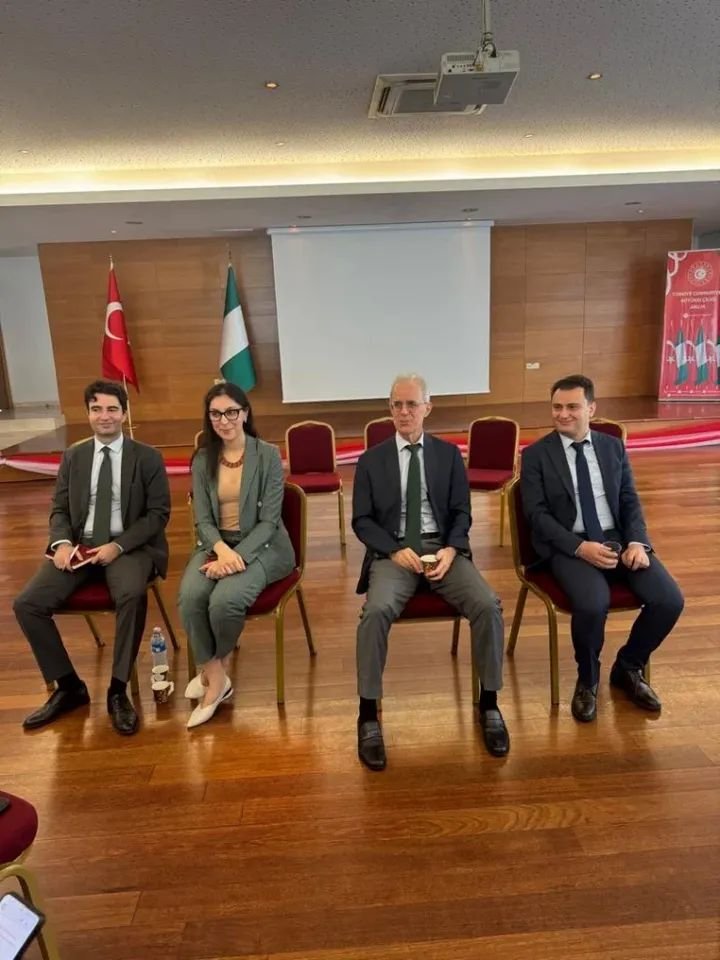
The Turkish Ambassador to Nigeria, Mehmet Poroy, disclosed the plans on November 9, 2026, during a press briefing in Abuja organised by the Turkish Embassy to mark 66 years of diplomatic relations between the two countries.
According to a report by Vanguard, Poroy said the proposed military training facility would enable Nigerian personnel to receive regular training within the country with assistance from Turkish military officers.
The arrangement is expected to reduce the need for Nigerian military personnel to travel to Türkiye for every training programme.
The ambassador also indicated that discussions were ongoing on the possibility of producing military equipment locally in Nigeria.
He stressed that the partnership would not be limited to supplying weapons and military equipment but could also involve establishing local production capabilities.
The distinction is important: Türkiye has publicly discussed the possibility of local defence manufacturing, but the November 9 announcement did not establish that specific factories had already been approved, funded or scheduled for construction. Vanguard News +1
200 Nigerian special forces personnel undergoing training
Poroy disclosed that 200 Nigerian special forces personnel were undergoing a two-month training programme in Türkiye.
The programme forms part of broader efforts to improve the operational capabilities of Nigeria’s armed forces, particularly in responding to terrorism and other security threats.
The Turkish government has also expressed willingness to share its experience in counterterrorism, intelligence cooperation and military capacity development.
Poroy noted that Türkiye’s experience in fighting terrorism had been shaped by decades of security challenges, adding that the response to terrorism required more than military operations.
He argued that economic, religious and other social considerations also played important roles in addressing insecurity.
This suggests that the proposed partnership could extend beyond conventional military training to include knowledge-sharing and broader security cooperation. Vanguard News +1
Nigeria and Türkiye expand defence industry cooperation
The latest announcement builds on previous engagements between Nigerian and Turkish defence officials.
On August 27, 2026, Nigeria’s Minister of Defence, General Christopher Musa (retd.), called for stronger defence-industrial cooperation between both countries during the seventh Nigeria–Türkiye Defence Industry Business Forum in Abuja.
According to the state-owned Voice of Nigeria, Musa urged both countries to move beyond a traditional buyer-and-seller relationship towards joint manufacturing, local production, technology transfer, research and development.
He also identified maintenance, repair, technical training and skills development as important areas for cooperation.
The minister said Nigeria needed to develop the ability to manufacture, maintain and improve modern military technologies rather than depend primarily on foreign suppliers.
The Defence Industries Corporation of Nigeria (DICON) was identified as an important institution in advancing the country’s domestic defence manufacturing ambitions.
The DICON Act 2023 provides a legal and institutional framework for strengthening the country’s defence industry, including encouraging private-sector participation and strategic partnerships.
Türkiye’s defence manufacturing experience could therefore provide opportunities for Nigeria to develop technical expertise, strengthen its domestic supply chains and improve the availability of locally produced military equipment. Voice of Nigeria
$5 billion trade target strengthens economic ambitions
Beyond defence cooperation, Nigeria and Türkiye are pursuing an ambitious plan to increase bilateral trade from approximately $2 billion to $5 billion.
The target was reaffirmed during President Bola Tinubu’s state visit to Türkiye in January 2026.
Turkish President Recep Tayyip Erdoğan announced the ambition following discussions with Tinubu in Ankara on January 27, 2026.
According to Nigeria’s State House, Erdoğan said discussions had already commenced on the steps required to achieve the target.
The two countries also established a Joint Economic and Trade Committee to provide a framework for expanding commercial relations and encouraging investment.
Existing trade between the countries includes Turkish exports of aircraft, helicopters, machinery, iron and steel, and chemical products to Nigeria.
Nigeria, in turn, supplies crude oil and agricultural commodities to the Turkish market.
However, Erdoğan did not announce a specific deadline for achieving the $5 billion target. The State House, Abuja +2
Nine agreements signed during Tinubu’s visit
The January 2026 state visit also produced nine bilateral agreements covering defence, trade, education, diplomacy and other areas of cooperation.
According to Türkiye’s Directorate of Communications, the agreements included:
- Defence cooperation.
- Establishment of a Joint Economic and Trade Committee.
- Cooperation on diaspora policy.
- Higher education cooperation.
- Cooperation in education.
- Media and communication cooperation.
- Halal quality infrastructure.
- Cooperation between the diplomatic academies of both countries.
- Cooperation on family and social services.
The defence agreement provides an institutional foundation for expanding military cooperation, while the economic committee is expected to support efforts to increase trade and investment.
Both governments have subsequently continued discussions on implementing the agreements. İletişim Başkanlığı +1
Why the defence partnership matters to Nigeria
Nigeria continues to face security challenges involving insurgency, terrorism, armed criminal groups and threats to communities across different parts of the country.
Strengthening domestic defence manufacturing could help address some of the challenges associated with depending heavily on foreign suppliers for military equipment.
Local production, if successfully implemented, could offer several potential benefits.
Reduced dependence on foreign suppliers: Manufacturing selected military equipment within Nigeria could improve access to essential supplies and reduce reliance on international procurement arrangements.
Technology transfer: Partnerships with Turkish defence manufacturers could expose Nigerian engineers, technicians and military personnel to advanced production methods and technical expertise.
Employment opportunities: Establishing defence production facilities could create skilled employment opportunities and support the development of related industries.
Improved military maintenance: Local technical capacity could strengthen equipment maintenance, repairs and long-term operational support.
Regional opportunities: A stronger Nigerian defence industry could eventually position the country as a manufacturing and maintenance centre serving other African markets, subject to appropriate regulations and quality standards.
However, these benefits will depend on actual investments, implementation arrangements, infrastructure, technical capacity and effective oversight.
What happens next?
The immediate focus is expected to remain on military training, technical discussions and the implementation of existing bilateral agreements.
The presence of 200 Nigerian special forces personnel in Türkiye demonstrates that military training cooperation is already taking place.
The proposed Nigerian training facility would represent another important development if the plans progress to implementation.
Similarly, discussions about local defence production will need to produce concrete arrangements involving participating companies, investment commitments, technology-transfer agreements and manufacturing locations.
Neither the November 9 announcement nor the available official statements provide a confirmed construction timetable, factory locations, investment figures or a list of equipment scheduled for local production.
The $5 billion trade target will also require sustained commercial engagement, increased investment and stronger business relationships between the two countries.
For Nigeria, the central question will be whether the growing relationship with Türkiye translates into measurable improvements in domestic industrial capacity, national security and economic opportunities.
The partnership presents an opportunity to strengthen Nigeria’s defence capabilities while broadening its international economic relationships. Its long-term value, however, will depend on how effectively both governments turn diplomatic commitments into practical results.
Weng Global – Stories beyond borders
Sources
- Vanguard – Turkey plans military training facility in Nigeria, November 9, 2026.
- Voice of Nigeria – Minister Seeks Enhanced Nigeria–Türkiye Defence-Industrial Partnership, August 27, 2026.
- Nigeria’s State House – We Are Targeting $5 Billion Trade Volume with Nigeria – President Erdoğan, January 28, 2026.
- Türkiye Directorate of Communications – Türkiye and Nigeria Sign Nine Agreements, January 27, 2026.
- Reuters – Turkey Aims to Lift Trade Volume with Nigeria to $5 Billion, January 28, 2026.