Reported by Weng Patrick Atokor l Journalist at Weng Global
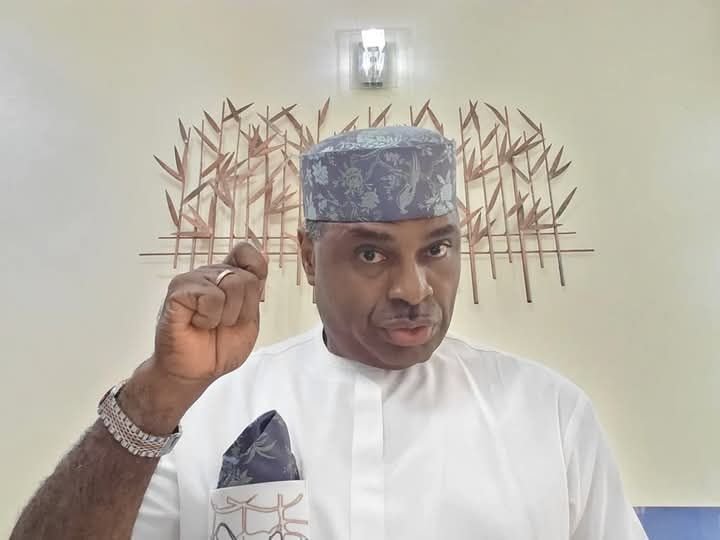
Kenneth Okonkwo, a chieftain of the African Democratic Congress (ADC), has changed his position on former Anambra State Governor Peter Obi’s financial record, saying he was previously “misled” when he defended Obi against claims that his administration left debts and other financial obligations behind.
Okonkwo made the remarks during an appearance on Television Continental’s Sunday Politics programme on Sunday, September 27, 2026.
The development is significant because Okonkwo was one of Obi’s prominent defenders during the 2023 presidential election campaign. He now occupies a different political position and is serving as spokesman for the presidential campaign council of former Vice-President Atiku Abubakar, the ADC’s candidate for the 2027 presidential election.
What Kenneth Okonkwo changed
Okonkwo said that during the 2023 election campaign, he had told Nigerians that Obi left Anambra State without outstanding debts, unpaid salaries, gratuities or pension liabilities.
He said his earlier position was based on the information available to him at the time.
However, following the recent release of financial records by the Anambra State Government, Okonkwo said he could no longer make the same assertions.
“I was misled,” Okonkwo said while explaining why his position had changed.
He said he was willing to change his position when presented with information that contradicted what he previously understood.
Okonkwo specifically referred to claims by the Anambra State Government that eight external financing facilities associated with projects during Obi’s administration remained outstanding, as well as allegations concerning salary arrears involving workers of the state-owned water corporation.
He said this meant he could not repeat the categorical claims he made during the 2023 campaign.
Why the Anambra debt issue matters
The disagreement is not simply about whether Anambra State had financial obligations.
The central question is what those obligations represented, when they were incurred, how much was actually drawn, what was outstanding when Obi left office in March 2014, and how the current outstanding balance should be attributed.
The Anambra State Government says eight external facilities connected with projects during Obi’s tenure had a combined contracted value of about $123.77 million.
According to the state government, $92.35 million remained outstanding as of June 30, 2026. It valued that outstanding balance at approximately N127.37 billion and said the figures were based on Debt Management Office records.
The facilities were linked to development programmes covering areas including health, education, agriculture, malaria control and erosion management.
The state government argues that successive administrations have continued to service the obligations.
But Peter Obi disputes the interpretation
Obi has rejected the way the Anambra Government has characterised the facilities.
The former governor said he did not personally approach financial institutions to borrow money or issue a bond on behalf of Anambra State during his tenure.
He also questioned the use of the $123.77 million figure as evidence that he left the state with that amount as debt.
Obi cited Debt Management Office figures which he said showed that Anambra’s external debt stood at about $18 million when he assumed office in March 2006, approximately $30 million when he left office in March 2014, and about $45.15 million by December 31, 2014.
His argument is therefore that the contracted value of several financing facilities should not automatically be treated as the amount of debt outstanding when he handed over power.
That distinction is important.
A loan facility can have a particular approved or contracted value, while the amount actually drawn and the amount outstanding at a particular date can be different.
What the Anambra Government says
The Anambra State Government maintains that the facilities were genuine borrowing arrangements connected with the Obi administration.
In its response, the government said records from the Debt Management Office showed that the eight facilities had an outstanding balance of $92.35 million as of June 30, 2026.
It also said the relevant loan agreements were entered into during Obi’s administration and that the state remains responsible for servicing them.
The government has additionally raised questions about other financial obligations, including alleged salary arrears involving workers of the former Anambra State Water Corporation and other state institutions.
However, the government’s claims remain part of a wider political and financial dispute, because Obi and his supporters have challenged the interpretation of the records.
The figures that readers should understand
At the centre of the controversy are several different figures:
$123.77 million:
The Anambra State Government describes this as the combined contracted value of eight external facilities associated with Obi’s administration.
$92.35 million:
The state says this was the outstanding balance on those facilities as of June 30, 2026.
N127.37 billion:
This is the naira equivalent of the $92.35 million figure using the exchange rate cited by the Anambra Government for June 30, 2026.
About $30 million:
Obi has cited this as Anambra’s total external debt position when he left office in March 2014, based on DMO figures he referenced.
These figures should not automatically be treated as interchangeable. They refer to different measurements and dates, which is one reason the dispute has continued.
Why Okonkwo’s change of position is politically relevant
Okonkwo’s comments come as Nigeria’s political parties and presidential candidates begin positioning themselves for the 2027 election.
His change in position is particularly notable because of his previous role in Obi’s 2023 presidential campaign.
Okonkwo said his approach to Obi would now be different from the role he played during the last presidential election.
He described his 2023 role as being similar to an “examination in chief” and said that in 2027 it would be more like a “cross-examination.”
The comment reflects a significant political shift, but it does not by itself establish the accuracy of either side’s interpretation of Anambra’s historical financial records.
The underlying documents and the precise treatment of the various financing facilities remain more important than any individual political endorsement or criticism.
What readers should know about the controversy
The current dispute should therefore be understood as a disagreement over the interpretation and timing of Anambra State’s financial obligations, rather than simply a question of whether a single $123.77 million debt was left behind in 2014.
The Anambra Government says eight facilities connected with projects under Obi’s administration remain outstanding and that the state continues to service them.
Obi disputes the characterisation of those facilities and has pointed to DMO figures showing a substantially different total external-debt position at the time he left office.
Independent reporting has also noted that the exact historical debt position requires careful examination of the individual facilities, their dates, drawdowns, repayments and outstanding balances rather than simply comparing the original contracted value with a later balance.
That distinction is particularly important because public debt is normally assessed using specific dates and categories. A facility approved during an administration, the amount actually accessed, the amount outstanding at handover and the debt recorded several years later are not necessarily the same figure.
What happens next
The controversy is likely to remain part of Nigeria’s political debate ahead of the 2027 presidential election.
For readers trying to understand the issue, the key documents to watch are the relevant Debt Management Office records, the individual loan or subsidiary agreements, evidence of drawdowns and repayments, and financial records showing Anambra’s debt position at the March 2014 handover.
Until those records are examined together, claims about the precise amount of debt attributable to Obi’s administration should be treated with appropriate context.
What is established is that the Anambra Government has published records concerning eight external financing facilities and that the state says a combined $92.35 million remained outstanding as of June 30, 2026.
It is also established that Peter Obi disputes the government’s interpretation of those figures, while Kenneth Okonkwo has publicly changed his earlier position after reviewing information released by the state government.
The debate, therefore, is no longer simply about what was said during the 2023 election campaign. It has become a question of how historical public-finance records should be interpreted and what those records show about the financial position Anambra State inherited in 2014.
Weng Global – Stories beyond borders
Sources
- Anambra State Government — official statement and records on the eight external financing facilities and outstanding balance.
- Premium Times — report on the Anambra Government’s release of loan records and Peter Obi’s response.
- Vanguard — report on Kenneth Okonkwo’s September 2026 comments.
- Channels Television — report on Peter Obi’s response to the $123.77 million claim.
- Legit.ng — analysis of the competing debt figures and the limitations of the available records.