Reported by Simon Daniel Yusuph l Journalist at Weng Global
Nigerian businesses are facing a growing strategic challenge as economic uncertainty, technological disruption, geopolitical tensions and changing market conditions increasingly overlap, raising questions about whether companies are adequately prepared to withstand multiple crises while maintaining sustainable growth.
An analysis by Franklin Nnaemeka Ngwu and Chinasa Onwe of the Department of Strategy and Entrepreneurship at Lagos Business School argues that Nigerian firms have demonstrated considerable adaptability in difficult operating conditions but remain exposed to weaknesses in strategic planning, technology adoption, leadership development and corporate governance.
The analysis, published by Punch on October 12, 2026, examines how businesses can move beyond short-term survival strategies towards a more structured approach to resilience in an increasingly unpredictable global economy.
The debate comes as Nigeria continues to navigate economic reforms, inflationary pressures, infrastructure constraints and changing patterns of global trade, while businesses face growing expectations to adopt digital technologies and prepare for new forms of competition.
For companies operating in Nigeria, the central question is no longer simply whether they can survive an economic shock. It is whether they have the leadership, resources, technology and organisational flexibility required to respond effectively when several disruptions occur at once.
Understanding the Polycrisis Facing Nigerian Businesses
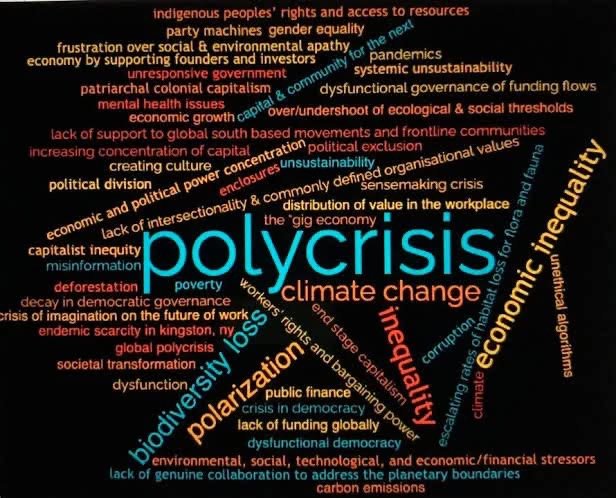
The term polycrisis describes a situation in which multiple crises occur simultaneously and interact, potentially making their combined effects more difficult to manage than individual problems.
For Nigerian businesses, these pressures may include exchange-rate volatility, higher operating costs, inconsistent electricity supply, regulatory uncertainty, changing consumer demand, supply-chain disruptions and rapid technological developments.
A company dealing with higher energy costs, for example, may also experience declining consumer purchasing power. If it depends on imported raw materials, foreign-exchange pressures could further increase production expenses.
At the same time, competitors using more efficient digital systems may reduce costs, respond to customers more quickly or introduce products at lower prices.
These developments can reinforce one another, leaving businesses with less financial flexibility to invest in improvements or absorb unexpected losses.
The challenge extends beyond Nigeria. Companies worldwide are adjusting to geopolitical instability, climate-related risks, technological change and uncertainty over global economic conditions.
However, Nigerian businesses operate within a distinctive environment in which infrastructure limitations, financing constraints and uneven access to technology can make responding to these pressures particularly difficult.
The result is a business landscape in which the ability to adapt has become an important competitive advantage, but adaptability alone may not be sufficient to guarantee long-term stability.
Economic Resilience Does Not Automatically Mean Strategic Readiness
Nigeria’s private sector includes businesses that have developed considerable experience operating through economic uncertainty.
Many entrepreneurs have learned to adjust prices, identify alternative suppliers, change distribution methods and restructure operations when market conditions deteriorate.
Such responses demonstrate practical resilience. However, the Lagos Business School analysis warns against assuming that a company’s ability to survive difficult conditions means it is strategically prepared for future disruptions.
There is an important difference between responding to an immediate problem and building an organisation capable of anticipating and managing future risks.
A business that survives a sudden increase in operating costs by reducing staff, postponing maintenance or cutting investment may preserve cash in the short term. Yet, if those decisions weaken its workforce, production capacity or competitiveness, the company could become more vulnerable over time.
Similarly, an organisation that repeatedly changes prices to reflect rising expenses may remain operational while losing customers who can no longer afford its products.
Strategic resilience requires businesses to understand these trade-offs and prepare responses before a crisis becomes severe.
It also requires companies to review their assumptions regularly rather than rely on plans that were developed under economic conditions that no longer exist.
For Nigerian firms, this means combining the practical flexibility associated with entrepreneurship with more systematic approaches to risk management, investment decisions and organisational development.
Foreign-Exchange Volatility Remains a Major Business Concern
Foreign-exchange uncertainty and wider macroeconomic volatility are among the pressures identified in the analysis.
Businesses that import machinery, equipment, raw materials or finished products can face higher costs when the naira weakens against currencies used for international transactions.
Even companies that source materials locally may experience indirect effects when their suppliers depend on imported inputs.
These pressures can complicate budgeting, pricing, inventory management and long-term investment decisions.
According to figures cited in the Lagos Business School analysis, nearly 45 per cent of Nigerian executives identified foreign-exchange and macroeconomic volatility as their most significant external business threats in the Nigeria Executive Outlook 2025, published by Boston Consulting Group and Lagos Business School.
The figure highlights the importance of economic stability to corporate planning, although the precise implications vary by industry, company size and exposure to imported goods.
An exporter earning foreign currency may have a different risk profile from a manufacturer that relies heavily on imported inputs but sells mainly to Nigerian consumers.
Likewise, businesses with diversified suppliers, strong cash reserves or flexible production arrangements may be better positioned to manage exchange-rate movements than companies with limited alternatives.
Effective foreign-exchange risk management therefore requires more than monitoring currency prices.
Companies must understand where their exposure originates, how changes in exchange rates affect their cost structures and which practical measures can reduce their vulnerability.
Depending on their circumstances, these measures may include diversifying suppliers, reviewing contractual arrangements, improving working-capital management and reducing unnecessary dependence on imported inputs where viable alternatives exist.
However, such adjustments cannot eliminate every risk, particularly when market conditions change rapidly or access to foreign currency becomes more expensive.
Nigeria’s Economic Outlook Presents Both Opportunities and Risks
Nigeria’s wider economic environment provides an important backdrop to the discussion about corporate resilience.
The World Bank’s October 2026 Nigeria Development Update reported that economic growth had remained resilient, supported partly by higher oil prices and improvements in external balances. It also warned that the priority was shifting towards faster, more inclusive growth capable of generating jobs, reducing poverty and improving living standards.
In its current country assessment, the World Bank projected average annual economic growth of 4.4 per cent during 2026–2028, while stressing the importance of sustained reforms, improved infrastructure, stronger productivity and private investment.
These projections offer a potentially supportive backdrop for businesses, but economic growth does not automatically translate into improved conditions for every company.
The effects depend on which sectors expand, whether consumer incomes improve, how much financing is available and whether businesses can convert increased demand into productive investment.
A company may operate in a growing economy while still facing high borrowing costs, unreliable infrastructure or insufficient demand for its products.
Businesses must therefore distinguish between positive national economic indicators and the conditions affecting their individual markets.
For corporate leaders, the practical task is to identify where growth could create opportunities while preparing for risks that may persist even as the broader economy improves.
This requires regular monitoring of economic indicators, realistic financial forecasts and investment decisions that account for more than one possible economic outcome.
Technology Adoption: The Gap Between Investment and Results
Artificial intelligence and digital transformation are increasingly important to the future of business competitiveness.
Companies can use digital systems to improve inventory management, analyse customer behaviour, automate repetitive tasks, strengthen financial controls and communicate more efficiently with customers.
Artificial intelligence may also support faster data analysis and help organisations identify patterns that would be difficult to detect through manual processes alone.
However, purchasing technology does not necessarily produce meaningful improvements in business performance.
The Lagos Business School analysis cites figures suggesting that 83 per cent of Nigerian firms expect to integrate generative artificial intelligence within two years, while 63 per cent remain in the early stages of exploration and pilot projects. It identifies leadership capacity and shortages of skilled personnel as important barriers to implementation.
These figures point to a potential gap between ambition and execution.
A company may introduce an AI tool without redesigning the processes in which it will be used. Employees may lack the training to apply it effectively, while managers may struggle to determine whether the technology is improving productivity or simply adding another layer of cost.
Successful adoption requires businesses to identify specific problems that technology can solve.
For example, a retailer might use digital inventory systems to reduce stock shortages and unnecessary purchases. A manufacturer could introduce predictive maintenance to identify equipment problems before they interrupt production.
A financial services company might automate selected administrative processes while maintaining appropriate human oversight and security controls.
In each case, the value comes from improving the underlying business process rather than merely acquiring new software.
Companies must also consider data protection, cybersecurity, reliability and the possibility that automated systems may produce inaccurate or misleading results.
Deloitte Nigeria’s 2026 cybersecurity outlook highlights evolving risks involving AI-enabled scams, ransomware, identity fraud and the growing need for stronger cybersecurity skills and governance.
Technology can therefore strengthen resilience, but poorly managed digital transformation can introduce additional vulnerabilities.
Why Long-Term Strategic Planning Needs to Change
Traditional business planning often relies on projections about revenue, demand, operating costs and market conditions over several years.
Such plans can provide direction and help organisations allocate resources. Their weakness emerges when leaders treat assumptions as fixed despite substantial changes in the external environment.
The polycrisis concept challenges companies to reconsider whether a single long-term forecast is sufficient for making strategic decisions.
Rather than abandoning long-term planning, businesses may need to combine clear objectives with regular reviews and alternative scenarios.
A company planning to expand production, for example, could examine how its financial position would change under different assumptions about exchange rates, energy costs, consumer demand and access to credit.
It could also establish indicators that would trigger a review of the expansion plan if conditions deteriorate.
This approach allows leaders to prepare responses before they are forced to make urgent decisions.
Scenario planning does not eliminate uncertainty or guarantee that forecasts will be correct. Its purpose is to help management understand potential risks, recognise warning signs and avoid relying on a single expected outcome.
For Nigerian companies, the approach may be particularly valuable where external conditions can change faster than investment decisions can be reversed.
The central lesson is that strategic plans should provide direction without preventing organisations from adapting when the evidence changes.
Global Adaptability and the Importance of Supply Chains
Global adaptability is another important test of corporate resilience.
Businesses increasingly depend on international networks for raw materials, technology, financing, logistics and access to customers.
Disruptions in one part of the global economy can affect companies far removed from the original event.
Geopolitical tensions, shipping delays, trade restrictions and fluctuations in commodity prices can change the availability or cost of essential supplies.
For Nigerian manufacturers, retailers and service providers, dependence on a limited number of suppliers can increase exposure to these disruptions.
A company that relies on one overseas source for a critical input may struggle to maintain production if deliveries are delayed or the cost becomes prohibitive.
Supplier diversification can reduce some of these risks, although alternative suppliers may be more expensive or unable to meet the same quality requirements.
Businesses can also examine whether strategic inventory reserves, improved demand forecasting or stronger relationships with local suppliers would make their operations more dependable.
Local sourcing should not automatically be treated as the best solution in every case. Domestic alternatives must be evaluated for quality, reliability, price and production capacity.
The objective is to create supply chains that balance cost efficiency with the ability to withstand disruption.
For Nigerian businesses, participation in broader African markets could also create opportunities to diversify customers and suppliers.
The African Continental Free Trade Area offers a framework for expanding trade across the continent, although businesses must still navigate practical challenges involving infrastructure, financing, customs procedures and differing regulatory requirements.
Companies that understand these markets and develop the capacity to serve them may be better positioned to reduce excessive dependence on a narrow customer base.
Talent and Leadership Could Determine the Outcome
Technology and financial resources are important to business performance, but they cannot replace effective leadership and skilled employees.
The Lagos Business School analysis identifies talent shortages and leadership capability as significant obstacles to translating technological ambition into measurable results.
This challenge extends beyond the ability to recruit workers with technical qualifications.
Businesses also need managers who can evaluate risks, communicate changes, make informed decisions and help employees adjust to new working methods.
Digital transformation may require staff to learn unfamiliar systems, while changes in supply chains or operating costs can force teams to reconsider established routines.
Without adequate training and communication, employees may resist new processes or use technology in ways that fail to achieve the intended benefits.
Companies therefore need to treat workforce development as part of their resilience strategy rather than an expense that can be postponed whenever financial pressure increases.
Training programmes, internal mentoring, leadership development and partnerships with educational institutions may help businesses strengthen their capabilities.
Organisations should also consider succession planning and the risks associated with relying too heavily on a small number of key individuals.
When essential knowledge remains concentrated among a few employees, illness, resignation or retirement can disrupt operations.
Documented procedures, shared expertise and clear responsibilities can help preserve institutional knowledge and improve continuity.
For Nigerian firms competing in a changing economy, the capacity to develop and retain skilled people may prove as important as the ability to acquire new technology.
Corporate Governance and Business Trust
The fifth strategic consideration identified in the analysis is ethical impact, including the relationship between corporate governance and public trust.
Businesses depend on trust from customers, employees, investors, suppliers, regulators and the communities in which they operate.
Weak governance can expose companies to financial losses, legal disputes, regulatory penalties and reputational damage.
A business may achieve short-term results while neglecting internal controls, transparency or responsible treatment of stakeholders. Such practices can create risks that become more costly when the company encounters financial pressure or public scrutiny.
The analysis cites the 2025 Edelman Trust Barometer as evidence of widespread scepticism about business leadership, reporting that 68 per cent of respondents believed business leaders misled the public.
The figure reflects a broader concern about trust, but it should not be interpreted as a direct measurement of every Nigerian company’s reputation.
For Nigerian businesses, the practical implications are clear: governance must be reflected in daily decisions rather than limited to policy documents or public statements.
This includes maintaining accurate financial records, communicating honestly with stakeholders, managing conflicts of interest and establishing channels through which misconduct can be reported.
Companies also need to distinguish between public commitments and actual performance.
A business that promises responsible conduct but fails to enforce its standards may weaken confidence among customers, employees and investors.
By contrast, credible governance can help organisations build relationships that remain valuable during difficult periods.
Trust does not remove economic or technological risks, but it can strengthen the relationships businesses depend on when responding to disruption.
Small and Medium-Sized Enterprises Face Distinct Challenges
The debate about strategic resilience is particularly important for Nigeria’s small and medium-sized enterprises, which often operate with fewer financial and organisational resources than large corporations.
Smaller businesses may have limited access to affordable credit, specialist advisers, advanced technology and formal risk-management systems.
A sudden increase in rent, electricity costs or the price of imported materials can therefore place substantial pressure on their cash flow.
Some small businesses also depend heavily on their owners for financial decisions, customer relationships and day-to-day operations. This can make continuity difficult when the owner becomes unavailable or the business experiences rapid growth.
However, smaller organisations may also benefit from shorter decision-making processes and closer relationships with customers.
Their size can allow them to change products, adjust service delivery or identify emerging customer needs more quickly than larger organisations with complex approval structures.
The challenge is to preserve this flexibility while developing enough structure to support sustainable growth.
Research published in Business Strategy and the Environment in 2026 examined strategic resilience among 285 Nigerian small and medium-sized enterprises. The study found that economic, legal and technological turbulence significantly affected resilience, with legal turbulence emerging as the strongest constraint in the study. It also found that capabilities involving sensing, responding, learning and organisational reconfiguration could help moderate the effects of external turbulence.
The findings reinforce the importance of internal capabilities, although the study’s results should not be assumed to apply identically to every business or sector.
For smaller firms, practical improvements could include maintaining reliable financial records, tracking cash flow, documenting essential processes, identifying alternative suppliers and reviewing regulatory obligations.
Such measures may not prevent every disruption, but they can improve a company’s ability to identify problems early and respond in a more organised way.
A Practical Framework for Building Strategic Resilience
The five areas identified in the Lagos Business School analysis—strategic soundness, technology mastery, global adaptability, talent agility and ethical impact—offer a useful framework for examining corporate readiness.
Businesses can apply these areas by asking specific questions about their operations.
Strategic soundness: Does the company regularly review its assumptions, assess major risks and prepare for alternative economic scenarios?
Technology mastery: Are digital investments solving measurable business problems, and do employees have the skills to use the systems effectively?
Global adaptability: Can the company respond if a major supplier becomes unavailable, shipping costs rise or a critical input becomes more expensive?
Talent agility: Does the organisation have the leadership, training and succession arrangements required to manage change?
Ethical impact: Are governance standards reflected in everyday decisions, financial reporting and relationships with stakeholders?
These questions can help directors and managers identify weaknesses before they become serious operational problems.
The answers should also be reviewed regularly. A business that appears well prepared today may become more exposed if it expands rapidly, changes suppliers, adopts unfamiliar technology or enters a new market.
Resilience is therefore not a permanent status that companies achieve once and retain indefinitely. It is an ongoing process of assessment, preparation, learning and adjustment.
What Happens Next?
The analysis by Ngwu and Onwe places responsibility on business leaders to reconsider how they prepare for uncertainty and measure organisational readiness.
For Nigerian companies, the next step is to translate the discussion into practical decisions involving investment, workforce development, risk management, technology and governance.
Business owners and corporate boards can begin by identifying their most significant vulnerabilities, determining which disruptions would have the greatest effect on operations and establishing clear responsibilities for managing those risks.
They can then prioritise improvements according to their financial resources and the potential consequences of inaction.
Government policy and the wider business environment will also influence the outcome. More predictable regulation, reliable infrastructure, improved access to financing and stronger skills development could help companies invest in resilience.
However, businesses cannot rely entirely on external improvements. Their ability to manage internal weaknesses remains an important part of long-term competitiveness.
The evidence suggests that Nigerian firms should neither be described as universally vulnerable nor assumed to be adequately prepared simply because they have survived repeated economic difficulties.
Their resilience varies according to industry, ownership, financial capacity, management quality and exposure to external risks.
The decisive question is whether companies can turn the experience gained from past disruptions into systems that help them anticipate and manage future challenges.
In the polycrisis era, survival remains important, but it is not the final measure of business strength. Sustainable resilience requires Nigerian firms to combine entrepreneurial adaptability with disciplined strategy, effective technology adoption, skilled leadership and credible governance.
For Nigerian businesses, the challenge is to move from repeatedly enduring crises to building organisations capable of preparing for them, adapting to them and emerging stronger without sacrificing long-term stability.
Weng Global – stories beyond borders
Sources
- Punch — analysis by Franklin Nnaemeka Ngwu and Chinasa Onwe, Department of Strategy and Entrepreneurship, Lagos Business School.
- World Bank — October 2026 Nigeria Development Update.
- World Bank — Nigeria country economic assessment.
- Deloitte Nigeria — Nigeria Cybersecurity Outlook 2026.
- Business Strategy and the Environment — research on dynamic capabilities and strategic resilience among Nigerian small and medium-sized enterprises.
- Edelman — 2025 Edelman Trust Barometer.