Reported by Weng Patrick Atokor l Journalist at Weng Global
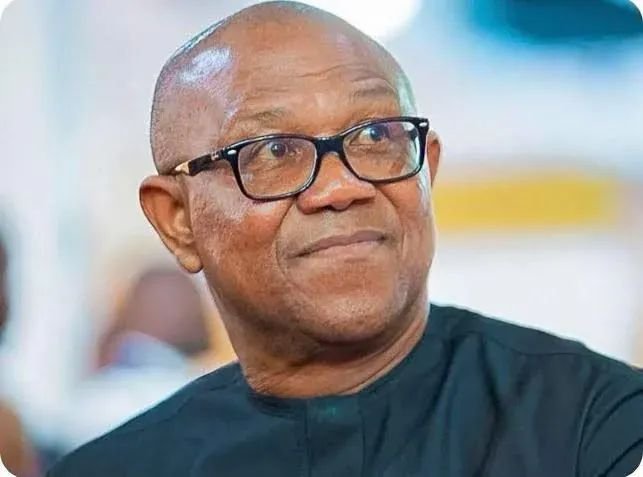
Peter Obi, presidential candidate of the Nigeria Democratic Congress (NDC), has said anyone found rigging an election under his administration would face imprisonment, regardless of the number of votes involved.
Obi made the statement during an interview with ARISE NEWS on Thursday, September 24, 2026, as he discussed electoral integrity, the treatment of opposition parties and his proposed approach to democratic governance ahead of Nigeria’s 2027 presidential election.
“I’ve said it, and I’ll say it again: if I am the serving president of this country, whoever rig elections will be in jail. Even for one vote, you will be in jail,” Obi said.
The former Anambra State governor also said political parties, including those in opposition, would not be harassed under an administration led by him.
Obi links electoral integrity to opposition freedom
Obi said protecting Nigeria’s electoral process should extend beyond the voting exercise itself to ensuring that political parties are able to operate without intimidation.
He said his administration would work with opposition parties on matters of national importance and involve them in decisions affecting the country.
“No political party will be harassed; we will support them,” Obi said during the interview.
He added that opposition representatives could be consulted on major national decisions even when the president was outside the country.
According to Obi, the approach would be intended to promote what he described as a stable, united and secure Nigeria.
His comments come as political parties and their candidates prepare for the 2027 general elections, with electoral integrity expected to remain a major issue in the political debate.
What Obi’s election-rigging pledge means
Obi’s statement is a campaign commitment about how he says his administration would approach electoral malpractice.
However, the imprisonment of a person accused of election rigging would still require the relevant legal and judicial processes.
Nigeria’s Electoral Act, 2026 establishes offences and penalties relating to election conduct. The law provides specific punishments for various electoral offences, including fines and imprisonment upon conviction.
This means a presidential administration cannot simply determine that an individual is guilty and impose a prison sentence without due process. Allegations would have to be investigated and prosecuted under the applicable law, with guilt determined through the judicial process.
The distinction is important because Obi’s declaration concerns his proposed enforcement approach, while criminal liability would ultimately depend on evidence, applicable legislation and decisions by competent authorities and courts.
NDC candidate focuses on free political competition
Obi also criticised restrictions he said had affected his campaign activities in some states.
He argued that candidates should be allowed to campaign regardless of the political affiliation of those controlling the areas where campaign activities take place.
The former governor cited his experience in Anambra State, recalling instances in which political opponents were permitted to campaign while he was governor.
He recalled allowing former Lagos State Governor Babatunde Fashola to campaign in Anambra and said he also accompanied former President Olusegun Obasanjo when Obasanjo campaigned for another candidate in the state.
Obi said those experiences reflected his view of political competition, arguing that voters should be free to choose between competing candidates.
His comments place electoral competition and the treatment of political opponents alongside election-rigging enforcement as central parts of his campaign message.
Obi is seeking another presidential mandate
Obi is seeking the Nigerian presidency in the 2027 election after securing the NDC’s presidential nomination earlier this year.
The former Anambra governor previously contested the 2023 presidential election under the Labour Party before subsequently moving into opposition political realignments.
In May 2026, Obi and former Kano State Governor Rabiu Kwankwaso formally joined the NDC after leaving the African Democratic Congress.
The NDC later confirmed Obi as its presidential candidate for the 2027 election.
The political realignment has placed Obi among the opposition figures preparing for the next presidential contest against President Bola Tinubu and other candidates.
Electoral offences under Nigeria’s 2026 law
Nigeria’s Electoral Act, 2026 provides the legal framework governing federal, state and area council elections.
The legislation includes provisions dealing with offences committed on election day and establishes penalties for violations.
For example, the Act prohibits several forms of conduct around polling units, including canvassing for votes, intimidating voters and destroying election materials. Some violations carry fines or imprisonment upon conviction.
The law therefore provides a statutory basis for dealing with electoral offences, although the precise offence and applicable punishment would depend on the conduct involved and the relevant provisions of the Act.
Obi’s proposal to jail people involved in election rigging would consequently have to operate within that legal framework if his administration were to take office.
The wider issue of election credibility
Election credibility has remained a significant issue in Nigeria’s political system, particularly in debates surrounding vote manipulation, electoral violence, result management and the independence of institutions responsible for elections.
Obi has repeatedly placed electoral integrity among the issues he wants to address ahead of the 2027 election.
His latest statement goes further by explicitly connecting electoral malpractice with criminal enforcement under a government led by him.
The declaration also raises questions about how an administration would ensure that electoral laws were enforced consistently regardless of the political affiliation of an accused person.
That would involve institutions beyond the presidency, including electoral authorities, law-enforcement agencies, prosecutors and the courts.
The independence of those institutions would therefore remain relevant to the practical implementation of any presidential pledge concerning election offences.
Obi also addresses his accessibility as president
During the ARISE NEWS interview, Obi said he would prioritise remaining physically present in Nigeria if elected.
He criticised what he described as prolonged presidential absence from the country and argued that the president’s presence was particularly important during periods of crisis.
“Nobody will look for me and say, ‘Where is Peter?’” Obi said, according to ARISE NEWS.
He said his approach to governance would involve greater accessibility and participation in national affairs.
The remarks form part of a broader campaign message centred on institutional accountability, political inclusion and the functioning of government.
Obi discusses his record in Anambra
The NDC candidate also used the interview to respond to claims concerning the financial position of Anambra State when he left office as governor in 2014.
Obi rejected claims that he left the state with $123 million in debt and said he did not approach financial institutions to borrow money or issue bonds on behalf of the state during his tenure.
He also disputed how certain World Bank and International Fund for Agricultural Development facilities had been characterised in discussions about the state’s debt.
According to ARISE NEWS, Obi said the facilities were development funds obtained by the Federal Government and subsequently made available to states. He also referred to financial documents and called for the figures to be independently verified through the relevant institutions.
The claims concerning Anambra’s finances remain separate from Obi’s election-rigging pledge and would require examination of official financial records to establish the relevant figures and obligations.
What happens next
Obi’s comments come as Nigeria’s political parties prepare for the 2027 general elections.
The focus on election rigging is likely to remain part of the political debate as parties discuss how votes will be cast, transmitted, collated and protected.
For Obi, the latest pledge establishes the position he says his administration would take toward electoral malpractice: anyone found responsible would face the legal consequences, regardless of whether the manipulation affected one vote or a larger number.
The implementation of such a pledge, however, would depend on investigations, prosecution, evidence, applicable electoral law and judicial decisions rather than a presidential declaration alone.
The broader question for the 2027 electoral process will be how effectively Nigeria’s institutions can enforce electoral rules and protect the rights of voters and competing political parties.
For voters following the election, Obi’s remarks therefore represent a campaign commitment that can be assessed alongside the positions of other candidates, existing electoral laws and the institutional mechanisms available for investigating and prosecuting electoral offences.
Weng Global – Stories beyond borders
Sources
- ARISE NEWS — report on Peter Obi’s September 24, 2026 interview and his comments on election rigging, opposition parties and governance.
- National Assembly of Nigeria — Electoral Act, 2026, including provisions on electoral offences and penalties.
- Channels Television — report confirming Obi’s emergence as the NDC presidential candidate for the 2027 election.
- Channels Television — report on Obi and Kwankwaso joining the NDC in May 2026.