Reported by Weng Patrick Atokor l Journalist at Weng Global
Nigeria’s growing political debate over the 2027 general elections has taken a contentious turn following widespread criticism of the slogan ‘rig and die’, with concerns mounting that the expression could encourage violence, threaten innocent citizens and undermine peaceful electoral participation.
The slogan, which has gained popularity among some political supporters and public figures as a warning against electoral manipulation, has divided opinion across the country. While its supporters describe it as a declaration of resistance against election rigging, critics argue that linking electoral malpractice to death could encourage intimidation, mob attacks and extrajudicial punishment.
The controversy has attracted responses from the Independent National Electoral Commission (INEC), former Lagos State Governor Babatunde Fashola, Labour Party-turned-Nigeria Democratic Congress political figure Peter Obi, and Nigerian entertainer Innocent Idibia, popularly known as 2Baba.
At the centre of the disagreement is a critical question about Nigeria’s electoral future: how can citizens defend the integrity of their votes without creating an atmosphere in which political disagreements and suspicions of malpractice become justification for violence?
INEC Raises Alarm Over Threats to Voters and Electoral Officials
The Independent National Electoral Commission has warned that the increasing use of the ‘rig and die’ slogan could endanger the lives of electoral officials, voters, political party agents and election observers during the 2027 general elections.
INEC National Commissioner and Chairman of its Information and Voter Education Committee, Mohammed Kudu Haruna, issued the warning on November 23, 2026, during a forum for journalists, media organisations and other stakeholders in Abuja.
The forum focused on ethical and professional standards in election reporting ahead of the 2027 general elections.
Haruna, represented by the commission’s Deputy Director of Information and Publicity, Wilfred Ifogah, said slogans connecting electoral offences with death could create an atmosphere of hostility, particularly at polling and collation centres.
He explained that the people most exposed to the consequences of such rhetoric might not be politicians but ordinary Nigerians working in the electoral process.
These include presiding officers, assistant presiding officers, collation officers, temporary election personnel, voters, party agents and observers.
The commission warned that a tense crowd could mistake delayed results, technical difficulties or unverified information for evidence of electoral manipulation, potentially leading to attacks against innocent people.
According to INEC, electoral malpractice must be addressed through established legal and institutional procedures rather than threats or violence.
The commission urged political leaders and their supporters to abandon inflammatory language and called on journalists to report the controversy responsibly without unnecessarily amplifying threatening messages.
Fashola Rejects Death as Punishment for Electoral Rigging
Former Lagos State Governor Babatunde Fashola has also criticised the slogan, arguing that electoral manipulation does not justify taking someone’s life.
Speaking during an interview with ARISE News on Friday, November 27, Fashola maintained that individuals accused of rigging elections should face prosecution and receive punishment through the judicial system.
He argued that Nigeria’s legal framework provides procedures for investigating and prosecuting electoral offences, stressing that accusations should not become grounds for extrajudicial punishment.
Fashola said serious electoral offences could attract substantial prison sentences, adding that offenders should not be able to escape meaningful punishment simply by paying fines.
His position reflects concerns that allowing political supporters to determine who deserves punishment could weaken the rule of law and create opportunities for politically motivated violence.
The former governor’s argument is that protecting elections requires effective law enforcement, credible investigations and appropriate judicial sanctions rather than threats of death.
2Baba Defends the Slogan but Warns Against Innocent Victims
Nigerian music star 2Baba has offered a different perspective, defending the expression as a reflection of public frustration with electoral manipulation and the failure to hold offenders accountable.
Speaking on Nigeria Info 99.3 FM’s WhatsUpLagos, the singer argued that Nigerians were increasingly unwilling to accept electoral fraud without serious consequences.
He maintained that people involved in manipulating election results should face sufficiently severe punishment to discourage future violations.
However, 2Baba also acknowledged the danger of innocent people becoming victims if accusations of rigging were accepted without evidence.
His position highlights the distinction between demanding accountability for electoral offences and encouraging violence against individuals suspected of committing them.
The singer’s intervention has added an influential public voice to the debate, particularly given the reach of entertainment personalities in shaping political conversations among young Nigerians.
Peter Obi Says the Slogan Is About Preventing Electoral Manipulation
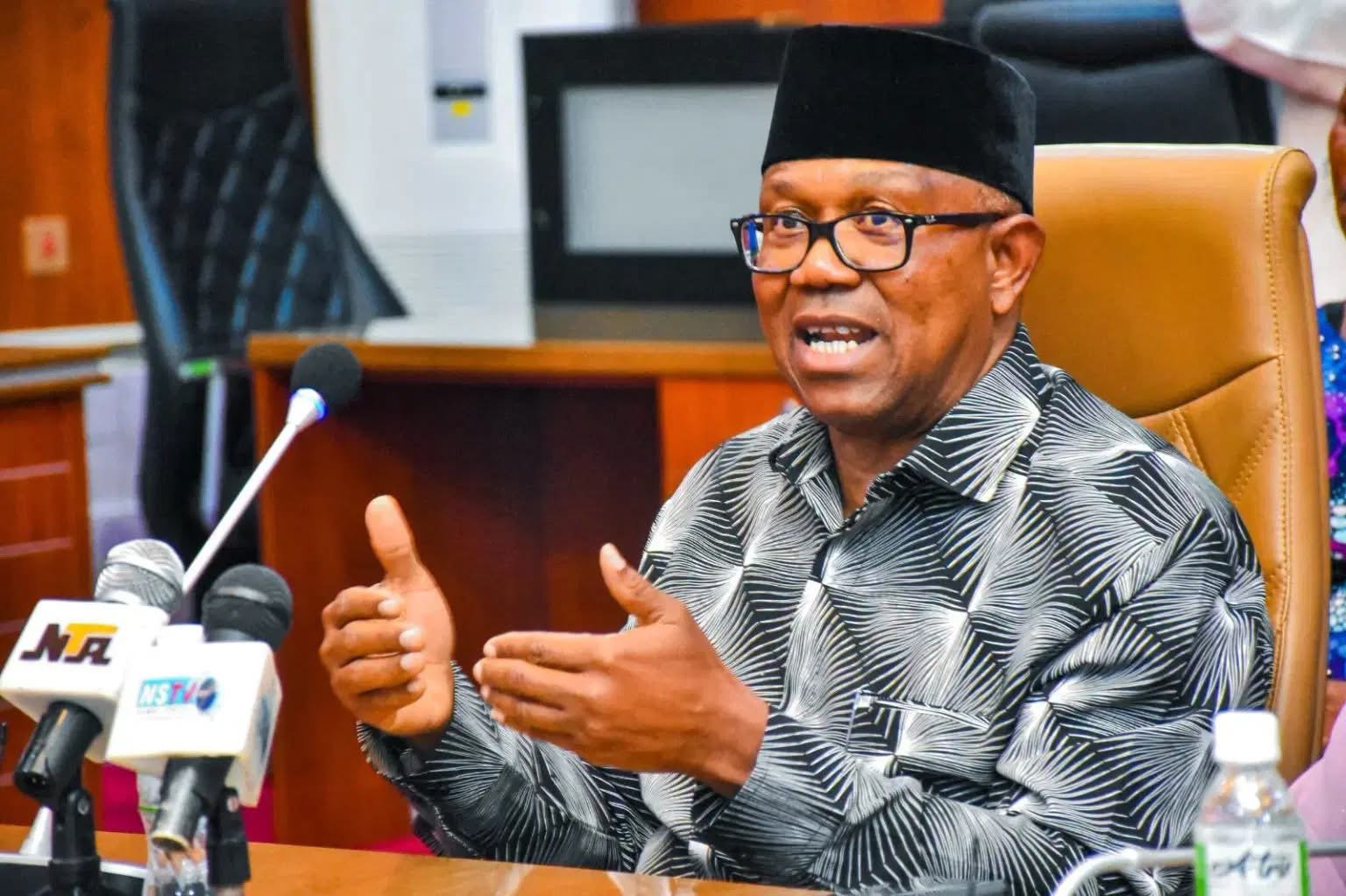
The presidential candidate of the Nigeria Democratic Congress (NDC), Peter Obi, has also defended the expression, describing it as a warning against electoral malpractice rather than an attempt to threaten political opponents or discourage campaigns.
Obi addressed the controversy during an interview with Channels Television on November 24, following a town hall meeting in Jalingo, Taraba State.
He argued that supporters were expressing their determination to prevent election manipulation and were not suggesting that political candidates should be attacked for participating in campaigns.
Obi also appealed to security agencies and government authorities to protect Nigerians participating in political activities.
His comments came amid concerns about the safety of opposition political gatherings ahead of the 2027 elections.
However, his explanation has not ended the disagreement over the language used by supporters of the movement.
APC Questions Who Would Decide When an Election Has Been Rigged
The All Progressives Congress (APC) has challenged the justification offered by Obi and other supporters of the slogan.
The party’s National Publicity Secretary, Felix Morka, questioned who would determine whether electoral rigging had occurred and what authority political supporters would have to impose punishment on anyone accused of manipulating an election.
Speaking on News Central, Morka argued that Nigerian law does not prescribe the death penalty for electoral malpractice.
His response raises an important issue concerning the authority of political supporters and citizens in determining electoral offences.
Under a constitutional democracy, allegations of criminal conduct must be investigated by the appropriate authorities and determined through established judicial procedures.
Allowing individuals or political groups to independently decide who has committed an offence and what punishment should follow could create serious risks for public safety and the administration of justice.
Ovie Omo-Agege’s Comments Helped Popularise the Expression
The controversy surrounding the slogan intensified after former Deputy Senate President Ovie Omo-Agege used the expression at a political gathering in October 2026.
Omo-Agege, who is seeking election to represent Delta Central Senatorial District under the NDC, warned that anyone who manipulated the 2027 general elections risked being killed.
He subsequently defended his choice of words during an appearance on Channels Television’s Politics Today, maintaining that his intention was to discourage electoral manipulation.
The expression was subsequently repeated by political supporters, protesters and other public figures, becoming part of the wider political conversation ahead of the elections.
Its growing popularity has also demonstrated how statements made by political figures can develop into wider public campaigns, particularly when amplified through social media and political gatherings.
However, the language has raised concerns about whether threats intended to discourage electoral fraud could instead contribute to an increasingly hostile political environment.
Law Firm Warns of Possible Legal Consequences
Legal concerns have also emerged over the use of the expression.
Abuja-based law firm Law Corridor has warned political candidates and their supporters that promoting the slogan could expose them to prosecution under existing electoral laws.
The firm’s Managing Partner, Henry Kelechukwu, raised the concerns during the inauguration of the General Elections Law Situation Room on November 26.
He argued that the Electoral Act 2026 contains provisions addressing electoral offences, including violence, and warned against legitimising self-help as a response to suspected malpractice.
According to Kelechukwu, allowing individuals to threaten or punish suspected offenders outside established legal procedures would undermine the supremacy of the rule of law.
The warning reinforces the position that preventing electoral manipulation and maintaining public order must operate within the same legal framework.
However, whether particular statements or actions constitute prosecutable offences would depend on their specific circumstances and the applicable provisions of Nigerian law.
Why the Controversy Matters for Nigeria’s 2027 Elections
The disagreement over the ‘rig and die’ slogan comes at a sensitive period in Nigeria’s political development, as political parties, candidates and supporters intensify preparations for the 2027 general elections.
The integrity of elections remains a fundamental issue for Nigeria’s democracy. Citizens have a legitimate interest in ensuring that votes are counted accurately, results are transparently transmitted and electoral officials perform their responsibilities without political interference.
Nevertheless, the methods used to defend electoral integrity are equally important.
Threatening violence against suspected offenders could create an environment in which ordinary electoral workers become targets of public anger.
Presiding officers, collation officials and other temporary election personnel perform essential administrative responsibilities. They may have little or no authority over broader political decisions, yet they could face the consequences of tensions arising from disputed results.
There is also the danger of misinformation.
A delayed announcement, network failure, technical problem or disagreement over figures could be interpreted as evidence of manipulation before the facts are established.
If political supporters are encouraged to treat suspicions as proof of electoral fraud, the consequences could extend beyond the individuals directly involved in political competition.
Nigeria’s experience with election-related disputes makes it important for political leaders to communicate responsibly and for security agencies to respond promptly to credible threats.
The country needs an electoral environment in which citizens can challenge irregularities without fear of intimidation, violence or retaliation.
Legal Accountability Remains Central to Electoral Credibility
INEC’s position places particular emphasis on lawful mechanisms for addressing electoral malpractice.
These include monitoring voting activities, documenting irregularities, reporting suspected offences to the commission and relevant security agencies, and seeking judicial intervention where necessary.
The commission has also highlighted the importance of transparent result management through its Result Viewing Portal (IReV).
Such mechanisms are important because electoral credibility depends not only on the conduct of voting but also on the ability of citizens and political stakeholders to verify results and challenge irregularities through recognised procedures.
The Nigerian Constitution also guarantees the right to life under Section 33, reinforcing the principle that accusations of electoral malpractice cannot justify taking someone’s life.
Ultimately, the responsibility for prosecuting electoral offences belongs to the appropriate legal institutions, not political supporters or self-appointed groups.
What Happens Next?
With the 2027 general elections approaching, attention is likely to remain on how political parties, electoral authorities and security agencies manage rising political tensions.
INEC has called on political leaders to discourage inflammatory rhetoric and ensure that election-related disagreements do not expose ordinary Nigerians to danger.
Political parties also face the responsibility of communicating their positions without encouraging threats, intimidation or violence.
For journalists and media organisations, the controversy presents an additional challenge. Reporting political slogans without examining their context could unintentionally amplify threatening messages.
The commission has therefore urged journalists to verify information, distinguish allegations from established facts and prioritise public safety in election reporting.
Nigeria’s democratic institutions will ultimately be judged by their ability to prevent electoral manipulation, investigate credible complaints and ensure that offenders face lawful consequences.
The demand for credible elections is legitimate, but protecting the ballot must not become a justification for endangering lives.
As the debate continues, the central challenge for Nigeria is to ensure that the determination to protect votes strengthens democracy rather than creates another source of electoral violence.
Weng Global – Stories beyond borders
Sources
- Punch – Furore over ‘rig and die’ slogan
- The Guardian Nigeria – INEC warns Nigerians against ‘rig and die’ slogan
- The Guardian Nigeria – Obi clarifies ‘rig and die’ slogan ahead of 2027 elections
- TheCable – INEC warns politicians against ‘rig and die’ rhetoric ahead of 2027 poll