Reported by Simon Daniel Yusuph l Journalist at Weng Global
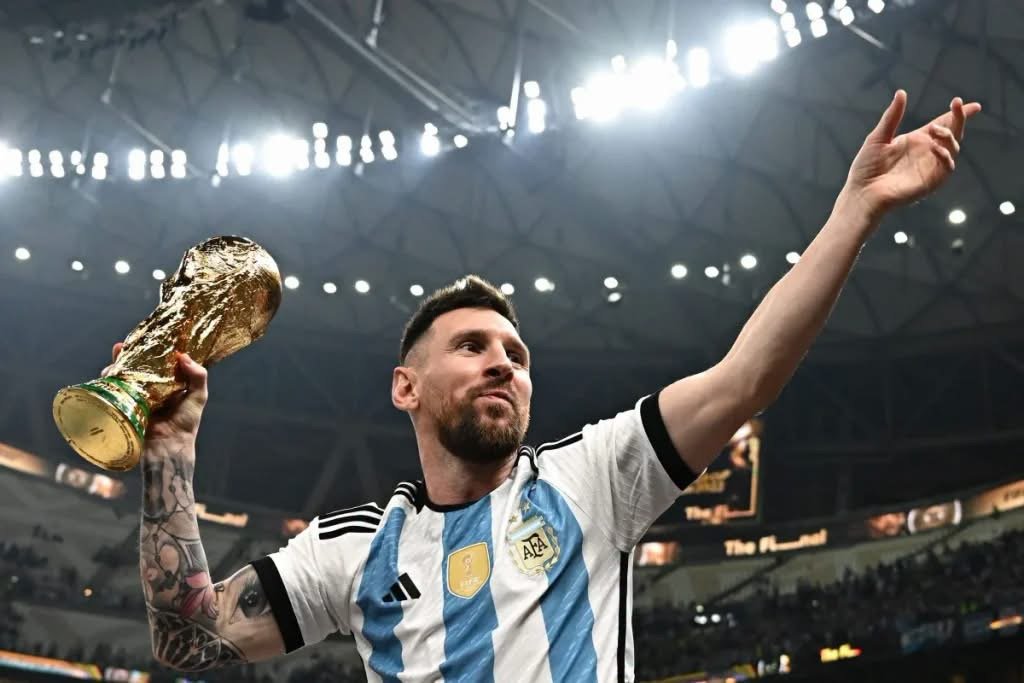
Lionel Messi is set to make his final appearance for Argentina on Tuesday, October 6, when the world champions face Benin in a farewell friendly at the Estadio Monumental in Buenos Aires, bringing the curtain down on a 21-year international career that transformed the country’s relationship with its greatest modern football star.
The 39-year-old forward announced his retirement from international football in August following Argentina’s defeat to Spain in the 2026 FIFA World Cup final. The Argentine Football Association (AFA) subsequently confirmed that Messi would return for one final match on home soil, giving supporters the opportunity to celebrate his career in front of a home crowd.
The match against Benin is scheduled for the Monumental, where thousands of Argentine supporters are expected to gather for an occasion designed as both a football fixture and a national farewell. FIFA confirmed ahead of the match that it would be Messi’s final game for Argentina.
A Final Chapter for Argentina’s Greatest Star
Messi’s international career began in 2005 when he made his Argentina debut as an 18-year-old against Hungary.
More than two decades later, he leaves the national team as Argentina’s record appearance-maker and leading goalscorer.
He has made 207 appearances for the national side and scored 125 goals, figures that place him at the top of Argentina’s historical records. He also leaves behind an international trophy collection that includes the 2021 Copa América, the 2022 FIFA World Cup and the 2024 Copa América.
His final competitive campaign with Argentina ended at the 2026 World Cup, where the team reached the final before losing to Spain.
Although the defeat denied Messi another World Cup triumph, his international legacy had already been established.
The player who once faced intense criticism from sections of Argentina’s supporters eventually became the central figure in one of the most successful periods in the country’s football history.
From Criticism to National Icon
Messi’s relationship with Argentina was not always as celebratory as it is today.
When he first emerged internationally, expectations were enormous. His extraordinary performances for Barcelona created an assumption that he would reproduce the same level of dominance for Argentina.
For years, however, international success remained elusive.
Argentina reached the 2014 World Cup final but lost to Germany. The team then suffered consecutive defeats in the 2015 and 2016 Copa América finals.
The 2016 defeat was particularly painful for Messi, who announced his temporary retirement from international football after missing a penalty during the shootout against Chile.
That decision did not last.
He returned to the national team and eventually became the leader of an Argentina side that broke through its long wait for major international silverware.
The 2021 Copa América victory in Brazil changed the tone of Messi’s relationship with Argentine supporters. It was his first major senior international trophy with the country.
The 2022 World Cup in Qatar transformed that relationship permanently.
World Cup Triumph Changed Messi’s Legacy
Argentina’s victory at the 2022 World Cup gave Messi the major international title that had remained missing from his career.
He played a central role throughout the tournament, scoring seven goals and providing three assists as Argentina defeated France on penalties in a dramatic final.
The victory also ended years of debate over whether Messi could be considered among Argentina’s greatest players without a World Cup title.
The triumph placed him alongside previous Argentine legends whose reputations had been defined by international success.
Four years later, Messi again helped Argentina reach the World Cup final in 2026, although Spain ultimately won the tournament.
FIFA’s retrospective on his career described the 2026 World Cup as the final stage of more than two decades with the national team.
The Final Match Against Benin
Tuesday’s meeting with Benin is not a competitive fixture but carries enormous symbolic importance.
The AFA arranged the match specifically as Messi’s farewell appearance in Argentina.
AFA president Claudio Tapia previously announced that Messi had been invited to receive what the federation described as the farewell he deserved in his homeland. The association also invited members of Argentina’s 2022 World Cup-winning squad and their families to take part in the occasion.
The choice of Benin gives the fixture an unusual dimension.
For Benin, the match represents an opportunity to share the field with one of football’s most celebrated players during a historic moment for Argentine football.
For Argentina, however, the result is secondary to the farewell.
The Monumental is expected to provide the setting for tributes to Messi and a celebration of his contribution to the national team.
The Argentine Football Association said the match would be the final fixture of the current FIFA international window for Argentina and would be marked by Messi’s farewell before the home supporters.
Messi’s Numbers Tell Part of the Story
Messi’s statistics with Argentina underline the scale of his contribution.
He enters his farewell with:
- 207 appearances for Argentina
- 125 international goals
- Two Copa América titles
- One FIFA World Cup title
- One World Cup runner-up finish in 2014
- More than two decades representing the national team
He is Argentina’s most-capped player and its all-time leading scorer.
His international career also includes numerous individual records and tournament achievements.
But the numbers only explain part of his importance.
Messi became the player through whom several generations of Argentine supporters experienced the national team.
His career stretched from an era dominated by Diego Maradona’s legacy to a period in which Messi himself became the defining figure of Argentine football.
A Difficult Beginning, an Emotional Ending
Messi’s international journey was shaped by contrasts.
He was celebrated globally from a young age because of his extraordinary club career, particularly at Barcelona, but his early years with Argentina were accompanied by pressure to prove that his club performances could be reproduced at international level.
The criticism intensified after Argentina repeatedly fell short in major tournaments.
His decision to briefly retire in 2016 illustrated how deeply the pressure affected him.
Yet the story eventually changed.
The Copa América triumph in 2021 gave Messi his first major senior international trophy.
The following year, the World Cup victory in Qatar elevated him to a different status in Argentina.
By the time of the 2026 World Cup, Messi was no longer simply expected to deliver a trophy.
He was already the country’s established football icon.
A New Era for Argentina
Messi’s departure creates a significant transition for Argentina.
The national team must now develop an identity without the player who has been its attacking focal point and captain for much of the modern era.
Argentina coach Lionel Scaloni and the country’s football authorities have several younger players capable of assuming greater responsibility.
The question of who will eventually wear Argentina’s famous No. 10 shirt is already attracting attention.
Young players including Nico Paz and Franco Mastantuono have been discussed as potential successors to Messi in the long term, although no definitive decision had been announced before the farewell. Argentine media reported that Scaloni intended to address the issue after Messi’s send-off.
Replacing Messi’s influence, however, will not be a matter of simply giving another player the No. 10 shirt.
Argentina’s next generation will have to establish its own leadership structure, playing identity and expectations.
Why Messi’s Departure Matters
Messi’s retirement from international football is significant beyond Argentina.
His career has become part of the global history of football.
For African supporters, including millions who followed his career through Barcelona, the World Cup and international competitions, his departure represents the end of an era in which one of football’s most recognisable figures remained active at the highest level.
The significance also extends to the relationship between African and South American football.
Benin’s participation in Messi’s farewell gives the West African country a prominent place in one of the most symbolic international football fixtures of the year.
Although the match is officially a friendly, its worldwide attention demonstrates the reach of Messi’s influence.
Messi Leaves After Winning Almost Everything
Messi’s Argentina career contains most of the achievements that define an elite international footballer.
He won the World Cup.
He won the Copa América.
He became Argentina’s leading scorer.
He became the country’s most-capped player.
He captained Argentina through one of its most successful periods.
He also experienced some of the most painful defeats in the national team’s modern history.
That mixture of failure and success is central to understanding his legacy.
His story was not simply one of effortless dominance.
It included years of disappointment, public criticism and near misses before Argentina finally won major trophies with him as its central figure.
Reuters described his farewell as the closing of a long and difficult relationship with Argentina, noting how supporters who had once questioned his commitment eventually embraced him as a national icon.
What Happens After Argentina
Messi’s international retirement does not mean the end of his professional football career.
He remains active at club level with Inter Miami in Major League Soccer.
That distinction is important.
The farewell against Benin marks the end of his Argentina career, not necessarily the end of his playing career altogether.
Messi can therefore continue competing at club level after Tuesday’s emotional farewell.
His decision to leave international football instead represents the conclusion of his responsibilities with the Albiceleste.
What the World Will Watch For
The biggest question surrounding the Benin match is not the final score.
Attention will centre on Messi’s final minutes in an Argentina shirt, the reception from supporters and the ceremony surrounding his farewell.
The Monumental is expected to be filled with supporters eager to see the captain one final time.
Former teammates from Argentina’s 2022 World Cup-winning side have also been invited to participate in the occasion.
The match is therefore likely to function as a celebration of an entire era rather than simply another international friendly.
For Argentina, it will be the beginning of life after Messi.
For Messi, it will be the final opportunity to wear the national-team shirt in front of the supporters who followed his journey from an uncertain young talent to the country’s record goalscorer and World Cup-winning captain.
Conclusion
Lionel Messi’s final Argentina appearance against Benin closes one of the longest and most consequential international careers in modern football.
From his debut as an 18-year-old in 2005 to his final farewell at 39, Messi experienced almost every possible emotion with Argentina: early promise, devastating defeats, retirement, redemption, continental glory and World Cup triumph.
His career ultimately became more than a collection of records.
It became a story about perseverance.
For years, Messi was judged against Argentina’s historic football expectations and compared with the country’s greatest previous players. He eventually answered those questions on the pitch, leading Argentina to major international titles and securing his place among the country’s most influential sporting figures.
When he walks onto the Monumental pitch against Benin, the result will matter far less than the moment.
Argentina will be saying goodbye to its captain, record goalscorer and most-capped player.
The wider football world will be watching the final chapter of a 21-year international story.
And for Argentina, the question after the farewell will no longer be whether Messi can deliver.
It will be how the national team moves forward without him.
Weng Global – stories beyond borders
Sources
- FIFA — Confirmed Messi’s final Argentina appearance against Benin on October 6, 2026, and provided background on his international career.
- Asociación del Fútbol Argentino (AFA) — Confirmed the Argentina-Benin farewell match and details surrounding Messi’s final appearance at the Monumental.
- Reuters — Provided reporting and historical context on Messi’s relationship with Argentina and his international farewell.
- Al Jazeera/AFP — Reported on Messi’s final Argentina appearance, his international records and the significance of the Benin friendly.
- Channels Television — Reported on the farewell match, Messi’s international career and the planned participation of former Argentina teammates.
- MLSSoccer — Provided additional career statistics and historical context ahead of Messi’s final Argentina match.