Reported by Weng Patrick Atokor l Journalist at Weng Global
Attacks, attempted attacks and harassment involving tankers in the Strait of Hormuz reached their highest weekly level since the U.S.-Iran war began, even as Gulf oil producers increased efforts to move crude and other energy products through the strategic waterway.
Maritime security sources told Reuters that at least 12 incidents involving oil, liquefied natural gas (LNG) and liquefied petroleum gas (LPG) tankers were recorded around the Strait between September 28 and October 5.
The incidents included reported attacks, attempted attacks, drone overflights, surveillance and radio harassment. The latest escalation is raising fresh concerns over the safety of commercial shipping and the sustainability of increased Gulf energy exports.
The United Nations shipping agency, the International Maritime Organization (IMO), separately recorded nine vessel incidents during the same week, according to Reuters. The lower figure reflects the organisation’s more cautious verification process and the time it can take to officially record maritime incidents.
Security incidents intensify in the Strait
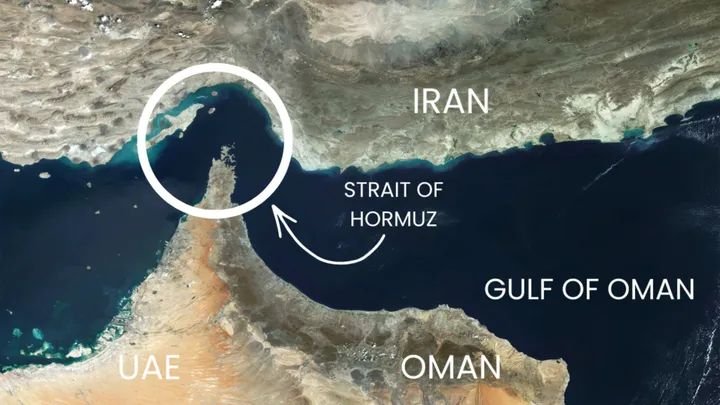
The Strait of Hormuz, which separates Iran from Oman and connects the Persian Gulf with the Gulf of Oman, remains one of the world’s most strategically important maritime routes.
The latest incidents have occurred as commercial vessels attempt to maintain movement through the waterway despite continuing military tensions.
The U.S. Navy-led Joint Maritime Information Center (JMIC) said attacks, attempted attacks and other forms of harassment by Iran’s Revolutionary Guards had continued.
According to the JMIC, the activity demonstrates what it described as Iran’s intent to maintain a presence along important transit routes and pressure vessels passing through the strait.
However, responsibility for individual incidents has not necessarily been established in every case. Several UK Maritime Trade Operations (UKMTO) reports describe vessels being struck by unknown projectiles while authorities investigate.
UKMTO’s incident records show a series of attacks involving tankers in late September and early October. On October 2, for example, a tanker reported being struck by an unknown projectile while making an outbound transit, causing a small fire and temporary loss of power. The fire was extinguished, the vessel continued underway and no casualties or environmental impact were reported at the time.
Other UKMTO reports recorded further incidents on October 3, 4 and 5, including attacks involving crude oil and LPG tankers.
In one October 5 incident, UKMTO reported that a tanker transiting the Strait of Hormuz was hailed by Iran’s Islamic Revolutionary Guard Corps and instructed to turn back or face being targeted. The vessel complied with the instruction while authorities investigated.
Gulf producers push to restore exports
The rise in maritime attacks comes at a particularly important moment for Gulf oil producers.
After months of severe disruption to energy flows caused by the conflict, Middle Eastern crude exports increased substantially during September.
Reuters reported that Middle Eastern oil exports averaged about 18.3 million barrels per day in September, with shipments exceeding pre-war levels on 14 days during the month. Saudi Arabia was among the major contributors to the increase.
Industry data from Kpler and Vortexa also showed that crude and condensate exports had regained significant momentum, while LNG shipments reached their highest level since February.
The recovery has been supported by efforts by Gulf producers and shipping operators to find ways around the security challenges.
But the latest attacks threaten to undermine that progress.
The problem is not simply whether oil is available for export. Producers must also find a way to move it safely and economically from terminals in the Gulf to international buyers.
Why the Strait of Hormuz matters
The Strait of Hormuz is a narrow maritime passage between the Persian Gulf and the Gulf of Oman.
Its importance extends far beyond the countries immediately surrounding it. Major energy producers including Saudi Arabia, Iraq, Kuwait, Qatar and the United Arab Emirates depend to varying degrees on maritime routes connected to the strait to reach international markets.
The waterway has consequently become a major pressure point during the conflict.
Earlier analysis from Reuters found that oil flows through Hormuz had recovered significantly but remained below the levels seen before the conflict. The disruption has also pushed up shipping, insurance and logistical costs.
The renewed attacks demonstrate the vulnerability of that recovery.
Even when oil continues moving, greater security risks can make each shipment substantially more expensive.
Tankers may require additional security arrangements, alternative routes or ship-to-ship transfers. Operators can also face higher insurance premiums and freight costs.
Those additional expenses can eventually affect the price paid by refineries, businesses and consumers.
Tanker crews face growing risks
The escalation has also placed renewed attention on the safety of seafarers.
Commercial tanker crews have little control over the wider geopolitical confrontation but can find themselves operating directly inside areas where military activity and attacks are taking place.
The IMO has repeatedly warned against attacks on merchant vessels and seafarers.
In September, the organisation said it had verified 80 attacks on international shipping in and around the Strait of Hormuz since the conflict began on February 28, with at least 22 seafarers killed.
The IMO has stressed that geopolitical conflicts cannot justify attacks on civilian merchant shipping and has called for the protection of seafarers and freedom of navigation.
The latest series of incidents therefore represents not only an energy-security problem but also a major maritime safety concern.
Oil exports have recovered, but the recovery remains fragile
The apparent contradiction between rising Gulf exports and increasing attacks is central to the current situation.
On one side, producers are demonstrating that large volumes of crude and gas can still be moved through the region.
On the other, the cost and risk of doing so are increasing.
Reuters reported that Gulf exports had at times exceeded pre-war levels during September, but that logistical problems and attacks could make the recovery difficult to sustain.
This means the current export increase should not automatically be interpreted as evidence that the energy crisis has ended.
Instead, it reflects the ability of producers, shipping companies and other market participants to adapt to an extremely difficult operating environment.
The longer the attacks continue, the greater the possibility that companies will reconsider whether the additional risk and cost of using the route are commercially sustainable.
Impact on global oil markets
The security situation is also being closely watched by international energy markets.
Oil prices have remained elevated, with Brent crude trading above $100 per barrel amid continuing concerns about supply disruptions and transportation risks.
The market is particularly sensitive to developments in Hormuz because a prolonged disruption could affect not only crude exports but also shipments of refined petroleum products, LNG and LPG.
Even when physical oil supplies remain available, uncertainty about transportation can create a risk premium in prices.
Higher freight rates, insurance costs and delays can also increase the final cost of energy reaching importing countries.
For developing economies that rely heavily on imported fuel, sustained disruption could have wider consequences for transport costs, inflation, electricity generation and household spending.
African countries are not isolated from these effects.
Higher international crude prices can raise the cost of refined petroleum products and place additional pressure on economies already dealing with currency, inflation and energy challenges.
Iran’s position
Iran has maintained significant influence over the security environment around the Strait of Hormuz.
Iranian officials have asserted that the country has control over the waterway, while the Islamic Revolutionary Guard Corps has continued to challenge the movement of some vessels.
Reuters reported separately that an Iranian official said what Tehran considers “illegal routes” near Oman’s coast would soon be blocked. The official also claimed that Iran’s control of the strait would continue until its demands were met.
The statements add to uncertainty over whether the latest maritime pressure represents a temporary escalation or part of a longer-term strategy to influence shipping through the waterway.
For commercial operators, the distinction is important because sustained uncertainty can be almost as disruptive as an outright closure.
The wider regional picture
The situation in Hormuz is unfolding alongside renewed instability elsewhere in the Middle East.
Fighting involving Iran-aligned forces and developments around other strategic maritime routes, including the Bab el-Mandeb, have increased concerns about the security of international shipping.
That creates the possibility of overlapping disruptions affecting multiple routes between Middle Eastern producers and global markets.
The result could be longer journeys, higher insurance premiums and greater pressure on shipping capacity.
For governments and energy companies, maintaining alternative export routes has therefore become increasingly important.
What happens next
The immediate focus will be on whether the attacks continue at the elevated rate recorded between September 28 and October 5.
Maritime authorities are expected to continue monitoring vessel movements and issuing warnings to commercial operators.
UKMTO has advised vessels operating in the area to maintain caution and report suspicious activity. Its latest incident records show that investigations into several attacks remain ongoing.
Energy markets will also watch whether Gulf producers can maintain their increased export volumes despite the worsening security environment.
If shipping remains operational, oil flows could continue recovering. But a sustained escalation that forces more vessels to avoid the Strait of Hormuz could reverse some of those gains.
For now, the central issue is not simply whether the waterway is open.
It is whether ships can continue using it safely, reliably and at a cost that makes continued international energy trade economically viable.
Why it matters
The surge in tanker incidents shows how closely military conflict, maritime security and global energy markets are connected.
The Strait of Hormuz remains a critical artery for international energy supplies. Any prolonged disruption could extend beyond the Middle East, affecting fuel prices, shipping costs, inflation and economic activity in countries far from the conflict zone.
For Gulf producers, the challenge is to keep exports moving.
For shipping companies, the challenge is protecting crews and vessels.
For governments, the challenge is maintaining freedom of navigation without allowing a wider regional conflict to disrupt global trade.
And for consumers, the outcome could ultimately be reflected in the price of fuel and other energy-intensive goods.
The latest surge in attacks therefore represents more than another episode in the wider Iran conflict. It is a test of how resilient the global energy and maritime system can remain while one of its most important shipping corridors stays under sustained pressure.
Weng Global – Stories beyond borders
Sources
- Reuters — reporting on tanker attacks in the Strait of Hormuz and Gulf oil exports.
- UK Maritime Trade Operations (UKMTO) — recent maritime security incident reports.
- International Maritime Organization (IMO) — statements on attacks against merchant vessels and seafarers.
- Al Jazeera — reporting and analysis on Hormuz shipping and Gulf oil flows.