Reported by Weng Patrick Atokor l Journalist at Weng Global
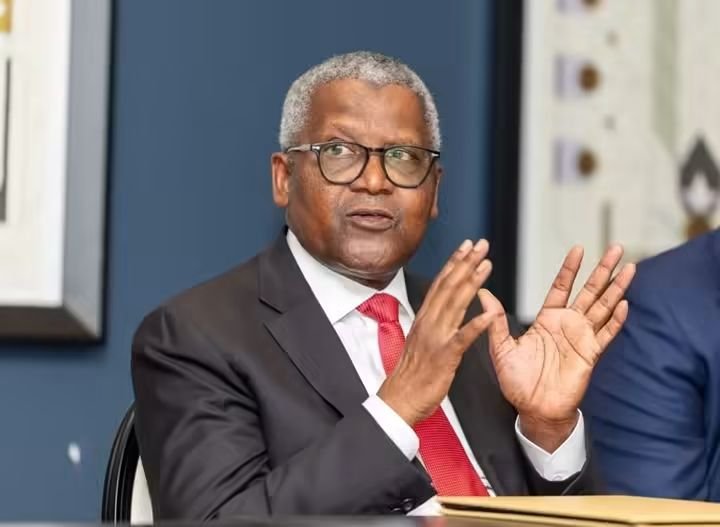
Aliko Dangote, Founder and President/Chief Executive of Dangote Industries Limited, has revealed that his company paid interest rates as high as 44 per cent on loans obtained to finance the construction of its Obajana Cement plant in Kogi State, highlighting the high cost of borrowing faced by Nigerian businesses during the country’s industrial development.
Dangote made the disclosure during an interview with ARISE News, where he discussed his 47-year business career, his relationship with Nigerian banks and the challenges of financing large-scale industrial projects.
The billionaire businessman said he had never defaulted on a bank loan throughout his business career, despite operating in an environment where borrowing costs could make long-term investments particularly difficult.
His remarks have renewed attention on the cost of commercial financing in Nigeria and the difficulties local businesses face when attempting to establish large manufacturing operations.
Dangote Says High Interest Rates Make Industrialisation Difficult
During the interview, Dangote argued that Nigeria’s high borrowing costs make it difficult for entrepreneurs to invest in manufacturing and other capital-intensive industries.
He said interest rates of 30 per cent alone could discourage investors from committing funds to factories and other long-term industrial projects.
According to him, businesses constructing manufacturing facilities often need several years to complete projects and begin recovering their investments. High interest charges during construction can significantly increase the total amount required to establish such facilities.
Dangote explained that the cost of borrowing could substantially increase the original capital requirement, particularly when investors depend on bank loans to finance projects that take years to become commercially productive.
He also identified inconsistent government policies and inadequate electricity supply as major obstacles to industrial development in Nigeria.
The businessman argued that manufacturers need a stable policy environment and reliable infrastructure to operate competitively and sustain investment.
Dangote Says He Has Never Defaulted on Bank Loans
Beyond the disclosure about Obajana, Dangote used the interview to defend his record of meeting financial obligations to lenders.
He said he had never defaulted on a loan throughout his 47 years in business and had never been taken to court by a bank over failure to repay borrowed funds.
His comments highlighted his approach to managing relationships with financial institutions while expanding his business interests from trading into large-scale manufacturing.
He also disclosed that he provided personal guarantees and pledged his assets as collateral to secure an initial $3.7 billion financing arrangement for his refinery and related projects.
Dangote said his willingness to take financial risks was based on his confidence in the long-term prospects of the investments.
He maintained that businesses require access to financing institutions that understand the economic conditions and challenges facing African manufacturers.
The Obajana Cement Project and Its Financing
The Obajana Cement plant is one of Nigeria’s major industrial investments and an important part of Dangote’s expansion into domestic cement manufacturing.
Located in Kogi State, the project was developed to increase local cement production and reduce Nigeria’s dependence on imported cement.
Financing records published by the International Finance Corporation (IFC) show that the original Obajana project was designed with a production capacity of approximately 4.4 million tonnes annually.
The IFC’s project documentation put the estimated project cost at $798 million, with $319 million expected from the sponsor’s equity and approximately $479 million in long-term debt from local and international financial institutions. Obajana Cement PLC +1
The European Investment Bank (EIB) also disclosed that it provided loan facilities totalling $150 million as part of the wider financing package for the cement project. The funding involved a consortium of international and Nigerian financial institutions, with First Bank of Nigeria acting as arranger for the local banks’ portion. European Investment Bank +1
The financing arrangements demonstrate the scale of capital required to establish large manufacturing facilities in Nigeria.
Dangote had previously discussed the financial challenges surrounding the project in an interview published by THISDAY in July 2024.
He said the company initially expected the Obajana project to cost approximately $480 million but eventually spent more than $1 billion.
He also disclosed that the company obtained a loan of approximately $480 million from the International Finance Corporation and other banks, which was originally structured for repayment over seven years but was repaid within 18 months, according to his account. THISDAYLIVE +1
Why Dangote’s Disclosure Matters to Nigeria
Dangote’s account raises broader questions about the availability and affordability of financing for businesses seeking to invest in Nigeria’s manufacturing sector.
Manufacturing companies generally require substantial upfront investment in machinery, land, infrastructure, energy and production facilities. Unlike businesses with shorter investment cycles, industrial projects may take years before generating sufficient revenue to recover their initial costs.
When borrowing rates are exceptionally high, the financial burden can discourage investment, increase production costs and make locally manufactured products less competitive.
For Nigeria, where economic diversification and domestic production remain important development objectives, access to affordable long-term financing is particularly significant.
High borrowing costs can also affect smaller manufacturers that lack the financial strength and collateral available to larger corporations.
Dangote’s experience illustrates the financing difficulties associated with building large industrial facilities in an economy where the cost of credit can become a major component of project expenditure.
Government Policies and Infrastructure Remain Major Concerns
Dangote also pointed to inconsistent government policies and inadequate electricity supply as challenges affecting Nigerian businesses.
He argued that governments seeking employment opportunities, industrial expansion and increased tax revenue must create an environment that supports domestic manufacturers.
Electricity remains particularly important for manufacturing because unreliable public power supply can force companies to depend on alternative energy sources, increasing their operating expenses.
His comments add to ongoing discussions about the reforms required to improve Nigeria’s investment climate, strengthen domestic industries and attract long-term private capital.
What Happens Next?
Dangote’s disclosure places renewed attention on the need for affordable financing, consistent economic policies and improved infrastructure to support industrial development.
However, he did not announce a new financing arrangement or specific policy proposal during the reported interview.
The immediate significance of his remarks lies in the experience he shared about the cost of financing the Obajana Cement project and the broader challenges facing businesses attempting to industrialise Nigeria.
For policymakers, financial institutions and prospective investors, the central question remains how to make long-term financing more accessible to businesses capable of expanding domestic production and creating employment.
Weng Global’s Perspective
Nigeria’s industrial future will depend not only on the willingness of entrepreneurs to invest but also on whether the country’s financial and infrastructure systems can support projects that require substantial capital and long investment periods.
Dangote’s experience demonstrates the financial risks involved in building major manufacturing facilities and the importance of creating conditions that allow productive businesses to grow.
Weng Global – Stories beyond borders
Sources
- ARISE News – Dangote: I’ve Never Defaulted on a Bank Loan in 47 Years of Business.
- International Finance Corporation (IFC) – Obajana Cement Project financing and project documentation.
- European Investment Bank (EIB) – Financing for the Obajana Cement plant.
- THISDAY – Aliko Dangote: Boldly Driving Africa’s Renaissance (July 20, 2024).