Reported by Weng Patrick Atokor l Journalist at Weng Global
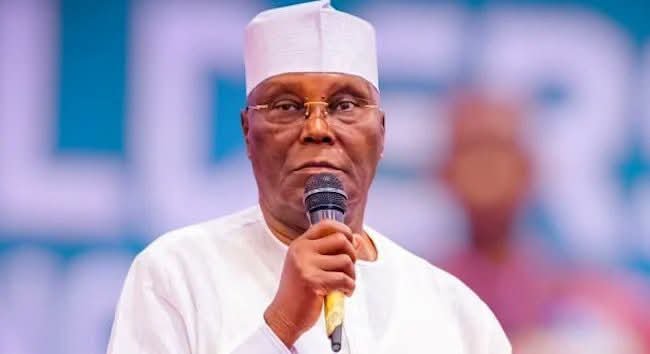
Former Nigerian Vice-President Atiku Abubakar has vowed to remain in the race for the 2027 presidential election, insisting that no court ruling, political pressure or alleged attempt to weaken the opposition will force him to abandon his ambition.
Atiku, who emerged as the presidential candidate of the African Democratic Congress (ADC), made the declaration on Friday, November 6, 2026, following a Federal High Court judgment in Abuja that nullified the party’s leadership under former Senate President David Mark and invalidated decisions taken by the leadership, including the process that produced his presidential nomination.
The former vice-president maintained that the decision would not end his political ambition, urging supporters to remain united and continue their campaign ahead of the next general election.
In a statement issued in Sokoto, Atiku said Nigerians should have the opportunity to determine their country’s political future through a credible electoral process.
He declared that he would not withdraw from the contest despite the legal challenges confronting his party.
“I am in this race. I am not going anywhere. We will be on the ballot. No threat, blackmail or court manoeuvre will make me abandon you or the cause we share,” he said.
His remarks have intensified the political debate surrounding the ADC’s leadership crisis and the legal uncertainty facing opposition parties ahead of the 2027 presidential election. Punch Newspapers +2
Court Ruling Puts ADC Leadership and Atiku’s Nomination in Question
The controversy followed a judgment delivered on Thursday, November 5, by the Federal High Court in Abuja, which invalidated the leadership structure of the ADC led by David Mark.
The ruling also affected decisions taken under the disputed leadership, including the party’s processes that resulted in Atiku’s emergence as its presidential candidate.
The case was instituted by Nafiu Bala Gombe, a former deputy national chairman of the ADC, who challenged the legitimacy of the party’s leadership arrangement.
Bala argued that following the resignation of former national chairman Ralph Nwosu, he was entitled to assume leadership of the party and questioned the procedures through which Mark and other party officials emerged.
Justice Peter Lifu delivered the judgment, setting aside the disputed leadership structure and decisions taken under it.
The development created fresh uncertainty for the opposition party, particularly regarding the validity of its presidential nomination and its preparations for the 2027 election.
The judgment does not, however, mean that Atiku has voluntarily withdrawn from the presidential contest. Rather, his political position is now tied to the legal consequences of the ruling and the outcome of the ongoing judicial process. Reuters +2
Atiku Accuses Tinubu’s Government of Weakening Opposition
Beyond rejecting the court judgment, Atiku accused President Bola Tinubu’s administration and the ruling All Progressives Congress (APC) of using political pressure and alleged legal manoeuvres to weaken opposition parties.
He argued that Nigeria’s democracy depends on the existence of a competitive political environment in which different parties can freely organise, present candidates and challenge the ruling government.
Atiku also warned against what he described as attempts to turn Nigeria into a one-party state.
According to him, political competition should be determined by voters rather than actions that could undermine opposition parties before elections.
He challenged the ruling party to face its political opponents at the ballot box, arguing that a government confident in its performance should welcome a credible electoral contest.
Atiku also raised concerns about alleged attempts to compromise the voters’ register through artificial intelligence-generated photographs, false names and fictitious identities.
However, these allegations remain claims made by the former vice-president and were not independently established in the available reports.
He did not provide publicly verified evidence in the statement linking the Tinubu administration to the alleged manipulation.
APC Rejects Allegations of Political Interference
The APC has rejected accusations that it influenced the court proceedings or was involved in efforts to undermine the ADC.
According to Premium Times, the party’s National Publicity Secretary, Felix Morka, said the APC was neither a party to the legal dispute nor an interested participant in the case.
Morka maintained that the dispute arose from disagreements within the ADC over its leadership structure.
He also criticised the opposition party for questioning the judiciary following an unfavourable judgment, urging its leadership to pursue the appropriate legal channels rather than accuse the ruling party of interference.
The APC’s response introduces another dimension to the controversy, with the opposition accusing the ruling government of weakening political competition while the governing party insists that the dispute is an internal ADC matter.
The allegations and counterclaims underline the political tensions surrounding the opposition’s preparations for the 2027 election. Premium Times Nigeria +1
ADC Moves to Challenge the Judgment
Following the ruling, the ADC leadership associated with David Mark moved to challenge the decision through the courts.
The party’s legal team filed an appeal on November 6, 2026, and also sought a stay of execution of the judgment pending the determination of the appeal.
The party subsequently notified the Independent National Electoral Commission (INEC) of the legal steps it had taken, asking the electoral commission to refrain from taking further action on the disputed matter while the appeal process was ongoing.
The application for a stay of execution is particularly important because filing an appeal does not automatically suspend the operation of a court judgment.
According to reports by Premium Times and THISDAY, the party’s request for interim relief had not yet been granted at the time of reporting.
The outcome of the appeal and any subsequent court orders could therefore have significant implications for the ADC’s leadership, its presidential candidate and its participation in the 2027 election.
Atiku’s insistence that he remains in the race must consequently be considered alongside the unresolved legal questions surrounding his party’s nomination. Premium Times Nigeria +1
Keyamo Questions Atiku’s Position as ADC Candidate
Nigeria’s Minister of Aviation, Festus Keyamo, also weighed into the controversy, questioning Atiku’s position following the court judgment.
In a response on social media, Keyamo drew attention to the manner in which Atiku signed his statement, noting that he identified himself as a former vice-president rather than specifically as the ADC presidential candidate.
Keyamo interpreted this as an acknowledgement of the court’s decision and advised Atiku to respect the rule of law.
He also argued that the political consequences of Atiku’s absence from the ballot should not be exaggerated.
However, Atiku’s statement itself made clear that he intended to continue pursuing the presidency, notwithstanding the judgment.
The exchange reflects the growing political confrontation between opposition figures and members of the Tinubu administration as the country moves closer to the next general election. Premium Times Nigeria +1
Atiku Renews Criticism of Tinubu’s Economic Policies
Atiku also used his statement to criticise the economic policies of the Tinubu administration, arguing that the country’s economic difficulties have strengthened the need for political change.
He pointed to the removal of the petrol subsidy, the depreciation of the naira, rising food prices, business closures and growing economic pressure on Nigerian households.
The former vice-president also raised concerns about insecurity and the continued departure of young Nigerians in search of better opportunities abroad.
His comments place economic conditions at the centre of his political message ahead of the 2027 election.
Nigeria has experienced significant economic adjustments under Tinubu’s administration, particularly following the removal of the petrol subsidy and foreign exchange reforms introduced in 2023.
While the government has defended its reforms as necessary to address longstanding economic weaknesses, the rising cost of living has remained a major concern for households and businesses.
Atiku is seeking to make these issues central to his campaign, presenting economic hardship and governance concerns as major reasons Nigerians should consider an alternative leadership.
However, the economic debate is expected to remain contested as the government and opposition parties present competing assessments of the country’s economic direction.
What the Court Dispute Means for the 2027 Election
The ADC leadership dispute comes at a critical period for Nigeria’s opposition parties, which are seeking to build a credible challenge to the ruling APC ahead of the 2027 presidential election.
Atiku remains one of Nigeria’s most prominent opposition politicians. He served as vice-president between 1999 and 2007 and contested the 2023 presidential election under the Peoples Democratic Party (PDP), finishing second behind Tinubu.
His emergence under the ADC represented a significant development in the opposition’s political realignment ahead of the next election.
However, the latest court judgment has introduced fresh legal uncertainty into those plans.
The dispute also raises broader questions about internal party democracy, the legal procedures governing political leadership and the ability of opposition parties to resolve disagreements without prolonged litigation.
For the ADC, resolving the leadership crisis will be important not only for Atiku’s presidential ambition but also for its organisational stability and preparations for the election.
What Happens Next?
The immediate focus is on the legal proceedings arising from the November 5 judgment.
The ADC has filed an appeal and sought a stay of execution, while Atiku has maintained that his presidential campaign will continue.
The decisions of the appellate courts and any subsequent orders will help determine the legal status of the disputed party leadership and the decisions taken under it.
INEC’s eventual position on the implications of the judgment will also be important to the party’s electoral preparations.
For now, Atiku’s declaration signals that he does not intend to abandon his presidential ambition.
Nevertheless, his ability to contest under the ADC banner will depend on the legal resolution of the party’s leadership dispute and the applicable electoral requirements.
The unfolding situation presents another major test for Nigeria’s opposition as political parties prepare for the 2027 general election.
Atiku’s message is clear: he intends to remain in the presidential contest. Whether the ADC can overcome its legal challenges and secure its place in the election remains the bigger question.
Weng Global – Stories beyond borders
Sources
- Reuters – Nigerian court voids presidential contender’s candidacy for 2027 election.
- Premium Times – Atiku insists he remains in 2027 race as APC denies court interference.
- TheCable – Atiku says no court manoeuvre will make him quit the 2027 race.
- Channels Television – Atiku tells supporters he will be on the ballot.
- THISDAY – Atiku declares nothing will keep him off the 2027 ballot as ADC heads to Appeal Court.