Reported by Weng Patrick Atokor l Journalist at Weng Global
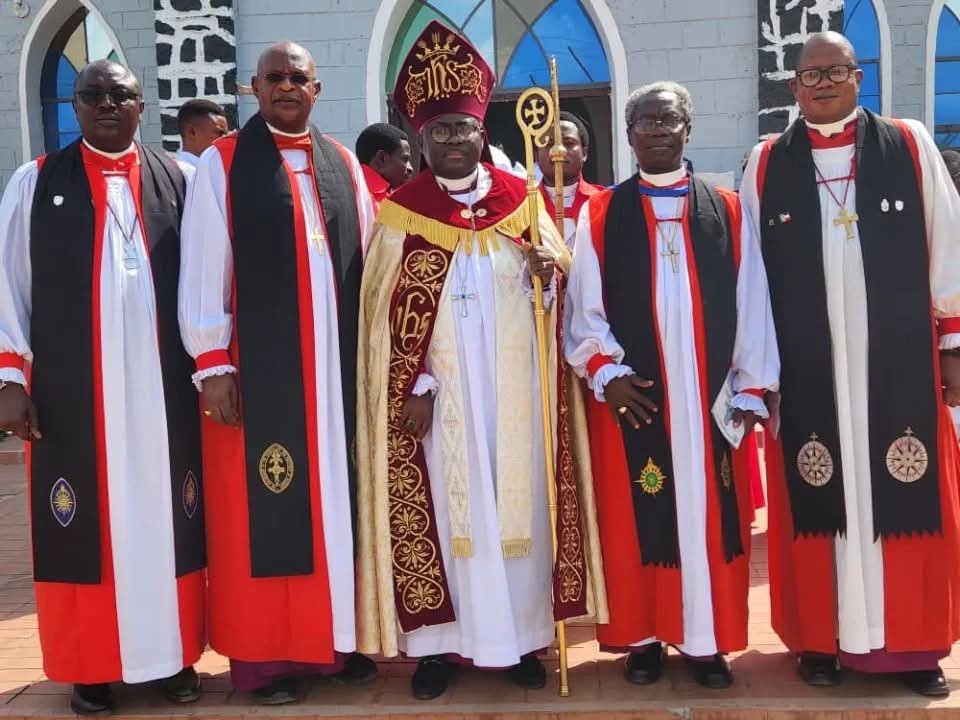
The Bishop of the Missionary Diocese of Oyo South, Anglican Communion, Rt. Rev. Dr Olufemi Familoni, has called on the Nigerian government to prioritise the completion of abandoned infrastructure projects across the country, warning that unfinished public projects contribute to economic losses, corruption and hardship for communities.
Familoni made the appeal on November 27, 2026, during the first anniversary celebration of the Missionary Diocese of Oyo South at the Cathedral Church of St. John, Akinmoorin, in Oyo State.
The Anglican bishop urged governments at all levels to move beyond initiating new projects and demonstrate greater commitment to completing existing ones, particularly infrastructure developments that directly affect people’s lives.
He specifically appealed for the timely completion of the dual-carriageway express road linking Fiditi and Oyo town, which passes through Akinmoorin, where the diocese’s cathedral headquarters is situated.
According to him, rural communities deserve access to quality infrastructure and should not be neglected when governments make decisions about development priorities.
Bishop Calls for Greater Accountability in Public Projects
Familoni expressed concern over the growing number of abandoned projects across Nigeria, noting that unfinished developments often create additional problems for the communities they are intended to serve.
He argued that beginning a project without ensuring its completion undermines the purpose of public investment and can leave residents dealing with prolonged inconvenience, deteriorating facilities and wasted resources.
The bishop also questioned the practice of embarking on projects without adequate financial arrangements to guarantee their completion.
He recommended that governments ensure sufficient funding is available before commencing major projects. Where immediate funding cannot be guaranteed, he proposed establishing appropriate agreements and legal frameworks to protect projects from abandonment.
Familoni further suggested that abandoning public projects should attract legal consequences, arguing that stronger accountability measures could discourage the misuse of public resources.
He linked the problem to corruption, saying Nigeria had suffered considerably from unfinished projects and the financial irregularities associated with them.
His comments highlight a longstanding governance challenge in Nigeria, where changes in administration, inadequate funding, poor planning and weak project supervision can affect the continuity of public infrastructure programmes.
Fiditi-Oyo Road Project Needs Priority Attention
The bishop’s appeal placed particular emphasis on the Fiditi-Oyo dual-carriageway project, which passes through Akinmoorin.
While commending the government for undertaking the road development, he urged the authorities to ensure that the project is completed without unnecessary delays.
He explained that the road would improve conditions for residents in the surrounding rural communities and contribute to better movement and access to essential services.
Familoni stressed that people living outside major urban centres also deserve comfortable living conditions and infrastructure capable of supporting economic and social activities.
The road is particularly significant to Akinmoorin because the community hosts the headquarters of the Missionary Diocese of Oyo South.
However, the bishop’s appeal extends beyond the particular road project, raising broader questions about how public infrastructure is planned, financed, monitored and maintained across Nigeria.
Abandoned Projects and Nigeria’s Development Challenges
Project abandonment remains a major concern for Nigeria’s development, particularly in the construction and public infrastructure sectors.
When governments or institutions begin projects without adequate planning and financial commitments, the resulting delays and abandonment can affect communities, businesses and public finances.
An academic study examining the causes of abandoned building projects in Lagos State identified poor project planning, inadequate cost control, weak resource management, inaccurate cost estimates and improper financial analysis among the major factors contributing to project abandonment.
The study also identified consequences such as conflicts among stakeholders, the loss of economic value and declining living standards.
Its recommendations included adequate planning, the engagement of competent professionals, improved communication, effective risk management and stronger financial control.
These findings reinforce the importance of the bishop’s call for governments to establish clear funding arrangements and accountability mechanisms before commencing public infrastructure projects.
Beyond the immediate financial implications, abandoned roads, schools, hospitals and other public facilities can deprive communities of services needed to improve living standards and stimulate economic activity.
For residents, an unfinished road project may mean prolonged transportation difficulties, increased travel costs and reduced access to markets, schools and healthcare facilities.
Similarly, abandoned public buildings and other facilities represent investments that may fail to deliver the intended benefits to citizens.
Bishop Reflects on First Anniversary of Diocese
Speaking during the anniversary celebration, Familoni also reflected on the progress recorded by the Missionary Diocese of Oyo South since its inauguration.
He expressed gratitude for the growth of the diocese and reaffirmed his commitment to building what he described as a Christ-centred, mission-minded and compassionate Anglican community.
According to him, the diocese had established mission stations, strengthened its administrative structures and provided support for clergy members and church workers during its first year.
He also highlighted developments in the women’s, children’s and youth ministries, alongside renovation projects and other infrastructure improvements undertaken by the diocese.
Among the facilities that had undergone rehabilitation were the Bishop’s Court and the cathedral.
Familoni further acknowledged contributions from individuals, including financial support from his family, towards the development of the diocese.
He said the diocese had also constructed important infrastructure to support its religious activities and the propagation of the Christian faith.
The anniversary provided an opportunity to review the organisation’s activities and recognise the contributions of individuals and members who supported its development.
Archbishop Urges Nigerians to Take Responsibility for National Development
Also speaking at the anniversary service, the Anglican Bishop of Ibadan North and Archbishop of Ibadan Province, Most Rev. Dr Williams Oluwarotimi Aladekugbe, urged Nigerians to move beyond complaining about the country’s challenges and embrace responsible conduct.
Preaching from 2 Chronicles 7:14, Aladekugbe emphasised the importance of humility and righteous living in addressing the country’s problems.
He argued that national development requires contributions from both leaders and citizens, rather than placing responsibility exclusively on those in government.
His message added a broader moral dimension to the anniversary celebration, focusing on personal responsibility, leadership and the need for positive contributions to society.
The event attracted Anglican leaders and worshippers from different parts of south-western Nigeria.
Among those present were the Bishop of Oyo Diocese, Rt. Rev. Dr Olufemi O. Oduntan; the Missioner of the Church of Nigeria, Rt. Rev. Ebenezer A. Okuyelu; the Bishop of Kwara Diocese, Rt. Rev. Dr Sunday T. Adewole; and other church leaders.
Why the Bishop’s Appeal Matters
Familoni’s intervention draws attention to an important question about governance in Nigeria: how can public authorities ensure that infrastructure investments translate into completed projects and measurable benefits for citizens?
The challenge is not simply about announcing new developments or allocating money in annual budgets. It also involves ensuring that projects are properly assessed, adequately funded, transparently executed and monitored until completion.
Government administrations frequently operate within limited tenures, while major infrastructure projects can take several years to complete. Without effective institutional arrangements, projects initiated by one administration may experience delays or abandonment under another.
This can result in additional expenditure, deterioration of unfinished structures and the loss of development opportunities.
The bishop’s proposal for stronger legislation and accountability therefore raises an important issue for policymakers: public projects should be treated as long-term development commitments rather than achievements belonging exclusively to individual administrations.
For communities such as Akinmoorin, the completion of essential infrastructure could improve connectivity, support local economic activities and enhance access to public services.
Ultimately, the value of a government project should be measured not merely by its announcement or commencement but by its successful completion and the benefits it delivers to the people.
What Happens Next?
Familoni’s appeal places renewed attention on the government’s responsibility to ensure the completion of the Fiditi-Oyo road project and other abandoned infrastructure developments.
However, the bishop’s statements do not establish a new government completion deadline or confirm any additional funding arrangement for the road.
The authorities responsible for the project will need to provide clear information about its funding, implementation schedule and expected completion.
For Nigeria more broadly, the call presents an opportunity for governments to strengthen project planning, improve transparency and establish measures that protect public investments from unnecessary abandonment.
As the country continues to pursue infrastructure development, the central issue remains whether projects started with public funds will be completed and deliver lasting improvements to citizens’ lives.
Weng Global — Stories beyond borders.
Sources:
- TheNigerian – Report on Bishop Olufemi Familoni’s appeal during the first anniversary of the Missionary Diocese of Oyo South.
- The Star Nigeria – Report on the Anglican bishop’s warning about abandoned projects and corruption.
- University of Lagos – Academic study, Effects of Project Management on Abandonment of Building Projects in Lagos State, Nigeria.