Reported by Weng Patrick Atokor l Journalist at Weng Global
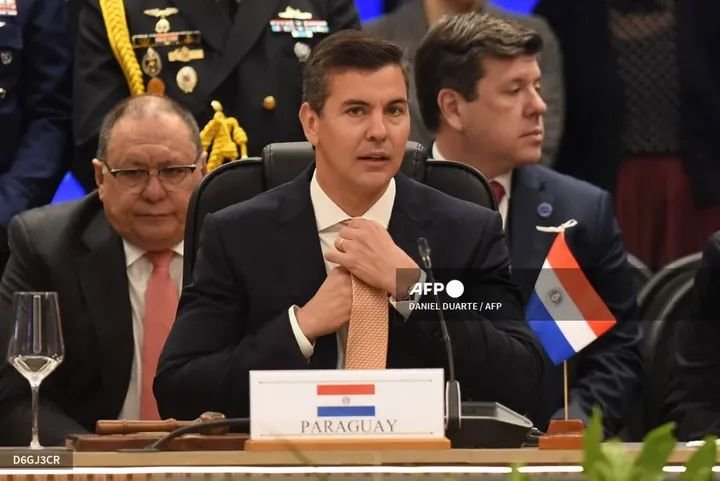
Paraguay has entered a major political transition after its Senate impeached President Santiago Peña over a banking crisis linked to the collapse of Ueno Bank, paving the way for Vice President Pedro Alliana to assume the presidency.
Alliana was sworn in on Friday, November 6, 2026, shortly after lawmakers voted to remove Peña from office following allegations of misconduct and conflicts of interest surrounding the troubled financial institution.
The political upheaval follows a banking crisis that left millions of Paraguayans unable to access their savings, triggering public demonstrations, widespread anger and demands for accountability.
According to reports by Reuters and Agence France-Presse (AFP), 44 of the 45 senators present voted in favour of Peña’s impeachment, while one lawmaker was absent.
The Senate’s decision marked a significant development in the country’s political crisis, which has intensified since authorities intervened in Ueno Bank earlier in the week.
Pedro Alliana Takes Over as Paraguay’s President
Following Peña’s removal, Alliana assumed the presidency in accordance with Paraguay’s constitutional succession arrangements.
The new president will complete the remaining period of the current presidential term, which runs until August 2028.
According to Paraguay’s Chamber of Deputies, Alliana formally assumed office after the impeachment proceedings concluded and pledged to protect democratic institutions, restore public confidence and promote transparency in government.
His immediate challenge will be addressing the financial consequences of the banking crisis and rebuilding confidence among citizens who have been affected by the disruption.
Alliana has also promised that affected depositors will receive compensation, although the repayment process is expected to take place in stages.
The transition places considerable pressure on the new administration to demonstrate that it can manage the financial emergency while maintaining political and institutional stability.
What Triggered Santiago Peña’s Impeachment?
The impeachment followed the collapse of Ueno Bank, a major digital financial institution that served approximately three million customers.
The bank’s rapid growth had made it an important part of Paraguay’s financial system, with its services reaching a substantial proportion of the country’s population.
However, concerns emerged over its financial condition, lending practices, regulatory oversight and connections to influential political and business figures.
Paraguay’s Central Bank intervened in the institution after identifying serious financial and regulatory problems, including concerns about its capital position and lending activities.
The intervention disrupted access to customers’ accounts, leaving millions of people uncertain about the safety and availability of their money.
The crisis became a national political issue after questions emerged about the relationship between the bank and Peña.
The former president had previously held shares in Ueno’s parent company, Grupo Vázquez, before reportedly selling his interests in 2025.
Opposition lawmakers accused his administration of conflicts of interest and questioned the handling of public funds deposited with the financial institution.
Peña denied wrongdoing and rejected allegations that he had improperly used his political position to benefit the bank.
Millions of Depositors Affected by Banking Crisis
The collapse of Ueno Bank created widespread financial uncertainty across Paraguay.
Approximately three million customers were affected by the disruption, including pensioners and other individuals who relied on the institution for everyday banking transactions.
The situation also raised concerns about public and pension-related funds held by the bank.
According to reporting by The Associated Press, the institution held substantial public deposits, while the disruption affected savings, payments and other financial activities.
The crisis prompted protests in the capital, Asunción, and other parts of the country as affected customers demanded access to their money and accountability from those responsible.
Demonstrators called for the government to explain how the bank was allowed to develop serious financial problems despite regulatory oversight.
The protests also increased pressure on political leaders to provide immediate solutions for depositors.
Government Begins Repayment Process
Authorities have started taking steps to address the financial consequences of the bank’s collapse.
According to AFP, advance payments to some affected depositors began on Thursday, November 5, ahead of Alliana’s assumption of office.
José Maciel of the Central Bank’s Deposit Guarantee Fund said the initial payments would prioritise eligible customers who do not have loans and possess accounts with other financial institutions through which the funds can be transferred.
The first payment phase was expected to cover amounts of up to approximately $1,600.
Officials indicated that additional categories of beneficiaries would be announced progressively as the repayment process continued.
However, the payment arrangements have not immediately resolved concerns among customers whose savings remain inaccessible.
The new administration will therefore face pressure to provide clear information about compensation arrangements, eligibility requirements and the timetable for releasing outstanding deposits.
Prosecutors Investigate Peña Over Alleged Financial Misconduct
Beyond the political consequences, Peña’s removal has opened a new chapter in the criminal investigations surrounding Ueno Bank.
Paraguay’s Attorney General’s Office is investigating matters connected to the supervision and resolution of the bank, as well as the placement of public funds in the institution.
Prosecutors are examining allegations involving breach of trust, influence peddling and the alleged misuse of public resources.
Peña has denied wrongdoing.
Following his impeachment, authorities placed the former president under house arrest pending further legal proceedings.
Prosecutors also indicated that he would be questioned as part of the investigation.
The case has attracted particular attention because of the alleged relationship between political authority, banking regulation and the management of public money.
The investigation will be important in establishing whether regulatory failures, improper influence or other unlawful activities contributed to the financial crisis.
It is important to distinguish the allegations under investigation from established criminal findings. Peña’s removal from office does not, by itself, establish criminal guilt.
Political Implications for Paraguay
Peña’s impeachment represents a significant political setback for the ruling Colorado Party and exposes the extent of the divisions surrounding the banking crisis.
The controversy has raised questions about the relationship between political leadership, financial institutions and regulatory independence.
The fact that a sitting president was removed following a major financial scandal demonstrates the political consequences that can follow when public confidence in financial oversight and government accountability deteriorates.
The situation also places Alliana in a difficult position.
Although he has inherited the presidency, he must address a crisis that developed under the previous administration while demonstrating that his government can provide effective leadership.
His ability to restore confidence will depend partly on the transparency of the banking investigations, the treatment of affected depositors and the government’s willingness to support independent accountability processes.
The crisis could also influence public debate about financial regulation and the safeguards required to protect depositors and public funds.
What Happens Next?
The immediate priorities for Paraguay’s new administration include restoring access to affected deposits, implementing compensation arrangements and supporting investigations into the circumstances surrounding Ueno Bank’s collapse.
Prosecutors are expected to continue examining the conduct of individuals connected to the bank and the regulatory decisions surrounding its operations.
Peña’s legal position will also remain under scrutiny as authorities pursue investigations into the allegations against him.
For Alliana, the coming months will be critical in determining whether his administration can stabilise the country’s political and financial environment.
The banking crisis has already produced a major change in Paraguay’s leadership. However, the broader consequences will depend on whether authorities can establish accountability, protect depositors and restore confidence in the country’s financial institutions.
Paraguay’s immediate challenge is therefore no longer limited to a change of president. It is also about rebuilding public trust in the institutions responsible for protecting citizens’ money and ensuring that financial oversight operates independently of political influence.
Weng Global — Stories beyond borders
Sources
- Reuters – Paraguay swears in new president as Peña is put under house arrest.
- Associated Press (AP) – Reporting on Santiago Peña’s impeachment and the Ueno Bank collapse.
- Agence France-Presse (AFP) – Crisis-hit Paraguay impeaches Peña, replaces him with VP Alliana.
- Paraguay Chamber of Deputies – Official announcement on Pedro Alliana’s assumption of the presidency.
- The Guardian – Reporting on Paraguay’s banking crisis and the removal of Santiago Peña.