Reported by Simon Daniel Yusuph l Journalist at Weng Global
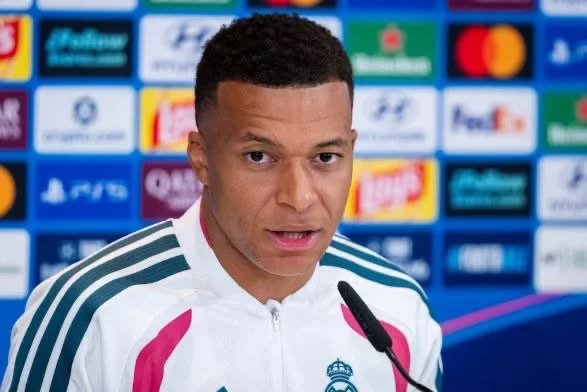
Chinese companies have ended commercial partnerships with French football star Kylian Mbappé following a viral video in which he appeared to describe a meme featuring his face superimposed on the image of a Chinese historical leader as a joke involving a “Chinese dictator.” The controversy has triggered criticism on Chinese social media and renewed attention to the risks international celebrities face when their public comments collide with cultural and political sensitivities in major markets.
The companies named in reports include beverage producer Dongpeng and dairy giant Mengniu. The Associated Press also reported that cheese producer Milkground had ended its endorsement agreement with the Real Madrid forward. The developments emerged on Tuesday, October 27, 2026, after the video circulated online and prompted a wave of criticism from Chinese football fans and other social media users.
The controversy centres on a clip in which Mbappé discusses his favourite internet memes. He appears to refer to an image depicting his face on the body of a figure he describes as a Chinese dictator. The video then shows an edited image associated with former Chinese leader Mao Zedong.
However, the authenticity of the circulating clip could not immediately be independently verified by AFP Fact Check, according to Agence France-Presse reporting. That limitation is important because the controversy has already had commercial consequences, even as questions about the video’s verification remain.
Dongpeng and Mengniu Announce End of Commercial Relationships
Dongpeng, a major Chinese beverage company, announced that it was terminating its cooperation with Mbappé, citing its opposition to behaviour it considered offensive to national sentiment.
In its statement, the company said it maintained a zero-tolerance policy towards conduct that offended national feelings and that the termination would take immediate effect.
Mengniu, one of China’s largest dairy producers, also announced an end to its cooperation with the footballer.
The company said it opposed words or actions that hurt the feelings of the Chinese people and maintained a zero-tolerance policy towards such conduct.
The announcements followed the spread of the video and a sharp reaction from sections of the Chinese online community. Although the companies’ statements condemned conduct considered offensive, the available reporting does not establish that every company publicly detailed the circulating video as the specific contractual reason for its decision.
The distinction matters. The timing of the announcements connects them to the controversy, but reporting should distinguish between what a company explicitly states and what observers infer from the sequence of events.
The Associated Press reported that Milkground had also ended its endorsement agreement with Mbappé. The broader response illustrates how a controversy involving a single public comment can extend beyond one sponsor to affect several commercial relationships.
What Mbappé Appeared to Say in the Video
The controversy began after a video circulated online showing Mbappé discussing internet memes featuring his face.
In the clip described by AFP, the footballer appears to recall a meme involving his face being superimposed on that of “some guy” whom he thinks is a Chinese dictator. The visual accompanying the remark appears to refer to Mao Zedong.
Mao, who died in 1976, was the founding leader of the People’s Republic of China and remains a major, politically sensitive figure in the country’s official historical narrative.
Some online descriptions of the incident have presented Mbappé as directly naming Mao. However, the wording reported by AFP indicates that he referred to a Chinese dictator rather than explicitly naming Mao in the quoted passage.
This distinction should not be overlooked. The apparent reference and the image shown in the video have driven the controversy, but the exact wording attributed to the footballer should be reported carefully rather than expanded beyond what the available material supports.
AFP Fact Check had not immediately verified the clip’s authenticity when the initial reports were published. That means the circulating video should not be treated as independently authenticated solely because it has been widely shared or repeatedly reproduced by other accounts.
No verified public response from Mbappé addressing the latest controversy was established in the reports available for this article. His position on the specific dispute therefore remains unclear.
Why the Meme Triggered Strong Reactions in China
The controversy reflects the sensitivity surrounding Mao Zedong and the history of modern China.
Mao led the Chinese Communist Party through the establishment of the People’s Republic of China in 1949 and remained the country’s dominant political figure until his death. His legacy is complex and contested internationally, particularly because of the mass suffering associated with policies and political campaigns undertaken during his rule.
Within China, however, Mao also occupies a central place in the country’s official historical and political identity. Public discussion of his legacy takes place within a distinct political environment, and material interpreted as insulting the country’s founding history can prompt strong reactions.
For some Chinese social media users, the combination of the altered image and the phrase “Chinese dictator” was perceived as disrespectful to Mao and, by extension, to the country’s historical identity.
The response demonstrates how an image that circulates as humour in one online community can carry a different meaning when it reaches another audience. Memes often depend on irony, exaggeration and shared cultural references. But those references do not necessarily translate across national, political or historical boundaries.
The dispute is not simply about whether a footballer intended to offend anyone. It also concerns how public figures’ remarks are interpreted by audiences in countries where they have substantial commercial interests.
Intent and impact are separate questions. A remark may be intended as a joke, yet still provoke criticism or affect commercial relationships if audiences interpret it as disrespectful.
At the same time, public criticism does not establish that every Chinese consumer shares the same view. Reactions visible on social media can demonstrate the intensity of a debate without proving that an entire population holds one position.
Chinese Social Media Amplifies the Controversy
The controversy spread rapidly on Chinese social media, particularly Weibo, where discussion of Dongpeng’s decision became a prominent trending topic.
Some users supported the companies’ responses and called for promotional materials featuring Mbappé to be removed. Others expressed anger at what they considered an unacceptable remark about China’s history.
Dongqiudi, a major Chinese online football platform, also criticised the remarks. According to AFP reporting, the platform said they were offensive to China and Chinese people and had hurt the feelings of Chinese football fans.
The reaction shows how online platforms can influence the commercial consequences of a celebrity controversy. Public criticism can quickly place sponsors under pressure to explain whether they will continue associating their products with a public figure.
However, trending topics and strongly worded posts should not automatically be treated as representative surveys of public opinion. Social media can amplify the most forceful responses, while quieter or more moderate views may receive less attention.
The sequence of events nevertheless demonstrates the speed with which a dispute can develop: a video circulates, users interpret and debate its meaning, prominent accounts and media platforms respond, and brands face scrutiny over their association with the individual involved.
For international companies and celebrities, that environment leaves little time to assess a controversy before it becomes a wider reputational issue.
Mbappé’s Commercial Appeal in China
Mbappé is among the most recognisable footballers of his generation. His performances for France and Real Madrid, combined with his global profile, have made him an attractive figure for companies seeking to reach football fans and younger consumers.
China is an important market for international sport, entertainment and consumer brands. Football stars can attract large online audiences, support advertising campaigns and help companies connect their products with global sporting culture.
Mbappé had featured in promotional campaigns for Chinese brands, including Dongpeng. Advertising featuring AI-generated images of the footballer drinking the company’s sports beverage had been shown in China during the year, according to the supplied AFP report.
His popularity among Chinese football fans had also been reflected in online engagement. The footballer is sometimes nicknamed “Guigui,” a Chinese rendering of “Turtle,” linked to internet memes featuring him.
The latest controversy therefore places companies in a difficult position. A celebrity endorsement can help a brand gain recognition, but it can also expose the company to reputational risks when the celebrity becomes the centre of a public dispute.
For Dongpeng and Mengniu, ending their partnerships means separating their brands from a controversy that has generated criticism online. The long-term commercial impact of those decisions, however, cannot yet be determined from the available information.
It is also unclear whether the companies will replace Mbappé with other international athletes or change their advertising strategies as a result of the episode.
A Previous Meme Controversy Raised Similar Concerns
The latest dispute follows an earlier discussion involving memes that portrayed Mbappé as a military dictator.
In a September interview with French sports newspaper L’Équipe, Mbappé addressed comparisons between himself and historical figures associated with mass suffering.
He acknowledged that some memes were intended as harmless humour but expressed discomfort with comparisons involving people responsible for killing others or bringing misery to millions.
His comments suggested that he recognised a distinction between playful online jokes and imagery associated with historical violence.
That earlier discussion provides context for the current incident, but it does not establish how Mbappé intended the specific remark now circulating online. The latest controversy requires its own careful examination of the video, its context and any response from the footballer or his representatives.
The incident also illustrates a wider problem for public figures whose images become the raw material for internet memes. Celebrities may become associated with edited images that they did not create, while their comments about those images can generate further controversy.
When a public figure says that a meme is funny or uses it among friends, some audiences may interpret the comment as an endorsement of the imagery or its political implications. Others may see it as an informal remark about internet culture.
The difference between those interpretations can become commercially significant when the person involved has endorsement agreements in multiple countries.
Previous Disputes Show the Risks of Cross-Cultural Marketing
International sport has experienced several disputes involving public comments and politically sensitive issues in China.
In 2019, a tweet by Daryl Morey, then general manager of the Houston Rockets basketball team, expressing support for Hong Kong’s pro-democracy protests prompted a major dispute between the National Basketball Association and Chinese partners and broadcasters. The episode led to suspended commercial relationships and a period in which NBA games were removed from Chinese television.
In 2023, former NBA player Dwight Howard attracted criticism on Chinese social media after appearing in a video with Taiwan’s vice-president at the time, Lai Ching-te, and referring to Taiwan as a country.
Taiwan is self-governing, while Beijing claims it as part of Chinese territory and has not ruled out using force to bring it under its control. The issue is highly sensitive in relations between China and Taiwan and in China’s relations with international organisations and public figures.
These cases are different from the Mbappé controversy in their circumstances and the nature of the remarks involved. They should not be treated as identical events. They nevertheless show that statements or appearances involving politically sensitive subjects can affect the commercial activities of sports organisations and individual athletes in China.
For companies, the challenge is to understand local cultural and political sensitivities without assuming that all audiences will respond in the same way. For international athletes, it is to recognise that a global public profile brings scrutiny across markets with different histories, political systems and expectations.
What the Controversy Means for Sports Sponsorships
Celebrity endorsement agreements are designed to connect a public figure’s reputation with a product or company. The arrangement can benefit both sides: the athlete receives commercial income, while the brand gains access to the athlete’s recognition and audience.
That relationship can become vulnerable when the celebrity is linked to a controversy that sponsors believe could damage their reputation.
Companies may respond by issuing statements, removing promotional materials, suspending campaigns or terminating agreements. The appropriate response depends on the terms of the contract, the facts of the incident and the company’s assessment of its commercial and reputational interests.
In Mbappé’s case, the reported decisions by Dongpeng, Mengniu and Milkground indicate that the dispute has moved beyond online criticism into commercial relationships.
However, the financial value of the affected agreements, any contractual penalties and the precise terms of the terminations have not been established in the reports available for this article. It would therefore be premature to estimate the total financial loss to Mbappé or the companies.
Nor is there enough information to conclude that the incident will affect his sponsorships outside China. The response so far has been reported in connection with Chinese companies and Chinese public reaction.
The wider lesson for the sports industry is that international endorsement strategies require more than an athlete’s popularity. Companies must also consider the public figure’s conduct, the context in which comments are made and the possibility that online content will be interpreted differently across markets.
What Happens Next?
The next important development will be whether Mbappé or his representatives issue a verified response to the controversy.
A response could help clarify the context of the video and the footballer’s position, but no public statement addressing the latest dispute was confirmed in the reporting available for this article.
The authenticity and full context of the circulating clip also remain important. Independent verification would help establish whether the video accurately represents the original exchange and whether any relevant material has been omitted or altered.
For the companies involved, the immediate question is how they will manage their advertising and brand communications following the reported terminations. Further information would be needed to determine whether promotional materials have been removed across all platforms and whether replacement campaigns are planned.
It remains uncertain whether the controversy will have consequences for Mbappé’s wider commercial partnerships, his relationship with Chinese football fans or his future promotional activities in the country.
For now, the episode highlights the increasingly international nature of celebrity reputation. A remark made in one setting can spread across borders within hours, prompting reactions from audiences, media platforms and commercial partners.
The central facts must remain distinct from the interpretations surrounding them: Chinese companies have reportedly ended partnerships with Mbappé; the decision followed a viral video interpreted as referring to Mao Zedong; and the video’s authenticity had not immediately been verified by AFP Fact Check. Further conclusions about the footballer’s intentions or the controversy’s long-term effects require additional evidence.
Weng Global – stories beyond borders
Sources
- Agence France-Presse (AFP)
- AFP Fact Check
- Associated Press (AP)
- L’Équipe
- Dongqiudi
- Public statements attributed to Dongpeng and Mengniu in media reporting