Reported by Simon Daniel Yusuph l Journalist at Weng Global
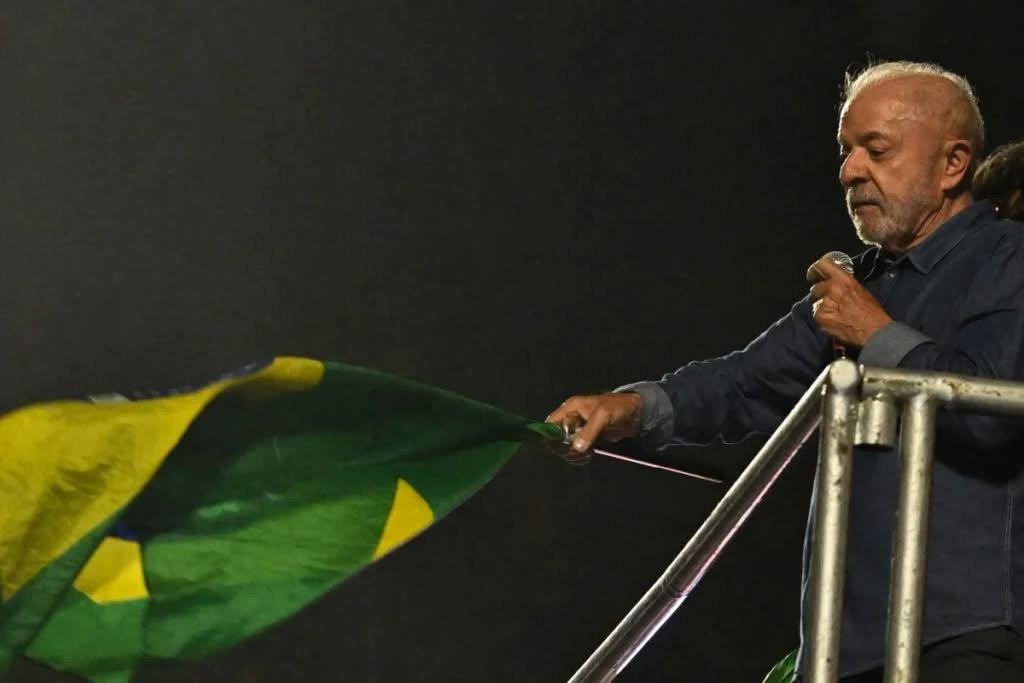
Brazilian President Luiz Inácio Lula da Silva has won re-election for a fourth, non-consecutive presidential term after defeating conservative challenger Flávio Bolsonaro in the October 25, 2026, presidential runoff, but the opposition candidate has refused to concede and says he will seek to annul the election.
Official results released by Brazil’s Superior Electoral Court (TSE) show that Lula secured 64,256,232 votes, representing 51.79 per cent of valid ballots, while Bolsonaro received 59,826,041 votes, or 48.21 per cent.
The result gives Lula a lead of approximately 4.43 million votes, extending the political influence of his left-wing Workers’ Party (PT) and keeping Brazil under left-wing leadership for another presidential term.
However, Bolsonaro’s refusal to accept the outcome has introduced fresh uncertainty into the country’s political landscape, raising questions about the next steps in the electoral process and whether the opposition will pursue a formal legal challenge.
The dispute follows controversy over a decision to extend voting hours in some areas after reports of transport difficulties and severe weather disrupted access to polling stations. Bolsonaro has criticised the decision, arguing that it undermined the legitimacy of the election.
As Brazil begins to absorb the result, attention is shifting towards the electoral authorities, the courts and the opposition’s next actions. The immediate challenge will be to address any formal complaints through the country’s legal institutions while maintaining public confidence in the electoral process.
Lula Secures Narrow Victory in Closely Contested Runoff
The October 25 runoff concluded a closely fought presidential contest between Lula, an experienced left-wing political leader, and Bolsonaro, a conservative senator seeking to bring his political movement to the presidency.
According to the official results published by the TSE, Lula received 51.79 per cent of valid votes, compared with Bolsonaro’s 48.21 per cent.
The margin demonstrates how sharply divided Brazil remains over its political leadership, economic direction and social priorities.
The election followed an unexpectedly competitive first round on October 4, when Bolsonaro finished ahead of Lula. Official results from that round showed Bolsonaro receiving approximately 47.03 per cent of valid votes, while Lula obtained 45.16 per cent.
Neither candidate secured the majority required to avoid a runoff, sending the two leading contenders into a second contest on October 25.
Lula’s eventual victory represented a reversal of the first-round outcome. The president secured enough support in the runoff to overcome Bolsonaro’s initial advantage and retain the presidency.
The outcome also demonstrated the importance of the second-round voting process in Brazil’s presidential elections, where the two leading candidates compete directly after the first round fails to produce an outright winner.
The Superior Electoral Court announced Lula’s re-election after the votes were counted. Its published figures recorded more than 64.2 million votes for the incumbent and nearly 59.9 million for Bolsonaro.
Although the difference was substantial in absolute numbers, the percentage margin remained relatively narrow in a country with a population exceeding 200 million people.
The outcome is therefore likely to remain a major subject of political debate, particularly among voters who supported Bolsonaro and those who had hoped for a change in national leadership.
Flávio Bolsonaro Refuses to Concede
Bolsonaro has rejected the outcome politically and announced that he intends to seek the annulment of the election.
According to Reuters’ reporting on October 26, the senator said he would not concede defeat and challenged the legitimacy of the runoff, focusing particularly on the decision to extend voting hours in some locations.
The announcement signals the possibility of a legal dispute over the conduct of the election.
However, the available reporting does not establish that a formal annulment petition has already been filed or that an electoral court has accepted any challenge to the result.
The distinction is important. A candidate’s declaration that an election should be annulled is not, by itself, a legal decision that invalidates the result.
Any formal challenge would need to be assessed under Brazil’s electoral laws and procedures. The relevant authorities would have to consider the grounds presented, the evidence supporting the complaint and whether the alleged irregularities provide a legal basis for changing the outcome.
For now, Lula remains the winner declared by the electoral authority.
Bolsonaro’s refusal to concede nevertheless presents a political challenge for Brazil, where confidence in democratic institutions and acceptance of election results are central to the peaceful transfer of power.
A contested election can generate uncertainty even when official results have been announced. Political leaders, party organisations and supporters may interpret disputed events differently, making clear communication from electoral authorities particularly important.
The coming days will therefore be significant in determining whether the opposition pursues a formal legal route, what evidence it presents and how the country’s institutions respond.
Dispute Over Extended Voting Hours
One of the central controversies surrounding the runoff concerns a decision to extend voting hours in some locations.
Reports from Brazilian media and international news organisations indicate that the extension followed difficulties affecting voters’ access to polling stations, including transport disruptions and severe weather.
The decision was controversial because some polling stations had already closed before the extension was announced.
Bolsonaro criticised the move, describing it as unacceptable and questioning its implications for the election.
The issue has become a key part of the opposition’s challenge to the result. However, the existence of controversy does not establish that the extension changed the outcome or that the election was unlawfully conducted.
A determination of whether an electoral irregularity occurred, and whether it was serious enough to justify annulment, would depend on the applicable law and the evidence examined by the competent authorities.
Electoral processes sometimes require adjustments when unexpected circumstances interfere with voting. Such decisions must be evaluated against the legal framework governing the election, including the authority to make changes, the circumstances that prompted them and the effect on voters’ rights.
In Brazil’s case, the controversy will require careful scrutiny because the election was closely contested and the disputed decision affected the timing of voting in some areas.
At the same time, any assessment must distinguish between disagreement with an administrative decision and evidence that the election result was compromised.
The electoral authorities’ explanations, any relevant official records and the arguments presented in a formal legal challenge would be important in determining the next steps.
What the Official Results Show
The final figures published by Brazil’s Superior Electoral Court provide the clearest basis for understanding the outcome.
Lula secured 64,256,232 votes, representing 51.79 per cent of valid ballots. Bolsonaro received 59,826,041 votes, equivalent to 48.21 per cent.
The difference was 4,430,191 votes.
The TSE also reported that more than 128 million voters participated in the second round, from an electorate of approximately 158.7 million registered voters.
The turnout figures underline the scale of the electoral exercise and the importance of the outcome for Brazil’s political future.
The official results provide a reference point for any subsequent legal proceedings. If the opposition seeks to overturn the result, its arguments will need to be considered within the electoral system established by Brazilian law.
The existence of an official count does not prevent legally permitted challenges. However, an announced intention to contest the result does not automatically suspend or overturn the declared outcome.
The distinction between the official count, a candidate’s objections and any eventual judicial decision is essential to accurate reporting of the dispute.
Who Is Luiz Inácio Lula da Silva?
Lula is one of the most influential figures in modern Brazilian politics. A former metalworker and trade union leader, he rose to national prominence through the labour movement before becoming a leading figure in the Workers’ Party.
He first served as Brazil’s president from 2003 to 2010, completing two consecutive terms.
After returning to the presidency in 2023, he sought another term in the 2026 election.
His political career has been closely associated with social welfare programmes, efforts to reduce poverty and inequality, workers’ rights and a prominent role for the Brazilian state in economic development.
Supporters credit his earlier administrations with expanding social programmes and improving living standards for many low-income households. Critics have raised concerns about government spending, economic management and corruption controversies involving political figures and institutions.
These competing assessments have helped shape Brazil’s political debate over the years.
Lula’s latest victory gives him another opportunity to pursue his policy priorities, but the narrow margin means that his administration will continue to face a substantial opposition constituency.
The result also means that questions surrounding the economy, public security, social policy and government accountability will remain central to the country’s political discussions.
His immediate task will be to consolidate support for his next administration while addressing the concerns of voters who backed the opposition.
Flávio Bolsonaro and the Conservative Opposition
Flávio Bolsonaro is a senator and the son of former Brazilian president Jair Bolsonaro. He became the conservative movement’s presidential candidate in the 2026 election and challenged Lula on a platform associated with the political right.
His campaign drew support from voters seeking an alternative to Lula’s leadership and from those aligned with the conservative movement built around his father.
The election also highlighted the continuing influence of the Bolsonaro political family in Brazil, despite the legal and political controversies surrounding the former president.
Flávio’s strong performance in the first round demonstrated the opposition’s ability to mobilise a substantial section of the electorate.
Although he lost the runoff, his 48.21 per cent share of valid votes means that the conservative movement retains a significant political base.
That support could influence legislative negotiations, public debate and the government’s ability to advance its agenda.
However, the implications will depend on how opposition parties respond to the result and whether they prioritise legal challenges, legislative opposition or preparations for future elections.
Bolsonaro’s decision to contest the outcome may also shape the relationship between the opposition and Brazil’s electoral institutions.
Whether the dispute remains within formal legal channels will be important for the country’s political stability.
The Legacy of Jair Bolsonaro’s Presidency
The 2026 election also reflects the continuing political consequences of Jair Bolsonaro’s presidency.
Jair Bolsonaro served as Brazil’s president from 2019 to 2022 before losing the 2022 election to Lula.
His presidency was marked by strong conservative politics, disputes over environmental policy, public health and the country’s democratic institutions.
Following his defeat in 2022, Brazil experienced a period of heightened political tension. The events surrounding the transition of power and subsequent legal proceedings against the former president continued to influence the national debate.
The former president was later convicted in a case concerning an alleged attempt to overturn the 2022 election result and received a prison sentence. Those proceedings formed part of the wider political context in which his son contested the presidency in 2026.
Flávio Bolsonaro’s candidacy therefore carried significance beyond an ordinary contest between two political parties. It represented an attempt by a prominent member of the Bolsonaro family to retain national political influence.
His strong first-round performance showed that the movement remains influential, while Lula’s runoff victory demonstrated that the opposition’s support was not sufficient to secure the presidency.
The latest dispute over the election result adds another chapter to Brazil’s recent political tensions.
Nevertheless, the legal and political circumstances surrounding the 2022 election should not automatically be treated as proof of wrongdoing in the 2026 contest. Any allegations concerning the current election must be evaluated on their own evidence.
What Lula’s Victory Means for Brazil’s Political Direction
Lula’s re-election keeps Brazil under left-wing leadership and gives his Workers’ Party another opportunity to shape national policy.
Brazil is Latin America’s largest economy and an important participant in international discussions concerning trade, climate change, food production, energy and global governance.
Decisions taken by its government can affect domestic businesses, regional economic cooperation and the country’s relationships with major international partners.
Lula has generally supported an active role for government in reducing inequality and promoting social development. His political approach has also emphasised multilateral cooperation and Brazil’s participation in international institutions.
The new term will provide an opportunity to continue those priorities, although implementation will depend on economic conditions, political negotiations and the government’s capacity to secure support for its policies.
The election does not remove the challenges facing the country. Economic pressures, public security concerns, inequality and disagreements over the role of government will continue to influence national debate.
The narrow victory also suggests that Lula will govern a politically divided country.
For his administration, the challenge will be to translate electoral support into workable policies while maintaining confidence among voters who did not support his candidacy.
For the opposition, the result presents a choice between challenging the election through established legal procedures and preparing to oppose the government politically.
The way both sides respond could influence Brazil’s political climate in the months ahead.
Implications for Democracy and Electoral Institutions
The dispute over the presidential result carries implications beyond the immediate contest between Lula and Bolsonaro.
Electoral systems depend on clear rules, transparent counting procedures and public confidence that votes are counted and reported fairly.
When a candidate disputes an election, the legal process provides a mechanism for examining specific allegations and determining whether any irregularity warrants a remedy.
Such procedures are particularly important in closely contested elections, where even administrative decisions can become politically contentious.
However, public confidence can be damaged when political claims circulate without supporting evidence or when disputes are presented as proof of wrongdoing before an independent assessment has taken place.
For that reason, Brazil’s electoral authorities and courts will have an important role in explaining the legal framework, addressing any properly filed complaints and communicating relevant decisions.
Political leaders also have a responsibility to distinguish between evidence-based objections and statements that merely express dissatisfaction with the outcome.
The immediate question is whether Bolsonaro’s announced challenge will develop into formal proceedings and, if so, whether those proceedings will produce evidence capable of affecting the result.
Until that process provides a different legal determination, the officially declared result remains the basis for reporting the election outcome.
International Reactions and Brazil’s Global Position
Lula’s re-election is also significant for Brazil’s international relationships.
As a major economy, agricultural producer and participant in multilateral organisations, Brazil has an important role in discussions involving climate policy, food security, trade and cooperation among developing countries.
The direction of its foreign policy can influence relationships with neighbouring Latin American states, the United States, Europe, China and other international partners.
Lula has advocated greater international cooperation and has sought to strengthen Brazil’s role in global diplomacy.
The continuation of his presidency is therefore likely to preserve broad elements of that approach, although specific policies will depend on decisions made by the administration.
For international partners, the election result provides a clearer picture of Brazil’s political leadership for the next term. The dispute over annulment, however, may keep attention focused on the country’s electoral institutions and political stability.
No specific international response should be assumed without an attributable statement from the relevant government or organisation.
The wider significance of the election will become clearer as Lula outlines his priorities and the opposition determines how it will respond to the outcome.
What Happens Next?
The next stage will depend partly on whether Flávio Bolsonaro submits a formal legal challenge and what grounds he presents.
Reuters reported on October 26 that Bolsonaro intended to seek annulment, but the available information did not establish that a formal petition had been filed.
If a challenge is submitted, the relevant Brazilian authorities will need to assess it according to the country’s electoral laws and procedures.
That assessment could involve examining the disputed voting-hour extension, the circumstances surrounding the decision and any evidence presented by the opposition.
The existence of a legal complaint would not, on its own, establish that the election was invalid. Any decision to alter or annul the result would have to come through the appropriate legal process.
Meanwhile, Lula will face the task of preparing for his next term and addressing the country’s political and economic challenges.
The transition period will also provide an opportunity for political leaders to clarify their positions and for electoral institutions to respond to any formal questions concerning the runoff.
For Brazil’s voters, the key issues will include the final legal status of the result, the government’s policy direction and whether the post-election dispute remains within established democratic procedures.
The election has produced a clear official winner, but the political consequences are not yet settled.
Lula’s victory gives him another presidential term, while Bolsonaro’s refusal to concede signals a potentially contentious period ahead. The credibility of the next steps will depend on evidence, transparent procedures and respect for the legal institutions responsible for resolving electoral disputes.
Weng Global – stories beyond borders
Sources
- Brazil’s Superior Electoral Court (Tribunal Superior Eleitoral)
- Reuters
- Associated Press
- Agence France-Presse
- Brazil’s Chamber of Deputies