Reported by Simon Daniel Yusuph l Journalist at Weng Global
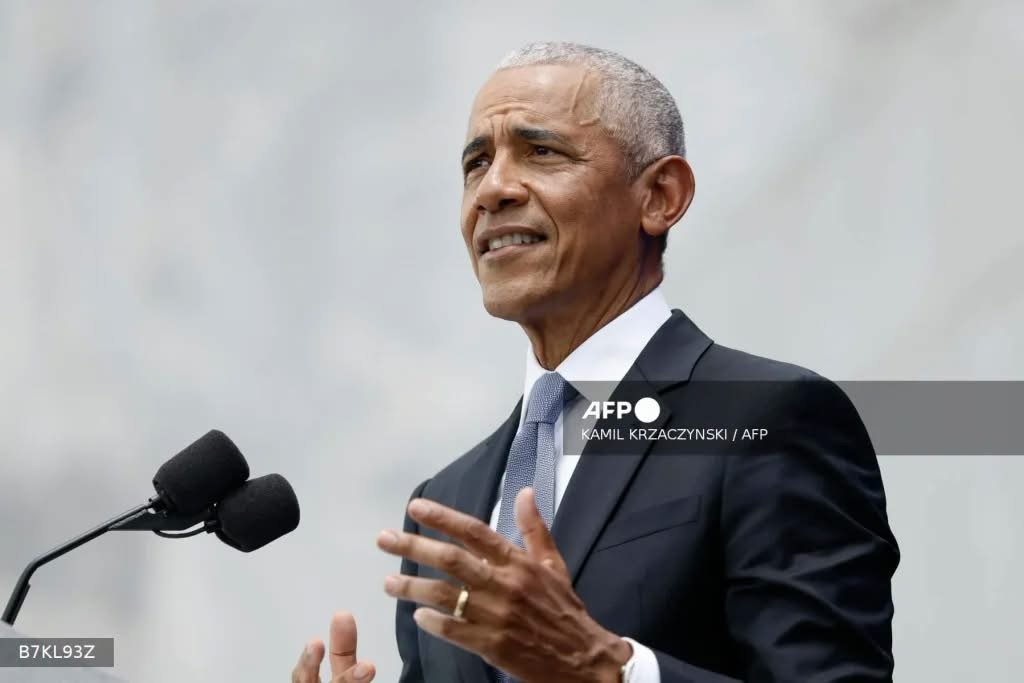
Former United States President Barack Obama has accused President Donald Trump’s administration of using federal government powers to target Democratic Congresswoman Ilhan Omar because of her political views, warning that the investigation into her immigration history raises serious concerns about democratic principles and the impartiality of law enforcement.
Obama made the criticism on Sunday, October 18, 2026, following a federal investigation into Omar’s citizenship and immigration records, which intensified after federal agents searched her Washington, D.C., residence on October 12.
The investigation has drawn national attention because Omar, who represents Minnesota’s Fifth Congressional District, is a naturalised United States citizen and one of Trump’s most outspoken critics in Congress.
Obama argued that government institutions should not be used to intimidate elected officials because of their political positions or public statements. He described the situation as an alarming development for American democracy and urged citizens to recognise the wider implications of allowing political disagreements to influence the exercise of state power.
Obama Challenges Trump Administration Over Omar Investigation
In his statement, Obama criticised what he characterised as the selective use of federal authority against a lawmaker who has repeatedly challenged Trump’s policies and political positions.
The former president argued that American democratic principles require government agencies to operate fairly, regardless of an individual’s political affiliation, public criticism of the president or position on controversial national issues.
His intervention brought additional attention to an investigation that had already generated criticism from Democratic lawmakers and civil rights advocates.
Obama’s central concern was that an elected representative should not face government action because of her political beliefs or willingness to criticise the administration.
The former president also warned that the normalisation of politically motivated investigations could create consequences beyond the immediate dispute involving Omar.
According to his argument, allowing a government to use its institutions against political opponents could establish a precedent that future administrations might exploit against people across the political spectrum.
The controversy therefore extends beyond Omar’s personal circumstances to questions about the independence of law enforcement, the protection of political dissent and the limits of executive authority.
However, Obama’s accusation that the investigation is politically motivated remains his assessment of the administration’s conduct. The existence of an investigation does not, by itself, establish that federal officials acted unlawfully or that the allegations under examination are true.
Federal Agents Search Ilhan Omar’s Washington Residence
The latest controversy followed a search of Omar’s Washington, D.C., residence by federal agents on October 12.
According to reports by Reuters and the Associated Press, the search formed part of an investigation connected to alleged irregularities in immigration and naturalisation paperwork dating back to Omar’s childhood.
The investigation reportedly examines whether information provided during the immigration process involving Omar or her late father was inaccurate.
Federal authorities have not publicly established that Omar committed immigration fraud, and the allegations remain unproven.
The Justice Department confirmed that the search was authorised by a court warrant, although officials have not publicly disclosed all the details of the investigation.
Omar has denied wrongdoing and described the search as an attempt to intimidate her politically. She has also maintained that she will not be silenced by the investigation.
The timing of the search has attracted particular scrutiny because it occurred only weeks before the November 3, 2026, midterm elections.
Critics argue that a high-profile investigation involving a prominent political opponent so close to an election risks undermining public confidence in the impartiality of federal institutions.
The administration’s position on the investigation and the evidence available to investigators remain important to determining whether the operation was justified by legitimate law enforcement concerns.
The distinction is significant: a court-authorised search allows investigators to pursue evidence within the scope of the warrant, but it does not establish the guilt of the person whose property is searched.
The investigation must therefore be assessed through verifiable evidence, applicable law and any findings established through the appropriate legal process.
What Is Known About Omar’s Citizenship?
Omar was born in Somalia and arrived in the United States as a refugee during her childhood.
She became a United States citizen in 2000 through her father’s naturalisation, according to reporting on the investigation and Obama’s account of her immigration history.
The current inquiry reportedly concerns historical immigration records and questions about information submitted during the process through which Omar and her family obtained legal status and citizenship.
Obama disputed the suggestion that the available account of Omar’s citizenship automatically supports claims that she obtained it improperly.
In defending the congresswoman, he pointed to her age at the time her father became a naturalised citizen and argued that she acquired citizenship through that process.
The investigation’s central questions concern historical records and whether any legally significant misrepresentation occurred. Those questions require evidence rather than political accusations.
Omar’s critics have raised allegations about her immigration history for years, but allegations and verified findings must remain separate.
A determination that a person committed immigration fraud would require appropriate legal and evidentiary support. Political criticism, repeated accusations or public suspicion cannot substitute for such a determination.
The distinction also matters because citizenship carries significant legal protections. Any attempt to revoke citizenship must comply with applicable law and the procedures governing denaturalisation.
The investigation’s outcome will therefore depend on the evidence available to authorities, the relevant legal standards and any subsequent proceedings.
Neither Obama’s defence of Omar nor the administration’s investigation should be treated as a substitute for an independent assessment of the underlying evidence.
Trump’s Previous Criticism of the Congresswoman
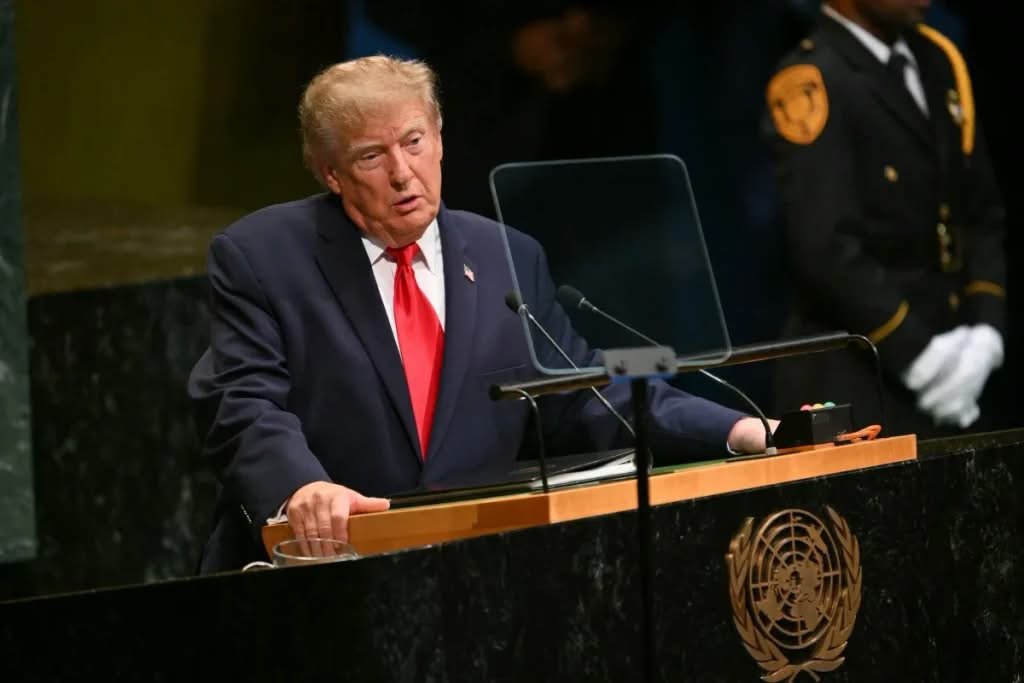
Omar has been a frequent target of criticism from Trump and his political allies.
The president has repeatedly attacked the congresswoman over her political positions, her Somali background and her criticism of his administration’s approach to immigration and other national issues.
Their longstanding political conflict has contributed to concerns about whether the current investigation is being conducted independently of the president’s personal and political disagreements with her.
Trump has continued to criticise Omar publicly. However, he has also said he does not take a position on whether she should be deported, according to an ABC News report published after the search of her residence.
That distinction is relevant because the investigation is being conducted through federal institutions, while the president’s public statements form part of the broader political controversy surrounding the case.
The administration’s critics contend that the history of public attacks against Omar makes it particularly important for officials to demonstrate that the investigation is based on credible evidence and follows established procedures.
The administration, meanwhile, has not publicly established through the information available that the investigation is intended to punish Omar for her political views.
Determining whether political considerations improperly influenced the inquiry would require evidence about the investigation’s origins, decision-making process and compliance with relevant legal safeguards.
A fair assessment must therefore distinguish the documented history of political hostility from the separate question of whether investigators have a legitimate legal basis for examining Omar’s records.
Why Obama’s Intervention Matters
Obama’s intervention is significant because he served as president from 2009 to 2017 and remains an influential figure within the Democratic Party.
Although former presidents often comment on major national developments, a direct public challenge to an ongoing investigation involving a sitting member of Congress can intensify political scrutiny of the administration.
His criticism also places the Omar case within a broader debate about the relationship between executive power, law enforcement and political opposition in the United States.
At the centre of that debate is a fundamental democratic question: how can a government investigate credible allegations against public officials while ensuring that its investigative powers are not used to punish political opponents?
The answer requires institutions to demonstrate independence, apply the law consistently and respect the rights of individuals under investigation.
If credible evidence of wrongdoing exists, public officials should not automatically be exempt from investigation because they hold elected office or belong to a particular political party.
Equally, political criticism of a president should not become grounds for selective enforcement or intimidation.
These principles are not mutually exclusive. A functioning democracy requires both accountability for potential wrongdoing and safeguards against the abuse of government authority.
For American citizens, the outcome could influence public confidence in the Justice Department and federal investigative agencies.
For observers outside the United States, the dispute also raises questions about the strength of democratic institutions in a country that has traditionally presented itself as a defender of constitutional government and political freedoms.
The credibility of those institutions depends not only on whether they investigate allegations but also on whether their actions can withstand independent scrutiny.
The Midterm Election Factor
The investigation has also become politically sensitive because of its proximity to the November 3 midterm elections.
The elections will determine control of the United States Congress and influence the administration’s ability to advance its legislative priorities.
Omar represents a Democratic district in Minnesota and is seeking re-election, making developments involving her politically consequential.
The timing has prompted concerns among Democrats that the investigation could affect the electoral environment or discourage public officials from openly criticising the administration.
However, the timing alone does not establish that investigators acted for electoral reasons.
A proper assessment would require examining the investigation’s chronology, the evidence supporting the search, the decisions made by relevant officials and whether established safeguards against politically sensitive enforcement actions were followed.
The issue is particularly important because public confidence in elections depends partly on the perception that government institutions are not being used to advantage one political party over another.
Investigations involving prominent political figures can become politically charged even when authorities maintain that their work is based on evidence.
For that reason, transparency about the legal basis of investigative actions, within the limits imposed by an ongoing criminal inquiry, could help address legitimate public concerns.
The administration’s handling of the case may therefore have implications beyond Omar’s individual circumstances.
Legal Questions Surrounding Denaturalisation and Deportation
The controversy has also raised questions about whether the federal government could attempt to revoke Omar’s citizenship and pursue deportation.
Denaturalisation is the legal process through which a person who acquired United States citizenship through naturalisation may lose that citizenship under specific circumstances recognised by law.
It is not an automatic consequence of an investigation or an allegation that information in historical immigration documents was inaccurate.
The government would need to satisfy the applicable legal requirements, and any attempt to revoke citizenship would be subject to relevant procedural and judicial safeguards.
The legal position is especially important in Omar’s case because the publicly reported account states that she became a citizen through her father’s naturalisation when she was a minor.
The investigation reportedly examines historical documentation and whether relevant information was misrepresented. The precise legal significance of those records has not been conclusively established in the public reporting available.
Trump administration officials have discussed the possibility of denaturalisation in cases involving alleged fraud, adding to the controversy over Omar’s citizenship status.
Nevertheless, the existence of a possible legal route does not establish that the requirements for using it have been met in this case.
Any potential action would need to be assessed against the relevant statutes, established legal procedures and the evidence produced by investigators.
Omar’s citizenship cannot be treated as revoked merely because federal authorities are investigating her immigration history.
Similarly, deportation cannot be presented as an established outcome while the relevant legal questions remain unresolved.
The distinction between an investigation, a formal legal action and a final judicial determination is essential to accurate reporting.
Concerns About Government Accountability
The dispute has renewed debate over how democratic institutions should respond when allegations of political interference arise.
In the United States, federal investigative agencies operate within a legal framework intended to ensure that criminal investigations are based on evidence and conducted according to established procedures.
When a prominent political figure alleges that those powers are being used selectively, the allegation itself warrants careful scrutiny, but it does not automatically prove misconduct.
Independent examination of the facts is necessary to establish whether the investigation follows the law and whether political considerations have influenced official decisions.
The same standard should apply regardless of which party controls the White House.
Government accountability requires authorities to investigate credible allegations without discrimination, while also protecting individuals against arbitrary or politically motivated action.
The Omar case illustrates the difficulty of maintaining public confidence when legal proceedings become entangled with a highly polarised political environment.
Supporters of the investigation may argue that public officials should face scrutiny when credible questions arise about their records. Critics may counter that the history of political attacks against Omar creates a risk of selective enforcement.
Both positions must ultimately be evaluated against verifiable evidence and the applicable law.
The most important question is not simply which political side benefits from the controversy, but whether the investigation meets the standards expected of an impartial justice system.
What Happens Next?
The immediate focus will remain on the federal investigation into Omar’s immigration and naturalisation records.
Authorities may continue examining relevant documents and evidence, but the full scope of their inquiry and any potential next steps have not been publicly established.
The investigation could lead to further legal action if authorities determine that sufficient evidence exists. It could also conclude without charges or other action if the evidence does not support the allegations.
No conclusion about Omar’s guilt or the administration’s motives should be drawn before the relevant facts are established.
Omar has denied wrongdoing and rejected the investigation as politically motivated. Obama’s public criticism has increased pressure on the administration to address concerns about the impartiality of its actions.
Any further developments, including possible legal proceedings or official explanations, will be important in determining the direction of the case.
The investigation is also likely to remain part of the wider political debate ahead of the midterm elections, particularly as lawmakers and voters assess questions about government accountability and the independence of federal institutions.
For now, the central issues remain unresolved: whether the investigation is supported by sufficient evidence, whether established procedures have been followed and whether the process has been influenced by political considerations.
Weng Global will continue to distinguish verified developments from allegations and political claims as further information becomes available.
Weng Global – stories beyond borders
Sources
- Reuters — Reporting on the federal investigation into Ilhan Omar’s immigration records and the search of her residence.
- Associated Press — Reporting on the search of Omar’s home, the investigation and reactions from political leaders.
- The Washington Post — Reporting on the investigation and the Trump administration’s earlier scrutiny of Omar’s citizenship records.
- CNN — Reporting on Barack Obama’s criticism of the investigation.
- ABC News — Reporting on Donald Trump’s public comments about Omar and the possibility of deportation.