Reported by Simon Daniel Yusuph l Journalist at Weng Global
Media adviser to former Vice-President Atiku Abubakar, Paul Ibe, has challenged the Minister of the Federal Capital Territory (FCT), Nyesom Wike, to publish invoices and disclose the funding sources for live broadcasts of his media engagements, raising questions about transparency, public expenditure and the use of government resources for political communication.
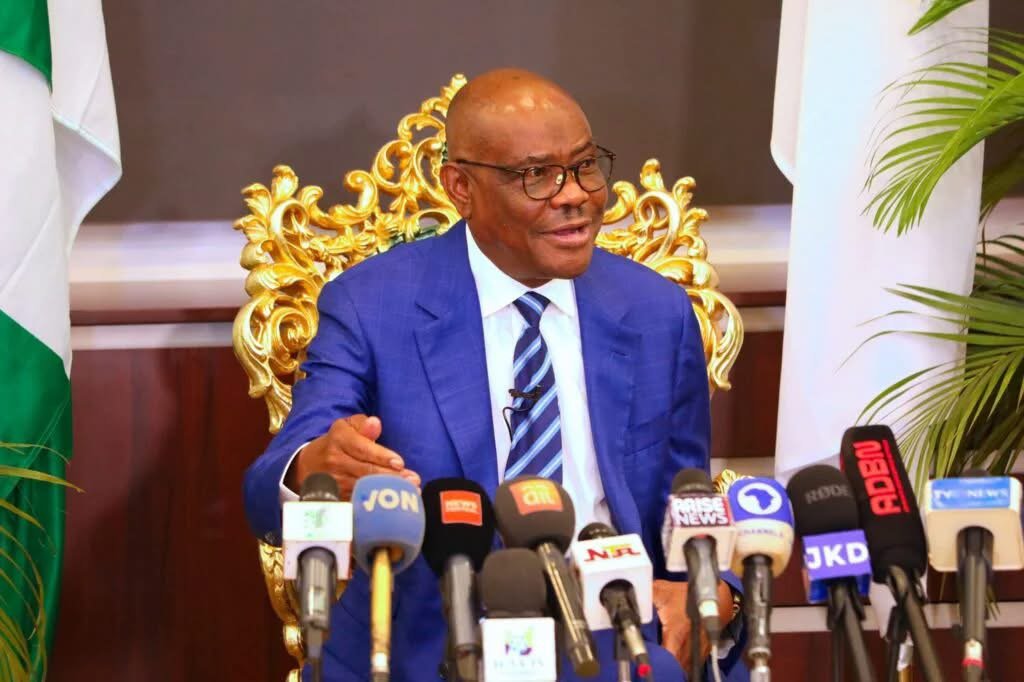
Ibe made the demand in a post on X on Tuesday, following Wike’s media parley in Abuja, where the minister discussed his administration’s projects and political support for President Bola Tinubu ahead of Nigeria’s 2027 general election.
The former vice-president’s aide questioned the cost of broadcasting the minister’s media engagements across several television and radio stations, arguing that residents of the FCT should be able to establish how much the broadcasts cost and whether public funds were used to finance them.
However, the cost figures cited by Ibe remain estimates. The available information does not include invoices, contracts, payment records or official budget documents independently establishing the actual expenditure or the source of funding.
The issue therefore centres on a demand for financial disclosure rather than a verified finding that public money was spent on the broadcasts.
Ibe Estimates Broadcast Costs Could Reach Billions of Naira
In his post, Ibe estimated that broadcasting a media engagement could cost between ₦10 million and ₦20 million per station per hour.
Using eight television and radio stations broadcasting for two hours as his example, he calculated that one session could cost between ₦160 million and ₦320 million.
He further estimated that holding 12 such sessions over a year could produce total expenditure ranging from ₦1.92 billion to ₦3.84 billion.
The calculations are based on the rates and broadcasting arrangements assumed in his post. They have not been independently verified and should not be treated as the confirmed cost of Wike’s media engagements.
Actual expenditure would depend on several factors, including the number of participating stations, the duration of each broadcast, the commercial rates charged, the nature of the arrangement and whether the stations received payment for carrying the events.
Other relevant considerations include whether the broadcasts were purchased as commercial airtime, arranged through a media partnership, covered as news events or funded through another arrangement.
Without invoices, contracts or payment records, it is not possible to determine which arrangements applied to the minister’s media parley.
Ibe nevertheless argued that the estimated figures warranted public scrutiny, particularly if any expenditure was drawn from government funds.
Atiku’s Aide Demands Invoices and Budget Details
Ibe called on Wike to disclose the stations that received payments, the amounts involved, the sources of the money and the budget lines under which any public expenditure was authorised.
His demand raises several questions relevant to financial accountability in government communications.
First, identifying the funding source would help establish whether the broadcasts were financed by the FCT Administration, a political organisation, private sponsors or another entity.
Second, invoices and payment records would help clarify whether money changed hands, which services were purchased and the amounts involved.
Third, the relevant budget lines, where public funds were used, would help establish the official purpose of the expenditure and the budgetary provision under which it was approved.
These details would be necessary to assess the expenditure properly rather than relying on estimates based on assumed broadcasting rates.
Public expenditure should be assessed against documentary evidence, applicable financial rules and the stated purpose of the spending. Equally, allegations about the misuse of public funds should not be treated as established facts without supporting evidence.
Ibe’s demand therefore places the emphasis on disclosure and verification.
Public Accountability and Government Communication
Government officials regularly use press conferences, media interviews and televised briefings to explain policies, announce projects and respond to questions about their performance.
Such engagements can help citizens understand government decisions and provide journalists with opportunities to scrutinise public officials.
However, the financial arrangements behind a government-sponsored communication exercise can become a legitimate matter of public interest when public resources are involved.
The key distinction is between the news value of an official’s appearance and the cost of arranging or broadcasting that appearance.
A television station may decide to cover a minister’s press conference as part of its normal news operations. Alternatively, an event organiser may purchase airtime or arrange a live broadcast through a commercial agreement.
Those arrangements are not necessarily equivalent, and the presence of a minister on television does not, by itself, establish that the government paid for the coverage.
Determining the actual arrangement would require evidence from the relevant parties, including the FCT Administration and the participating broadcasters.
If public money was spent, disclosure of the purpose, amount and authorisation would allow residents and other interested parties to assess whether the expenditure complied with applicable rules and served a legitimate public function.
If the broadcasts were privately funded or provided under a different arrangement, clarification of that arrangement would help resolve the questions raised.
Ibe Questions the Focus of Wike’s Media Parleys
Beyond the estimated cost, Ibe questioned the issues receiving attention during Wike’s media engagements.
He argued that the broadcasts should devote greater attention to infrastructure, public services and other matters affecting residents of the Federal Capital Territory rather than political disagreements involving opposition figures.
In his post, Ibe referred to Atiku, former Rivers State Governor Rotimi Amaechi, Labour Party figure Peter Obi and political groups, including the African Democratic Congress and the Nigerian Democratic Congress.
His criticism reflects the wider political disagreements surrounding Wike’s public support for Tinubu ahead of the 2027 general election.
Wike, a former governor of Rivers State, has continued to defend his political position and has used public engagements to discuss the president’s record and the political alliances supporting his re-election bid.
A media briefing can legitimately address both government performance and political developments, particularly where journalists question officials about their public statements or political decisions.
Nevertheless, the balance between administrative communication and partisan political messaging is an important consideration when evaluating the purpose and financing of official media activities.
The questions raised by Ibe do not, on their own, establish that the minister’s media engagements were improperly funded or that public resources were used for private political purposes.
Those conclusions would require evidence about the content of the engagements, the funding arrangements and the responsibilities of the relevant institutions.
What FCT Residents Need to Know
The controversy touches on several issues that matter to residents of the FCT.
The first is financial transparency. If government resources were used to pay for broadcasts, residents have a legitimate interest in understanding the expenditure and its official purpose, subject to applicable disclosure rules.
The second is value for money. Where public funds are spent on communications, the relevant authorities should be able to explain the service purchased, the cost incurred and the public purpose served.
The third is the distinction between government communication and political campaigning. Public officials may participate in political debates, but the financing of any associated activities should be assessed against the applicable laws, regulations and budgetary rules.
These questions are particularly relevant when government communication involves substantial sums of money. However, the amounts in this case remain Ibe’s estimates rather than verified expenditure figures.
A proper assessment would require a clear record of the broadcasts, the participating stations, the commercial arrangements, the source of payment and any relevant budgetary authorisation.
The available information does not establish whether the FCT Administration paid for the broadcasts, whether any payments were made by a political organisation or private entity, or whether the stations carried the engagements as part of their ordinary news coverage.
It would therefore be premature to conclude that the estimated amounts represent money spent by the government.
Wike’s Office Yet to Provide an Immediate Response
According to the supplied report, FCT Minister’s spokesperson, Lere Olayinka, was contacted for comment but was unable to provide an immediate response to the enquiry.
No substantive response from Wike or the FCT Administration was included in the available material addressing Ibe’s specific demand for invoices, station-by-station payment details and funding sources.
The absence of an immediate response does not establish that the allegations or estimates are correct. The minister’s office and the relevant broadcasters would be in a position to clarify the arrangements if they choose to provide supporting information.
Further reporting would need to establish whether invoices or contracts exist, whether payments were made and which entity, if any, financed the broadcasts.
The FCT Administration’s relevant budget and expenditure records could also help clarify whether the engagements involved public spending.
What Happens Next?
The central outstanding issue is whether documentary evidence supports the estimated costs and identifies the source of funding for Wike’s media engagements.
Publishing the relevant invoices, where they exist, alongside payment records and applicable budget details would help establish the actual costs and the entities responsible for them.
The participating television and radio stations could also clarify whether they received payment, the nature of any commercial arrangements and the duration of the broadcasts.
Until such information becomes available, the figures cited by Ibe should remain clearly identified as estimates, and questions about the use of public funds should remain questions requiring evidence.
The episode highlights a broader principle of public accountability: government communication should be open to scrutiny when public resources are involved, while claims about expenditure must be supported by verifiable records.
For now, Ibe has made a demand for disclosure, but the available information does not independently establish the actual cost of the broadcasts or confirm that public money financed them.
Weng Global – stories beyond borders
Sources
- Paul Ibe’s post on X, as described in the supplied report.
- The supplied report on Ibe’s demand for disclosure and the response from the FCT minister’s spokesperson.
- Punch Newspapers, reporting on Wike’s political position and public engagements.
- The Independent Newspaper Nigeria, reporting on Wike’s October 13, 2026, media parley in Abuja.