Reported by Simon Daniel Yusuph l Journalist at Weng Global
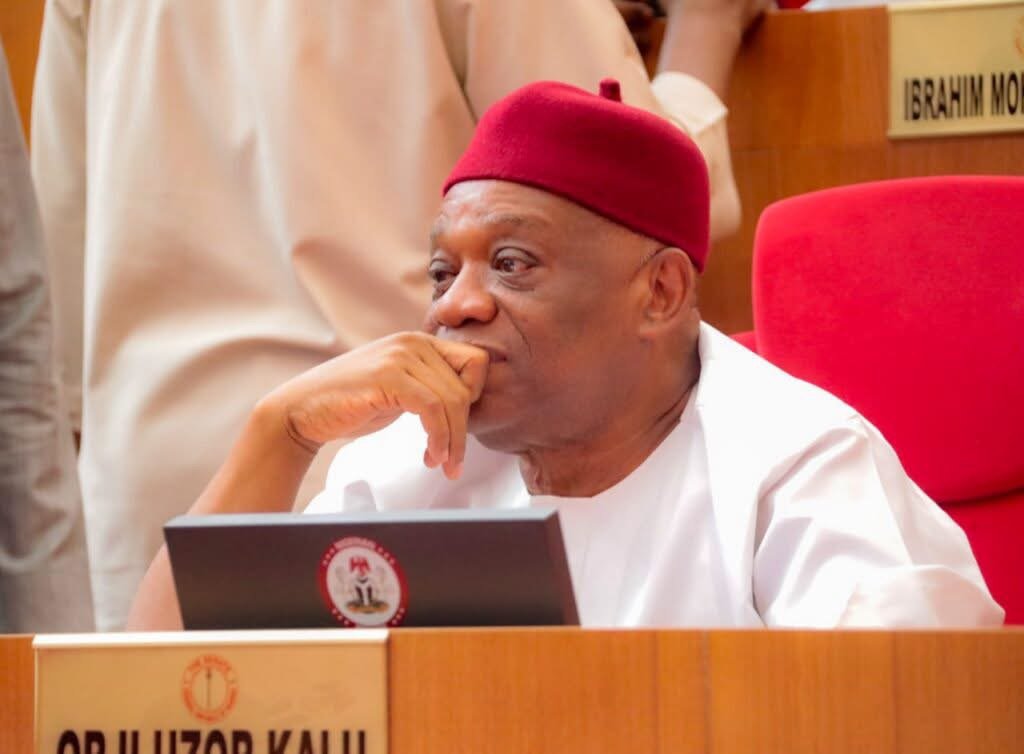
Senator Orji Uzor Kalu has insisted that the South-East Development Commission (SEDC) must operate from the region it was established to serve, stressing the importance of ensuring that the federal agency remains focused on its development responsibilities across the South-East.
Kalu, who represents Abia North Senatorial District in the Senate and chairs the Senate Committee on the South-East Development Commission, has been at the forefront of legislative scrutiny of the commission’s operations, expenditure and progress towards fulfilling its mandate.
The debate over where the commission should operate from is closely connected to broader questions about public spending, institutional efficiency, accountability and the delivery of development projects in Abia, Anambra, Ebonyi, Enugu and Imo states.
The SEDC was established to promote economic growth, infrastructure development, investment and improved living standards across the South-East. Its ability to translate that mandate into practical benefits for residents remains a key concern for lawmakers and other stakeholders.
Kalu Emphasises the Commission’s Regional Responsibility
Kalu’s position reflects the expectation that an institution established specifically to address the development needs of the South-East should maintain its principal operations within the region.
The commission is expected to coordinate development initiatives, engage state governments, identify investment opportunities and support projects addressing infrastructure and economic challenges across the five states.
Operating from the region can help strengthen direct engagement with communities, businesses, traditional institutions, state authorities and other stakeholders whose cooperation is necessary for successful project implementation.
It may also improve access to the commission for residents and organisations seeking information about its programmes or opportunities to participate in development initiatives.
However, the effectiveness of the institution will ultimately depend not only on its location but also on how efficiently it manages public resources, identifies priority projects and demonstrates measurable results.
The central issue is therefore whether the commission can establish an effective operational structure that supports its statutory responsibilities while minimising unnecessary administrative costs.
Enugu Headquarters and Abuja Liaison Office
The location of the SEDC’s headquarters has featured prominently in discussions about its administration and expenditure.
According to information published on the commission’s official website, its headquarters is located in Enugu State, with additional offices serving the five states covered by its mandate.
The existence of an Abuja liaison office has nevertheless attracted attention during Senate oversight proceedings.
In June 2026, the Senate Committee on the South-East Development Commission questioned the commission’s management over its financial records and expenditure. The discussions included scrutiny of reported spending associated with the Abuja office.
Premium Times reported on June 11, 2026, that the commission had explained the purpose of the liaison office following questions raised by lawmakers.
The commission said the facility supported engagements with the National Assembly, federal ministries and agencies, development finance institutions and other strategic partners.
That explanation highlights the administrative reasons an agency operating under the Federal Government might maintain a presence in Abuja. Engagement with federal institutions can be important for securing cooperation, coordinating policies and advancing development projects.
However, the existence of such a liaison office does not necessarily settle the question of where the commission’s principal operations should be concentrated.
For Kalu and other lawmakers concerned about the commission’s performance, the broader consideration is whether its administrative arrangements are appropriate for an agency established to serve a specific region.
Senate Scrutiny Raises Questions About Public Spending
The debate over the commission’s operations has unfolded alongside legislative scrutiny of its finances.
During an oversight engagement in June 2026, the Senate committee examined expenditure records presented by the commission’s management, led by Managing Director and Chief Executive Officer Mark Okoye.
According to reports by Premium Times and Kapital FM, lawmakers questioned aspects of the commission’s financial presentation, including spending associated with its Abuja liaison office and amounts they said required further explanation.
The scrutiny underscored the responsibility of the National Assembly to examine how public funds allocated to government institutions are used.
For a newly established development commission, administrative spending may be necessary to create offices, recruit personnel, establish operational systems and prepare projects for implementation. Such expenditure, however, must be supported by appropriate records and assessed against the institution’s mandate.
The distinction between legitimate operational costs and expenditure that requires further justification is important.
An office may serve a practical purpose, but its cost, duration of use and contribution to the agency’s objectives should be demonstrable. Likewise, funds described as committed to projects should be supported by documentation showing the nature of the commitments and the progress made towards implementation.
The Senate’s questions therefore concern more than the physical location of the commission. They also relate to whether its resources are being managed transparently and directed towards the development priorities for which the agency was established.
The concerns raised during oversight proceedings should not, by themselves, be treated as proof of financial wrongdoing. Determining whether expenditure was proper requires examination of the relevant records, explanations from the commission and any subsequent findings by the appropriate authorities.
What the SEDC Is Expected to Deliver
The South-East Development Commission was created to promote sustainable economic development and address infrastructure and investment challenges across the region.
Its responsibilities cover five states with different economic strengths, infrastructure needs and development priorities.
These include improving infrastructure, encouraging investment, supporting businesses, promoting economic opportunities and helping communities benefit from development initiatives.
The region has a significant commercial and entrepreneurial base, making infrastructure and investment particularly important to its economic prospects. Better transport connections, reliable energy, effective logistics and access to finance can help businesses expand and create employment.
A development commission can contribute by coordinating stakeholders, supporting project preparation, identifying investment opportunities and helping mobilise resources for initiatives that individual communities or local authorities may struggle to deliver independently.
Nevertheless, establishing an agency does not automatically produce these outcomes.
The commission must translate its mandate into clearly defined priorities, transparent procurement processes, realistic implementation plans and projects whose progress can be independently assessed.
Its administrative arrangements should support these responsibilities rather than become an end in themselves.
A regional headquarters can help facilitate engagement with local stakeholders, but its value should be measured by how effectively the commission uses its proximity to the people and institutions it serves.
Why the Location Debate Matters
The disagreement over the SEDC’s operating base raises a wider governance question: how should public institutions balance the need for access to federal decision-makers with the responsibility to remain close to the communities they serve?
For an agency with a regional development mandate, maintaining its principal operations within the region may strengthen accessibility and improve coordination with state governments.
It can also make it easier for businesses, community representatives and other stakeholders to engage directly with the institution.
At the same time, a liaison office in the Federal Capital Territory may provide practical benefits when regular engagement with national institutions is required.
The issue is therefore not necessarily whether an agency should have any presence outside its designated region. Rather, it is whether the size, cost and purpose of that presence are justified by the agency’s responsibilities.
A clear division between the regional headquarters and any external liaison office could help address concerns about administrative efficiency.
Such an arrangement would require transparent information about the functions performed at each location, the resources allocated to them and the results they support.
For residents of the South-East, the most important measure will be whether the commission delivers tangible improvements in infrastructure, investment, employment opportunities and living standards.
The location debate matters because administrative decisions can affect operating costs, accessibility and the speed with which an institution responds to regional needs.
However, the final assessment should be based on evidence of performance rather than location alone.
Accountability and Regional Development Must Go Together
Kalu’s insistence that the commission should operate from the South-East places renewed attention on the relationship between institutional administration and regional development.
As chairman of the Senate committee responsible for overseeing the commission, he has a legislative responsibility to examine its activities and question whether its operations align with its statutory purpose.
That oversight should help ensure that public funds are managed responsibly and that the commission remains focused on the needs of the region.
The commission’s management also has a responsibility to provide clear explanations of its decisions, maintain accurate financial records and demonstrate progress towards its objectives.
Public confidence depends on the availability of reliable information about expenditure, procurement, project selection and implementation.
Publishing accessible updates on approved projects, funding commitments, procurement decisions and implementation milestones would help residents assess whether the commission is meeting expectations.
It would also allow lawmakers, civil society organisations, journalists and other stakeholders to evaluate progress using verifiable information.
The commission’s official website identifies transparency, sustainability, community engagement and development as important elements of its institutional approach. Demonstrating those commitments in practice will be essential to maintaining public confidence.
What Happens Next?
The key questions are whether the commission will maintain its principal operations at its designated headquarters in Enugu, how it will justify the role and cost of its Abuja liaison office, and what evidence it will provide of progress towards its regional development mandate.
The commission has previously indicated its intention to relocate fully to its designated headquarters in Enugu, according to reporting by Premium Times in June 2026. The latest statement attributed to Kalu reinforces the importance of keeping the institution’s operational arrangements aligned with the purpose for which it was created.
Any assessment of subsequent developments should distinguish between the commission’s stated plans, actions already completed and decisions formally confirmed by the relevant authorities.
Further clarity from the commission and the Senate committee would help establish the current position regarding its offices, administrative expenditure and implementation priorities.
Ultimately, the SEDC will be judged by more than where its officials work. Its credibility will depend on transparent administration, responsible spending and measurable improvements in the lives of people across Abia, Anambra, Ebonyi, Enugu and Imo states.
For the region, the central expectation is that the commission will use its resources and institutional authority to advance practical development rather than allow administrative disagreements to overshadow its core responsibilities.
Weng Global – stories beyond borders
Sources
- South-East Development Commission official website — information on the commission’s mandate, headquarters and institutional priorities.
- Premium Times — reporting on the commission’s Abuja liaison office and Senate scrutiny of its expenditure, published June 11, 2026.
- Kapital FM — reporting on the Senate committee’s examination of the commission’s financial records, published June 10, 2026.