Reported by Simon Daniel Yusuph l Journalist at Weng Global
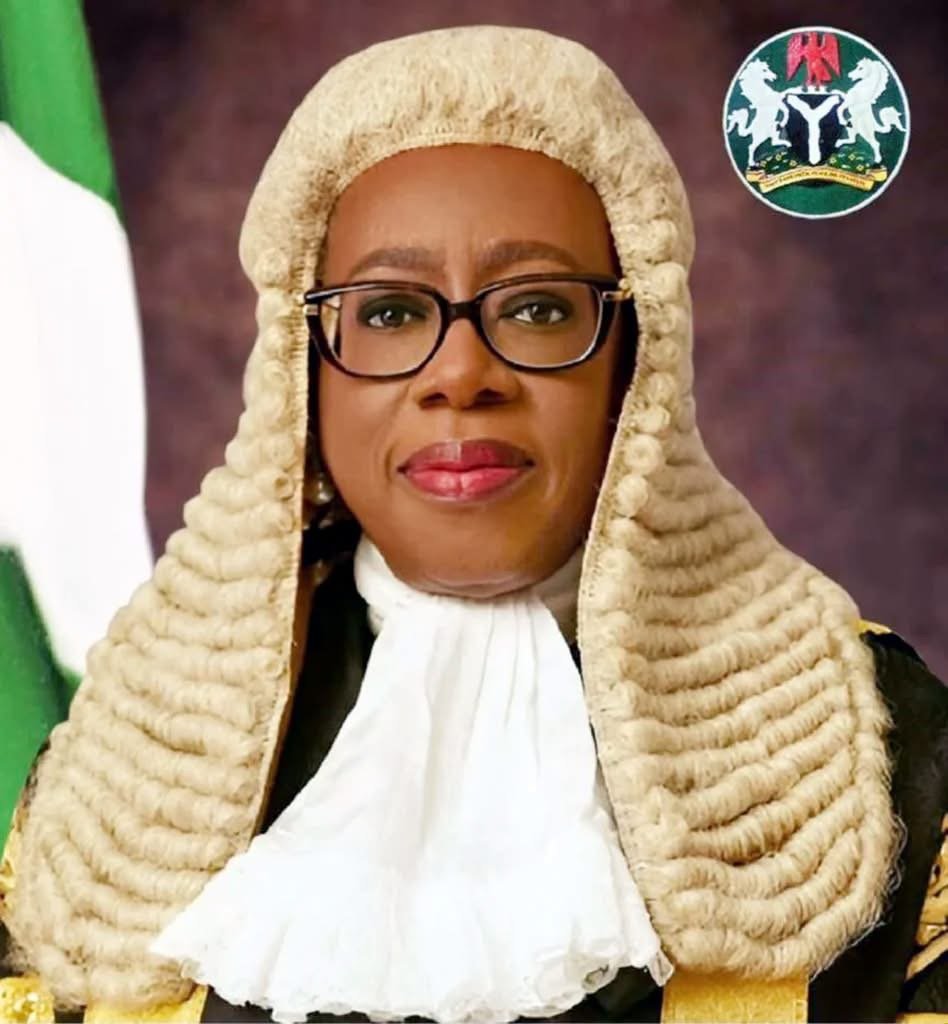
Nigeria’s Chief Justice, Justice Kudirat Kekere-Ekun, has cautioned judges against conduct that could raise doubts about their impartiality and urged lawyers to avoid manipulating court processes through multiple or strategically filed cases ahead of the 2027 general elections.
Kekere-Ekun issued the warning on Monday, October 12, 2026, in Abuja during the opening of the Supreme Court’s 2026/2027 legal year, stressing that election-related disputes require strict adherence to the Constitution, professional discipline and independence from political influence.
Her remarks come as political parties and their candidates prepare for the next general elections, a period expected to generate disputes over party leadership, candidate selection, electoral procedures and election results.
The Chief Justice said the conduct of judicial officers during an election period could attract intense public scrutiny, making it essential for them to avoid actions, relationships or public engagements that might create a reasonable perception of political alignment.
She also warned legal practitioners against forum shopping, the practice of seeking a perceived favourable court or division for a case, and the filing of multiple proceedings seeking substantially similar reliefs.
The warnings place judicial independence, professional responsibility and public confidence in the courts at the centre of preparations for Nigeria’s 2027 elections.
CJN Urges Judges to Maintain Impartiality
Kekere-Ekun stressed that judges must approach political and electoral disputes with the same calmness, detachment and commitment to the law expected in other cases.
Election-related litigation often attracts considerable attention because court decisions can affect political parties, candidates, public officeholders and the wider electorate.
The consequences can extend beyond the immediate parties in a case, particularly when disputes concern who is eligible to contest an election, which faction is legally recognised within a political party or whether an election result should stand.
Against this background, the Chief Justice emphasised the importance of judicial officers remaining conscious of their constitutional responsibilities and avoiding conduct that could undermine public confidence.
Her warning reflects a fundamental distinction in democratic governance: political parties compete for power, but courts are expected to resolve legal disputes according to the law rather than partisan interests.
A judge’s responsibility is not to secure a particular political outcome but to consider the evidence, apply the relevant law and provide reasoned decisions.
Public confidence can suffer when judicial decisions are perceived to reflect political relationships rather than legal reasoning, even where the merits of a particular case have not been independently established to support such a perception.
The challenge for the judiciary is therefore not only to deliver lawful decisions but also to preserve the appearance and reality of impartiality in politically sensitive cases.
Kekere-Ekun’s intervention serves as a reminder that judicial independence must be demonstrated through professional conduct as well as decisions delivered in court.
Lawyers Warned Against Forum Shopping
The Chief Justice also directed attention to the conduct of lawyers involved in political and electoral disputes, warning against practices that could undermine the orderly administration of justice.
Forum shopping occurs when a litigant deliberately chooses a court or division believed to be more favourable to its case instead of proceeding through the appropriate legal channel.
The practice can become particularly contentious when parties initiate similar proceedings in different courts or divisions in an attempt to secure favourable orders.
Such parallel cases may create conflicting decisions, complicate enforcement and increase uncertainty for the parties involved.
They can also place unnecessary pressure on judicial institutions, especially when different courts are asked to consider substantially similar questions.
Kekere-Ekun warned that these practices could damage public confidence and expose the judiciary to avoidable embarrassment.
She maintained that lawyers must not allow the legal profession to become an instrument for pursuing partisan or strategic objectives through the manipulation of court processes.
The proper court, she stressed, should be determined by the law governing a dispute rather than by the likelihood of obtaining a preferred outcome from a particular judge or division.
The warning is significant as political disputes frequently involve competing claims over jurisdiction, party leadership and the interpretation of electoral laws.
While parties have the right to approach the courts to protect their legal interests, that right does not remove the responsibility to follow proper procedures and respect the judicial system.
Lawyers are expected to advise clients on lawful remedies, identify the appropriate forum and avoid actions that could produce unnecessary or contradictory proceedings.
The Chief Justice’s position reinforces the principle that legal representation should advance a client’s legitimate interests without compromising the integrity of the administration of justice.
Political Cases Must Not Undermine Other Court Proceedings
Kekere-Ekun also highlighted the wider institutional implications of the volume of political and electoral litigation.
Political disputes can require urgent judicial attention because electoral laws often prescribe strict timelines for filing and determining particular cases.
However, the urgency attached to political matters can create pressure on court schedules and administrative resources.
The Chief Justice raised concern about the broader consequences if political disputes were to overwhelm court dockets at the expense of other litigants seeking justice.
Civil, criminal, commercial and other cases also require timely consideration. Delays can affect personal freedoms, business operations, property rights and the ability of individuals to obtain effective legal remedies.
The challenge, therefore, is to manage election-related cases within the applicable legal framework while ensuring that other matters do not become unnecessarily neglected.
Effective case management, coordination between courts and compliance with procedural rules can help reduce avoidable delays.
The Chief Justice’s warning suggests that lawyers and litigants have a responsibility to avoid multiplying proceedings unnecessarily and to disclose related cases where required.
Such practices can help courts understand the full scope of a dispute, minimise conflicting orders and allocate judicial resources more effectively.
For citizens, timely access to justice is an important part of the rule of law. A system in which politically connected or high-profile disputes consistently displace other cases risks weakening confidence in equal treatment before the law.
The issue is particularly important as Nigeria approaches another electoral cycle, when disputes may increase the demands placed on the judiciary.
Supreme Court Reports 411 Judgments in 2025/2026 Legal Year
The Chief Justice’s remarks came as she presented an account of the Supreme Court’s work during the 2025/2026 legal year.
According to figures reported by Punch Newspapers on October 12, 2026, the Supreme Court handled 2,456 matters during the period and delivered 411 judgments.
The matters comprised:
- 1,179 general civil motions.
- 573 criminal motions.
- 13 Sharia-related motions.
- 676 appeals.
The appeals included 433 general civil appeals, 212 criminal appeals, 19 political appeals, 12 Sharia appeals and 10 originating summons.
Kekere-Ekun compared the figures with the preceding legal year, during which the court handled 2,280 matters and delivered 369 judgments and rulings.
The figures indicate an increase in the number of matters handled and judgments delivered, although the number of cases alone does not provide a complete assessment of judicial performance.
The nature and complexity of cases, the time required to prepare reasoned judgments, the number of pending matters and the resources available to the court also influence the administration of justice.
The Chief Justice acknowledged that institutional statistics could not fully capture the work required to address delays and manage the court’s caseload.
The Supreme Court occupies a central position in Nigeria’s judicial system as the country’s highest court. Its decisions on constitutional and legal questions can have far-reaching implications for government institutions, political parties and individual citizens.
Political appeals form only a portion of its workload, but their consequences can be particularly significant where they concern electoral disputes or the interpretation of laws governing political competition.
The figures provide context for the Chief Justice’s emphasis on proper case management and responsible use of judicial processes.
Why Judicial Independence Matters Ahead of 2027
The credibility of elections depends on more than the conduct of voting and the announcement of results. It also depends on whether disputes can be resolved through a legal process that citizens and political actors consider fair.
In Nigeria, courts play an important role in resolving disputes arising from party primaries, candidate eligibility, party leadership and election outcomes.
Where electoral disputes reach the courts, judges must interpret the relevant laws and determine the issues presented before them. Their decisions can influence the political future of candidates and parties, making impartiality particularly important.
However, judicial independence is not simply the absence of direct political interference. It also involves maintaining professional standards, avoiding conflicts of interest and ensuring that decisions are based on the law and evidence.
The conduct of lawyers is equally important. Legal practitioners help determine how disputes are presented, which procedures are followed and whether related cases are properly disclosed.
When proceedings are duplicated or filed strategically in different courts, the resulting uncertainty can undermine the orderly resolution of disputes.
Conflicting orders can also leave parties uncertain about their legal obligations and create additional work for the courts.
For voters, these issues matter because confidence in electoral outcomes is strengthened when disputes are handled transparently, promptly and according to established legal principles.
The judiciary cannot guarantee that every litigant will agree with a judgment. It can, however, strengthen confidence by ensuring that proceedings are fair, decisions are reasoned and the law is applied consistently.
The Chief Justice’s warning is therefore relevant not only to judges and lawyers but also to political parties, candidates and other participants in the electoral process.
Political actors have a responsibility to respect lawful procedures and avoid treating litigation as a substitute for compliance with electoral rules.
At the same time, courts must remain accessible to parties with legitimate grievances and must not allow concerns about political pressure to prevent them from carrying out their constitutional duties.
The Role of Lawyers in Protecting Public Confidence
The warning to lawyers highlights the important relationship between professional ethics and the public standing of the judiciary.
Lawyers are officers of the court and have duties that extend beyond securing immediate advantages for their clients. They are expected to respect court rules, act with professional integrity and assist in the proper administration of justice.
In election-related disputes, those obligations become especially important because proceedings may attract intense public attention and carry significant political consequences.
A lawyer who files duplicative proceedings or seeks to obtain inconsistent orders risks contributing to confusion and undermining confidence in the judicial process.
Conversely, responsible legal representation can help courts identify the real issues in dispute, apply the relevant law and reach decisions without avoidable procedural complications.
The Chief Justice’s remarks also underline the importance of distinguishing legitimate legal challenges from attempts to exploit procedural opportunities for strategic advantage.
Not every case filed in different courts is necessarily improper. Jurisdiction, the nature of the relief sought and the applicable law must be considered in each instance. The concern is with practices that amount to improper forum shopping or the unnecessary duplication of proceedings.
The objective should be to ensure that disputes are resolved through the legally appropriate channels rather than through a search for a more favourable judge or conflicting decisions.
For the legal profession, maintaining these standards is essential to preserving the credibility of both the Bar and the Bench.
What Happens Next?
Kekere-Ekun’s warning places responsibility on judicial officers and legal practitioners as Nigeria moves towards the 2027 general elections.
Judges who are assigned to election tribunals or other politically sensitive cases will be expected to maintain impartiality and apply the law without favouring political interests.
Lawyers, meanwhile, will need to ensure that proceedings are filed in the appropriate courts, related cases are properly disclosed and legal procedures are not used to pursue improper strategic outcomes.
The Supreme Court’s reported workload also highlights the continuing importance of efficient case management and measures aimed at reducing delays.
No new enforcement measure or specific sanction arising from the warning was established in the information reviewed for this report. The practical impact of the Chief Justice’s remarks will depend on how judicial officers, legal practitioners and relevant institutions uphold existing constitutional, statutory and professional obligations.
As the election period approaches, the handling of political disputes will remain an important test of Nigeria’s judicial institutions.
The central question is whether the courts can resolve contentious cases fairly and efficiently while protecting the rights of litigants and preserving public confidence in the justice system.
For the 2027 elections, the principle at stake is straightforward: political competition must be settled through democratic and lawful processes, while the judiciary must remain independent of partisan interests.
WENG Global — Stories beyond borders
Sources
- Supreme Court of Nigeria — information on the court and its institutional role.
- Punch Newspapers — report on the Supreme Court’s 2025/2026 legal-year statistics, published October 12, 2026.
- Naija News — report on the Chief Justice’s October 12, 2026, warning to judges and lawyers ahead of the 2027 elections.
- The Sun — report on the Chief Justice’s earlier warning against judicial bias and forum shopping, published October 8, 2026.