Reported by Simon Daniel Yusuph l Journalist at Weng Global
Kenya has confirmed its first imported case of Bundibugyo Ebola virus disease after a Kenyan citizen who had been living in the Democratic Republic of Congo (DRC) became ill and later died in Nairobi, prompting intensified contact tracing and public-health surveillance across the country.
The Kenyan Ministry of Health confirmed the case on October 6, 2026, after laboratory testing established that the patient was infected with Bundibugyo virus, the Ebola species responsible for the ongoing outbreak in eastern DRC. The patient died on the night of October 5 despite receiving supportive medical care.
The development has raised concerns about the risk of cross-border transmission in East and Central Africa, although Kenyan health authorities said on October 7 that the country is not experiencing an Ebola outbreak and that the confirmed case was imported from the DRC.
Kenya Records First Confirmed Ebola Case
According to Kenya’s Ministry of Health, the patient had been living in the DRC and became ill approximately one month before travelling to Kenya.
He was treated at several healthcare facilities in the DRC before travelling by road through Uganda. He reached Kampala on October 2 and subsequently boarded Jambo Jet flight 8523 to Nairobi, arriving at Jomo Kenyatta International Airport on October 3.
Kenyan officials said the patient underwent routine public-health screening and immigration procedures at the airport.
He was subsequently taken directly from the airport to Nairobi Hospital by a relative and a friend, where medical personnel isolated him after observing symptoms consistent with Ebola.
The symptoms included fever, chills, fatigue, weakness, muscle pain, sore throat, painful swallowing and bleeding under the skin at injection sites, according to the Ministry of Health.
Samples were collected and tested at Kenya’s National Virology Reference Laboratory and the Kenya Medical Research Institute. Both tests confirmed infection with Bundibugyo virus.
Despite supportive treatment, the patient died on October 5.
Kenyan authorities subsequently carried out a safe and dignified burial in accordance with Ebola public-health protocols on October 6.
Health Authorities Intensify Contact Tracing
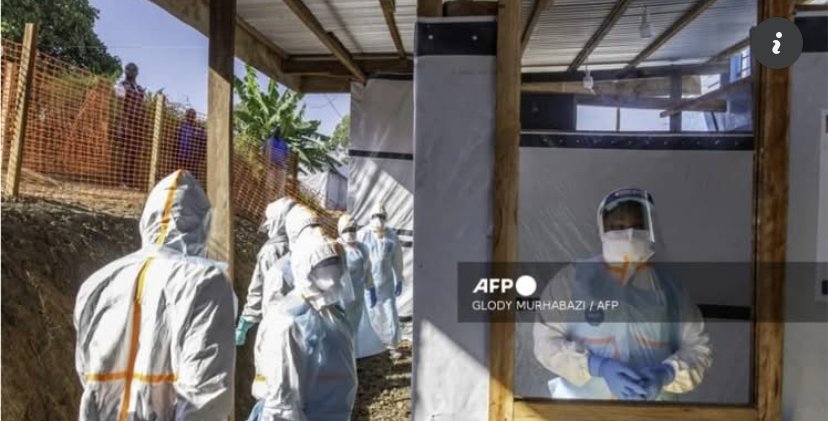
The immediate priority for Kenyan authorities is identifying and monitoring people who may have been exposed to the patient.
Kenya’s Ministry of Health initially identified 28 contacts, including family members and healthcare workers who had interacted with the patient.
However, the government said on October 7 that the contact-tracing effort had expanded to 57 people linked to the case.
Ten of those contacts had been located and placed under quarantine at the National Police Service Hospital in Nairobi, while authorities continued efforts to identify and monitor the remaining contacts.
Health authorities are also examining people who may have been exposed during the patient’s journey from the DRC through Uganda and into Kenya.
This includes passengers and crew members associated with the flight to Nairobi, as well as people who may have interacted with the patient before he was isolated.
The purpose of the contact-tracing exercise is to identify anyone who may develop symptoms early enough for medical monitoring and isolation.
Kenyan health authorities have stressed that early identification is critical in preventing an imported case from developing into wider community transmission.
Government Says Kenya Is Not Experiencing an Ebola Outbreak
Kenya’s Health Cabinet Secretary, Aden Duale, sought to reassure the public following confirmation of the case.
During a visit to Nairobi Hospital on October 7, Duale said Kenya was not experiencing an Ebola outbreak.
The government described the case as an imported infection linked to the ongoing outbreak in the DRC.
The distinction is important.
A confirmed imported case does not automatically mean that sustained transmission is occurring within the Kenyan population. Authorities must first determine whether any contacts become infected and whether there is evidence of onward transmission.
At present, Kenyan officials are focusing on surveillance, quarantine, contact tracing and preparedness.
The government has also increased attention at ports of entry and designated healthcare facilities capable of isolating suspected or confirmed patients.
Kenya Strengthens Isolation Capacity
Kenya has several facilities designated to manage suspected or confirmed Ebola cases.
The Ministry of Health said it had reviewed the country’s isolation and treatment capacity at five designated facilities.
These include Kenyatta National Hospital, Moi Teaching and Referral Hospital, National Police Service Hospital, Port Reitz Hospital and Nairobi Hospital.
Together, the facilities provide hundreds of beds for isolation and treatment, including high-dependency and intensive-care capacity at Nairobi Hospital and Kenyatta National Hospital.
Nairobi Hospital, where the first confirmed patient was treated, has a 133-bed Ebola isolation unit, including 45 high-dependency and intensive-care beds, according to the ministry.
The government said the review was part of efforts to ensure that the country’s health system can rapidly respond if additional suspected cases are detected.
The Role of Uganda in the Patient’s Journey
The case also highlights the challenge of controlling infectious diseases across borders in a region where people routinely travel between neighbouring countries.
The patient travelled from the DRC into Uganda by road before flying from Kampala to Nairobi.
Uganda had previously experienced its own Ebola outbreak during 2026, recording cases and deaths before being declared free of the disease in August.
The World Health Organization said Uganda had ended its latest outbreak in August, while Kenya is now the fourth country to confirm Bundibugyo virus disease in connection with the current regional situation.
The patient’s journey demonstrates why health authorities across East and Central Africa have maintained heightened surveillance even after individual countries have been declared free of Ebola.
A country can successfully end local transmission while remaining exposed to imported infections from neighbouring states where transmission continues.
The Wider Ebola Outbreak in the Democratic Republic of Congo
Kenya’s imported case is directly connected to a much larger Ebola outbreak in the DRC.
The DRC is currently dealing with an outbreak of Bundibugyo Ebola virus disease that began in 2026 and has spread across several provinces.
The outbreak has become one of the most serious Ebola emergencies the region has faced, with thousands of confirmed infections and deaths reported by Congolese authorities.
Reuters reported that the outbreak had recorded more than 8,000 cases and more than 4,000 deaths by early October.
The scale of the outbreak has placed enormous pressure on healthcare systems and disease-control programmes in affected areas.
The movement of people across borders adds another layer of complexity because Ebola does not respect national boundaries.
WHO has therefore been supporting Kenya and other countries in strengthening surveillance, laboratory testing, infection prevention and control, contact tracing and emergency preparedness.
What Is Bundibugyo Ebola Virus Disease?
Bundibugyo virus is one of the viruses that causes Ebola virus disease.
Ebola is a severe infectious disease that can spread through direct contact with the blood or other bodily fluids of an infected person or someone who has died from the disease.
The illness can initially produce symptoms such as fever, weakness, fatigue, muscle pain and sore throat before progressing to more severe symptoms.
Because early symptoms can resemble those of several other infectious diseases, rapid laboratory testing and careful assessment of travel and exposure history are important in identifying cases.
The Kenyan patient’s medical history and recent travel to an area affected by Ebola were important factors in the investigation that led to his isolation and testing.
Why Cross-Border Surveillance Matters
The Kenyan case illustrates the importance of coordinated disease surveillance across African borders.
The patient travelled through at least three countries before his infection was confirmed in Nairobi.
That movement demonstrates how quickly an infectious disease can cross national boundaries when people travel for family, economic, medical or other reasons.
Health authorities therefore face a difficult balance: maintaining effective screening and surveillance while avoiding unnecessary disruption to legitimate movement and trade.
Kenyan officials have emphasised that the country’s response is focused on detecting possible infections quickly and preventing community transmission.
The WHO has also continued supporting regional coordination as countries respond to the wider outbreak.
Questions Raised About Airport Screening
The case has also prompted renewed scrutiny of health screening at borders and airports.
Reuters reported on October 7 that the patient had passed through screening points during his journey despite having symptoms associated with Ebola. The report said health experts noted that symptoms can be difficult to identify at an early stage and may potentially be masked by medication.
However, it would be premature to conclude from the case alone that airport screening systems failed in every respect.
Disease screening is not capable of identifying every infected person, particularly when symptoms are not yet obvious or when a traveller’s health condition changes during transit.
The incident nevertheless provides an important opportunity for authorities to review how health declarations, temperature checks, travel histories and referral procedures operate at international entry points.
WHO Supports Kenya’s Response
The World Health Organization said the Kenyan government formally notified it of the confirmed case on October 6 in accordance with the International Health Regulations.
WHO said its support includes strengthening surveillance, contact tracing and other response measures.
The organisation also confirmed that laboratory testing at Kenya’s National Virology Reference Laboratory and Kenya Medical Research Institute detected Bundibugyo virus.
The international response is significant because the current Ebola emergency is regional rather than confined to one country.
WHO and African health institutions have experience supporting governments during previous Ebola emergencies, but the scale and geography of the current DRC outbreak create continuing challenges.
Public Health Authorities Urge Vigilance, Not Panic
The confirmation of Kenya’s first Ebola case is likely to generate public concern, particularly because the patient died shortly after arriving in the country.
However, health authorities have urged the public to remain calm while following basic public-health guidance.
The government’s emphasis is on early reporting, contact tracing, isolation and medical monitoring rather than widespread public alarm.
People who develop symptoms associated with Ebola, particularly after possible exposure to an infected person or travel from an area experiencing active transmission, should seek medical attention and provide accurate travel and exposure information to healthcare workers.
Avoiding unnecessary contact with suspected cases is also an important part of infection prevention.
Why the Development Matters for Africa
Kenya’s first confirmed Ebola case is significant beyond the country’s borders.
Kenya is an important regional transport and economic hub, with Nairobi serving as a major aviation centre connecting East Africa with the rest of the continent and the wider world.
An imported infectious disease case therefore has implications for regional health security.
The development also demonstrates the importance of Africa’s growing capacity to detect and respond to emerging infectious diseases.
Laboratory confirmation, isolation facilities, contact tracing and coordination with WHO enabled Kenyan authorities to identify the infection and begin containment measures relatively quickly.
The challenge now is ensuring that the response remains effective if additional suspected cases emerge.
What Happens Next?
Kenyan health authorities will continue monitoring the 57 identified contacts and tracing people who have not yet been located.
Those considered at risk will remain under observation for the relevant monitoring period, while suspected cases can be isolated and tested.
The government will also continue strengthening screening and surveillance at points of entry and reviewing the country’s capacity to manage additional cases.
WHO and other international health partners are expected to continue supporting Kenya’s response.
The most important immediate indicator will be whether any of the identified contacts develop symptoms and test positive.
If no additional infections are detected, the incident could remain limited to a single imported case.
If additional cases are identified, however, authorities would need to rapidly determine whether transmission occurred within Kenya and whether a broader outbreak response is required.
For now, the Kenyan government maintains that the country is not experiencing an Ebola outbreak and is treating the incident as an imported case requiring intensive surveillance and containment.
The Bigger Picture
Kenya’s first confirmed Ebola case is a reminder that disease outbreaks in one African country can quickly become regional public-health concerns.
The patient’s movement from the DRC through Uganda to Kenya demonstrates the importance of cooperation between neighbouring countries and international health organisations.
For Kenya, the immediate objective is clear: identify every potentially exposed person, monitor them closely, isolate suspected cases quickly and prevent onward transmission.
For the region, the development reinforces the need for strong laboratories, trained health workers, reliable border surveillance and transparent communication with communities.
The response will ultimately be judged not only by how Kenya handles this individual case, but by whether the country can prevent further transmission while maintaining public confidence.
At this stage, the confirmed death represents a serious public-health development, but it should not be confused with evidence of a nationwide Ebola outbreak in Kenya.
The next phase of the response will depend heavily on contact tracing, laboratory testing and whether any additional infections emerge.
Weng Global will continue to monitor developments as Kenyan authorities and international health agencies provide further updates.
Weng Global — Stories beyond borders
Sources
- Kenya Ministry of Health
- World Health Organization
- Kenya News Agency
- Reuters
- Associated Press
- The Guardian
- Al Jazeera