Reported by Simon Daniel Yusuph l Journalist at Weng Global
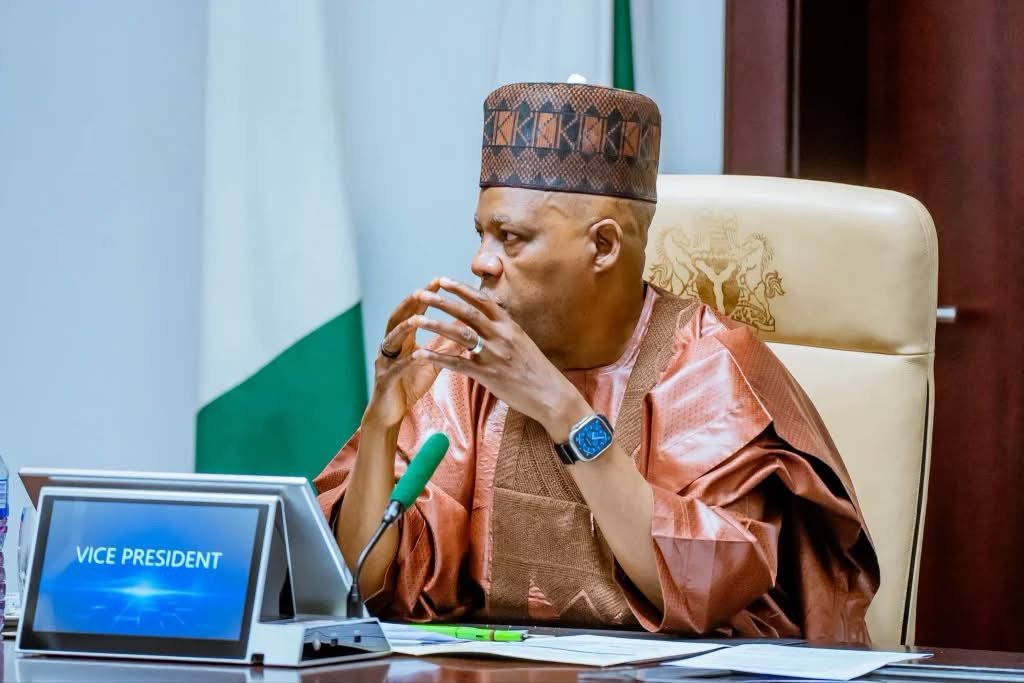
Vice President Kashim Shettima has launched the Community Investment Fund under the Nigeria for Women Programme Scale-Up Project in Katsina State, with more than 40,000 women expected to receive business capital after meeting the programme’s eligibility requirements.
The intervention, supported through a partnership involving the Federal Government, Katsina State Government and the World Bank, is designed to expand women’s access to finance, strengthen small businesses and improve household incomes.
The latest rollout forms part of Katsina State’s wider investment in the Nigeria for Women Programme, for which the state government has committed billions of naira to extend the initiative beyond its original pilot areas.
The programme is also expected to reach a much larger number of women as implementation expands across Katsina’s 34 local government areas.
Shettima Flags Off Community Investment Fund
Shettima formally flagged off the Community Investment Fund during his visit to Katsina on Sunday, October 4, 2026.
The fund operates under the Nigeria for Women Programme Scale-Up, an initiative aimed at improving the economic participation of women, particularly those from poor and vulnerable households.
Speaking at the launch, Shettima said the intervention was intended to strengthen women’s businesses, increase household incomes and promote financial inclusion.
The Vice President said the ultimate measure of the programme’s success should be its effect on businesses and households.
According to The Sun’s report of the launch, Shettima said more than 40,000 women in Katsina would receive business capital after fulfilling the prescribed eligibility conditions.
The emphasis on business capital places the programme beyond a one-off relief intervention. Its stated objective is to help women build sustainable economic activities and strengthen their ability to generate income.
More Than 57,000 Women Covered in Initial Direct Support
While the number of women expected to receive business capital is more than 40,000, Katsina officials have also provided a broader figure for the Community Investment Fund.
Before the launch, the Katsina State Commissioner for Women Affairs, Aisha Aminu Malumfashi, said 57,432 women would receive direct financial support under the programme.
The initial intervention covers women in Daura and Funtua Local Government Areas, according to information released ahead of the Vice President’s visit.
Beneficiaries are being organised into Women Affinity Groups, which are designed to serve as platforms through which participants can build savings, access financial and non-financial services, strengthen their businesses and connect with markets.
The distinction between the two figures is important.
The broader 57,432 figure relates to women covered by the Community Investment Fund intervention, while the more than 40,000 figure refers specifically to women expected to receive business capital after meeting eligibility conditions.
Katsina Commits Billions to Women’s Economic Empowerment
Katsina State has previously disclosed that it invested ₦8 billion to scale up the Nigeria for Women Programme across all 34 local government areas.
According to the Katsina State Government, the World Bank initially supported implementation in three local government areas, with the state providing ₦500 million in counterpart funding.
The state subsequently committed an additional ₦4 billion to extend the programme to another 31 local government areas and appropriated another ₦4 billion in its 2026 approved budget to increase the number of beneficiaries.
The state’s commitment has therefore been presented as part of a broader strategy to move the programme from a limited pilot scheme into a statewide women-focused economic intervention.
More recent information from the World Bank programme’s implementation team, reported ahead of the October launch, put the state’s actual counterpart funding at more than ₦8.5 billion over the preceding two years, with further funding earmarked in the next budget.
The same report said the expanded programme could eventually reach nearly 800,000 women across Katsina’s 34 local government areas.
World Bank Partnership
The Nigeria for Women Programme Scale-Up is being implemented through cooperation between the Nigerian government, Katsina State, the World Bank, financial institutions, communities and women’s groups.
Michael Ilesanmi, Senior Social Development Specialist and Task Team Leader for the Nigeria for Women Programme, said the initiative was designed to be inclusive.
He said eligible women aged 18 and above, including persons with disabilities, could participate.
The programme provides support beyond direct finance. Its framework includes financial literacy, enterprise development, access to markets and productive opportunities, as well as measures aimed at strengthening women’s resilience to economic and climate-related challenges.
That approach is significant because limited access to finance is only one of the barriers facing women-owned businesses.
Access to markets, financial knowledge, savings mechanisms and business skills can determine whether financial support produces a lasting economic impact.
From Pilot Programme to Statewide Initiative
The Nigeria for Women Programme did not begin with the current statewide rollout.
Katsina previously operated the programme in a smaller number of local government areas, including Katsina, Daura and Funtua.
Governor Dikko Radda had earlier pledged to extend the programme to all 34 local government areas, arguing that wider coverage would give more women access to opportunities capable of improving household livelihoods.
In July, the Katsina State Government said Women Affinity Groups in Katsina, Daura and Funtua had accumulated more than ₦349 million in savings.
The government said the programme had received ₦4 billion in counterpart funding from the state because of its potential to improve the economic circumstances of participating women.
The savings recorded by the groups provide an indication of how the programme is intended to operate beyond direct government disbursement.
By encouraging women to organise into groups and save collectively, the programme seeks to build financial habits and community-based support structures alongside access to capital.
Radda’s Economic Empowerment Agenda
The Katsina initiative is part of Governor Radda’s broader emphasis on women’s economic empowerment.
In January, the state government launched a separate empowerment programme targeting 14,450 women entrepreneurs across all 34 local government areas.
That initiative was designed to provide financial and technical support to women involved in agriculture, trading, tailoring, food processing, artisanship and other small-scale economic activities.
The state government has also linked women’s economic empowerment to household welfare and community development.
In earlier statements, Radda argued that economically independent women are better positioned to contribute to household expenses, children’s education, healthcare and food security.
The government has therefore presented women-focused investment not simply as a social programme but as part of a broader economic development strategy.
Why the Fund Matters
Women’s access to finance remains an important issue for economic development in Nigeria.
Small businesses operated by women contribute to household incomes and local economies, but many entrepreneurs face difficulties obtaining affordable credit, accessing markets and expanding their businesses.
A structured programme that combines capital with financial literacy, savings and market access could therefore have a wider effect than a cash-only intervention.
For Katsina, the issue is particularly significant because the state is seeking to expand economic opportunities across all 34 local government areas while also addressing poverty and vulnerability.
The World Bank-supported programme is consequently being positioned as part of a longer-term effort to strengthen household resilience and increase women’s participation in productive economic activities.
However, the long-term impact will depend on implementation, transparency in beneficiary selection, effective monitoring and whether participating businesses are able to remain viable after receiving support.
The size of the funding alone will not determine the programme’s success.
Inclusion of Vulnerable Women
Officials have also emphasised inclusion.
The programme framework allows eligible women aged 18 and above to participate, including women living with disabilities.
This is important because vulnerable groups can face additional barriers to accessing formal financial services and business opportunities.
By organising beneficiaries into Women Affinity Groups, the programme also seeks to create community structures through which participants can access services and strengthen their economic networks.
Such structures could become particularly important for women operating small businesses in rural and underserved communities where conventional banking and business support services may be less accessible.
Health and Household Welfare
Katsina’s approach to the programme has also expanded beyond income generation.
The state government said Women Affinity Groups would be linked to the Katsina State Health Insurance Scheme.
The stated objective is to improve access to affordable healthcare for participating women and members of their households.
The Deputy Governor, Faruk Lawal Jobe, previously said reducing out-of-pocket healthcare spending could allow families to direct more of their income towards productive activities, nutrition and education.
This integrated approach links economic empowerment with household welfare.
If effectively implemented, reducing healthcare costs could help protect business capital from being diverted to emergency medical expenses.
What Happens Next
The immediate next stage is the implementation and disbursement of the Community Investment Fund to eligible beneficiaries.
Women will participate through Women Affinity Groups, where they are expected to access financial and non-financial support, strengthen savings and develop their businesses.
The programme will also continue expanding its coverage beyond the initial implementation areas.
Katsina State officials have said the ultimate ambition is to reach eligible women across all 34 local government areas, while programme officials have projected that the expanded initiative could eventually reach hundreds of thousands of women across the state.
The government and development partners will therefore face the task of ensuring that funds reach the intended beneficiaries and that the economic activities supported by the programme remain sustainable.
Monitoring the use of funds, measuring business growth and tracking household-level outcomes will be critical to determining whether the intervention achieves its stated objectives.
Conclusion
Vice President Kashim Shettima’s launch of the Community Investment Fund in Katsina marks a new phase in the state’s effort to expand economic opportunities for women.
More than 40,000 women are expected to receive business capital under the latest intervention, while 57,432 women have been identified for direct support in the initial Daura and Funtua phase.
The wider programme has received billions of naira in state counterpart funding and is designed to expand across Katsina’s 34 local government areas.
For beneficiaries, the central question will now be whether the financial support translates into stronger businesses, higher household incomes and greater economic independence.
For government and development partners, the challenge will be ensuring transparent implementation, effective monitoring and sustained support.
The success of the initiative will ultimately be measured not by the size of the announced fund, but by whether it produces durable economic opportunities for the women it is intended to serve.
Weng Global – stories beyond borders
Sources
- Katsina State Government
- Nigeria for Women Programme
- World Bank programme officials, as reported by Channels Television
- The PUNCH
- The Sun
- Vanguard
- Independent Newspaper Nigeria