Reported by Weng Patrick Atokor l Journalist at Weng Global
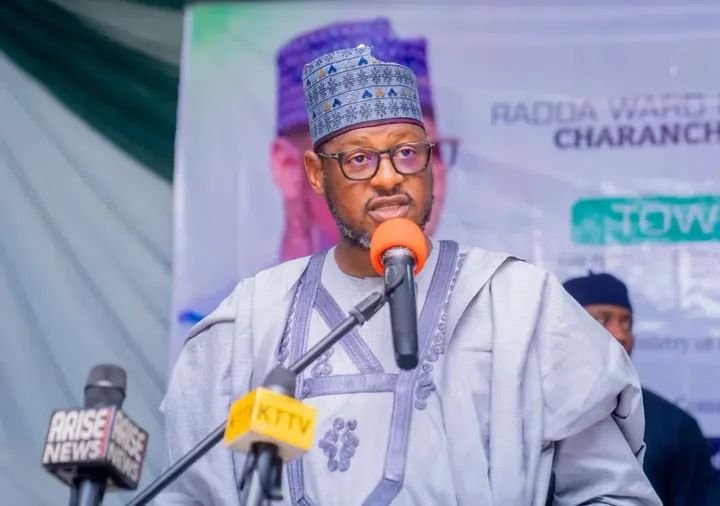
Katsina State Governor Dikko Radda has signed the state’s ₦828.58 billion 2027 Appropriation Law into effect, completing the legislative process required for the government to implement its spending plans for the next fiscal year.
The governor signed the appropriation law on Wednesday, September 30, 2026, after the Katsina State House of Assembly passed the bill. The approved figure is ₦828,578,844,091.48, slightly below the ₦828.64 billion proposal initially presented to lawmakers.
But beyond the headline figure, the important question for residents is what the budget actually means: how much will go into development projects, what sectors have been prioritised, where will the money come from, and what should residents watch for during implementation?
What is an appropriation law?
An appropriation law is the legal framework that authorises a government to spend public money for specified purposes during a financial year.
In practical terms, Governor Radda’s assent means the Katsina government now has a legally approved spending plan for 2027. Ministries, departments and agencies can proceed with programmes and projects contained in the approved budget, subject to the relevant financial and procurement processes.
The Assembly’s approval also means that the executive’s original proposal has passed through legislative scrutiny rather than becoming law solely through the governor’s proposal.
The final budget provides ₦190.73 billion for recurrent expenditure and ₦637.85 billion for capital expenditure. That translates to roughly 23 per cent for recurrent spending and 77 per cent for capital expenditure.
The simple difference between recurrent and capital spending
For readers who do not regularly follow government budgets, the distinction is important.
Recurrent expenditure generally covers the regular costs of running government. These can include personnel expenses, administrative costs and other recurring obligations.
Capital expenditure, on the other hand, is associated with investments and projects such as roads, schools, hospitals, infrastructure and other development programmes.
Therefore, when Katsina allocates nearly three-quarters of its 2027 budget to capital expenditure, the spending plan is heavily weighted towards development projects rather than the day-to-day running of government.
However, a large capital allocation does not automatically mean that all the money will be spent successfully. Actual implementation will depend on revenue mobilisation, procurement, project execution and financial management during the year.
How big is the ₦828.58bn budget?
The 2027 budget is smaller than Katsina’s approved 2026 budget.
The state had an approved ₦897.87 billion budget for 2026, meaning the 2027 appropriation is approximately ₦69.3 billion lower. The reduction is about 7.7 per cent.
The reduction does not necessarily mean that every sector will receive less money. A state budget is influenced by expected revenue, capital receipts, grants, borrowing, previous balances and other funding sources.
When the 2027 proposal was presented in September, the Katsina government said it had adopted a more cautious approach to projected revenue and expenditure.
The government projected about ₦95.77 billion in internally generated revenue, while other expected sources included capital receipts and allocations expected through the Federation Account.
This makes revenue performance one of the important issues to watch during implementation.
Which sectors receive the biggest attention?
The budget places substantial emphasis on sectors directly connected to public services and economic development.
During the presentation of the original proposal, the government identified five major priority areas within the capital budget.
They were:
- Basic and Higher Education — ₦83.82 billion
- Works and Housing — ₦71.60 billion
- Agriculture and Livestock — ₦65.88 billion
- Health — ₦53.64 billion
- Rural Development — ₦50.51 billion
Together, the five areas accounted for approximately ₦325.45 billion, or more than half of the proposed capital expenditure.
These allocations provide an indication of where residents are expected to see significant government activity in 2027.
Education receives a major allocation
Education has the largest allocation among the five identified priority sectors, with ₦83.82 billion earmarked for basic and higher education.
According to the budget proposal, the money is intended to support areas including learning infrastructure and scholarship-related interventions.
For Katsina residents, the significance of this allocation will ultimately depend on what projects are executed.
A budget allocation can provide funding authority, but the effect on students and communities will be determined by actual implementation — including whether schools are renovated or constructed, whether educational facilities improve and whether planned interventions reach their intended beneficiaries.
Roads, housing and transport
Works and Housing was allocated ₦71.60 billion from the capital budget.
The proposed spending was linked to road construction and rehabilitation, housing development, connectivity and urban expansion.
Infrastructure spending can have effects beyond the immediate construction project.
Better roads can reduce travel difficulties, improve connections between rural communities and markets, and make it easier for people to access schools, hospitals and other public services.
The effectiveness of this allocation will therefore be closely tied to the number, location and quality of projects eventually delivered.
Agriculture and livestock
Agriculture and livestock development received ₦65.88 billion in the proposed capital allocation.
The government linked the spending to food security, livestock value chains and climate-smart agricultural practices.
Agriculture is particularly important to Katsina because of the state’s large rural population and the role of farming and livestock activities in household livelihoods.
The allocation could therefore have implications for farmers, livestock producers, agricultural businesses and consumers if the planned programmes translate into productive infrastructure, support services and improved value chains.
But, again, the budget allocation itself is not the final outcome. The key measure will be implementation.
Health receives ₦53.64bn
The health sector has a capital allocation of ₦53.64 billion.
According to the state government’s budget proposal, the funding is intended to support the upgrading and expansion of healthcare facilities, improve diagnostic capacity and provide specialised equipment, including equipment connected with advanced cancer diagnosis and treatment.
The state government had also announced plans involving additional equipment for the Advanced Imaging and Cancer Centre at the General Amadi Rimi Specialist Hospital in Katsina.
For residents, healthcare spending can have a direct impact when it results in functioning facilities, available equipment, adequate staffing and accessible services.
Rural development receives ₦50.51bn
Rural development has been allocated ₦50.51 billion from the capital budget.
The government said the allocation would support rural infrastructure and community-level development projects.
This is significant because government development can be uneven if major investments are concentrated in urban centres.
The Katsina government has repeatedly linked the 2027 budget to consultations conducted across the state’s 361 wards and 34 local government areas.
Governor Radda said residents were consulted about their needs and that the government used the information gathered during the exercise in preparing the budget.
Why the 361-ward consultation matters
One of the distinctive features of the 2027 budget process is the government’s emphasis on grassroots consultation.
Radda said the process began with gathering residents’ needs from the state’s 361 wards and 34 local government areas. Ministries, departments and agencies subsequently defended their proposals before the final legislative scrutiny and approval by the Assembly.
The governor has described the resulting appropriation as a “people’s budget.”
That description is the administration’s characterisation of the process, rather than an independent assessment. What will ultimately determine whether the consultation produced practical results is whether the projects identified through the process are actually funded and delivered.
An important lesson from the 2026 budget
The 2027 budget also comes as Katsina continues implementing its 2026 spending plan.
According to reporting by Premium Times based on the state’s budget implementation figures, Katsina had spent ₦295.19 billion, representing 32.88 per cent of its approved 2026 budget, as of August 28, 2026.
Capital expenditure stood at ₦193.02 billion, equivalent to 26.57 per cent of the approved capital provision at that point.
That figure provides important context for the new budget.
The size of a budget tells readers how much government intends to spend. Implementation figures tell a different story — how much has actually been spent.
For that reason, monitoring the quarterly implementation of the ₦828.58 billion 2027 budget will be crucial.
What happens after the signing?
With the governor’s assent, the appropriation becomes the legal spending framework for Katsina’s 2027 fiscal year.
The next stage is implementation.
Government ministries, departments and agencies will be expected to execute the approved programmes, while the House of Assembly retains its constitutional oversight role.
Governor Radda urged implementing agencies to ensure that projects and programmes are carried out promptly and that priority is given to interventions capable of directly benefiting residents.
This means residents, civil society organisations, journalists and other stakeholders will have an important role in following what happens after the signing ceremony.
Questions that will matter throughout 2027 include:
- How much revenue will Katsina actually collect?
- How much of the ₦637.85 billion capital allocation will be released and spent?
- Which projects will begin first?
- How many of the 361 ward-level priorities will be implemented?
- Will education and healthcare projects be completed as planned?
- How much will be spent on roads and rural infrastructure?
- Will actual spending match the approved budget?
- What will quarterly budget implementation reports show?
Why the budget matters to Katsina residents
For ordinary residents, the most important part of the ₦828.58 billion figure is not the number itself.
The significance lies in what the money eventually produces.
A budget becomes meaningful when an allocation becomes a functioning school, a completed road, a properly equipped hospital, an agricultural intervention, a water project or another service that residents can actually use.
The 2027 Katsina budget therefore moves the state’s fiscal discussion from planning to implementation.
The government has now secured legislative approval and executive assent. The next test is whether the approved spending plan can be translated into measurable projects and services across the state’s 34 local government areas.
The 2027 appropriation also provides an opportunity to compare budget promises with actual government performance over the course of the year.
For residents, that means the most useful way to follow the budget will not be to focus only on announcements made at the signing ceremony, but also on subsequent releases, procurement, project execution and quarterly spending reports.
What readers should know next
Katsina’s ₦828.58 billion 2027 Appropriation Law authorises the state government to implement its approved spending programme for the coming fiscal year.
About ₦637.85 billion — roughly 77 per cent — is allocated to capital expenditure, while ₦190.73 billion is allocated to recurrent expenditure. Education, works and housing, agriculture and livestock, health, and rural development are among the major capital priorities identified during the budget process.
The budget is smaller than the state’s ₦897.87 billion 2026 budget, but the government says the 2027 plan reflects a review of expected revenue and expenditure.
The immediate issue is therefore no longer whether Katsina has passed a budget.
The central question for 2027 will be how effectively the approved ₦828.58 billion is mobilised, spent and converted into projects and public services for residents.
Weng Global – Stories beyond borders
Sources
- Katsina State Government — 2027 budget proposal and sectoral allocations.
- Channels Television — Report on Governor Radda’s signing of the ₦828.58 billion 2027 Appropriation Law.
- Punch — Report on the 2027 budget proposal and priority-sector allocations.
- Premium Times — Report on the 2027 proposal and 2026 budget implementation figures.
- The Guardian — Report on the signing of Katsina’s 2027 appropriation law.