Reported by Weng Patrick Atokor l Journalist at Weng Global
Oyo State Governor and presidential candidate of the Allied Peoples Movement (APM), Seyi Makinde, has presented his “Reset Nigeria” agenda as a proposed programme for changing the country’s economic, education, security and governance systems if he wins the 2027 presidential election.
Makinde has argued that Nigeria can be “reset” within four years under his proposed administration, placing the idea at the centre of his campaign message as political parties intensify preparations for the 2027 elections.
The statement is part of a broader campaign platform through which the APM candidate has been outlining what his administration would seek to do if elected.
What is Makinde’s “Reset Nigeria” agenda?
The “Reset Nigeria” concept is the central political message of Makinde’s 2027 presidential campaign.
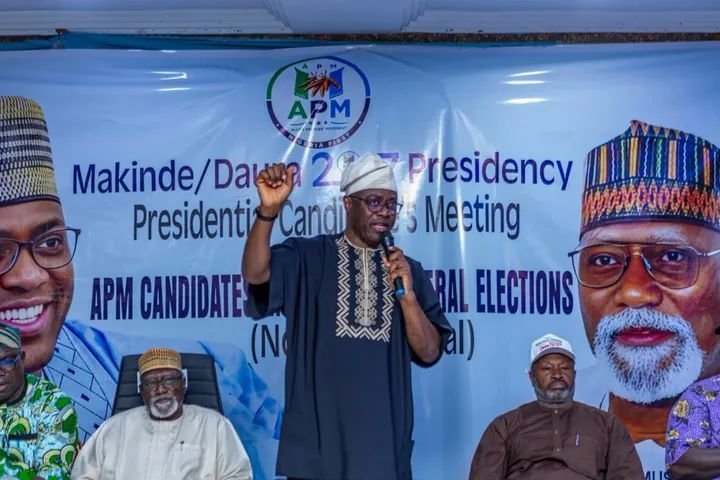
At a North-West zonal town hall meeting in Katsina on September 22, Makinde outlined proposals covering the economy, education, security and governance. Channels Television reported that he presented the programme as a reform agenda aimed at making Nigeria’s economy more productive and competitive while improving governance and other public systems.
His campaign platform describes the broader objective as building a country in which governance is institutionalised, economic opportunities are expanded, justice and security are strengthened, and government becomes more transparent and accountable.
The important distinction is that these are campaign proposals and commitments. They describe what Makinde says he would attempt to implement if elected; they are not yet federal government policies or completed reforms.
Why is the four-year timeframe significant?
Makinde’s four-year claim is significant because it presents the proposed “reset” as a defined first-term objective rather than an open-ended programme.
Nigeria’s presidency operates on a four-year constitutional term, subject to the country’s electoral and constitutional framework. Makinde is therefore presenting the first term as the period within which his administration could undertake major changes.
The campaign’s official platform similarly presents its agenda as a series of missions explaining the challenges facing Nigeria, the proposed responses and the outcomes the campaign says Nigerians should expect.
However, achieving such broad changes would depend on several factors, including legislation where required, federal institutions, available public finances, implementation capacity, cooperation between levels of government and the political process in the National Assembly.
A campaign promise to achieve a particular result within four years should therefore be distinguished from a verified prediction that the result would actually occur.
The economy
Economic reform is one of the major components of the proposed agenda.
Makinde has said Nigeria needs a more productive and competitive economy, with greater emphasis on investment in skills, knowledge and economic activity.
His campaign platform also highlights expanding economic opportunities and creating conditions in which Nigerians can participate more effectively in the economy.
The economic question is particularly important because changes to taxation, energy, public spending, investment and monetary conditions can have consequences for households and businesses.
Makinde has also discussed petroleum-sector reform. During the commissioning of the APM campaign office in Abuja, he clarified that his position was not a proposal to simply restore the previous fuel-subsidy system. Instead, he argued for a framework under which Nigerians would obtain greater benefits from the country’s petroleum resources.
Education and skills
Education is another component of the proposed reset.
Makinde has linked economic development to investment in skills and knowledge, arguing that Nigeria needs a workforce capable of competing in a changing economy.
His campaign platform places particular emphasis on young Nigerians, describing youth unemployment and limited access to opportunities as structural challenges requiring reforms in skills development and economic opportunity.
For readers, the practical issue is how such proposals would translate into funding, curriculum reforms, technical and vocational training, university education, employment opportunities and access to skills.
Those details will be important in assessing the implementation of the programme if the proposals progress beyond the campaign stage.
Security
Security is another central pillar of the APM’s proposed agenda.
The party has repeatedly argued that Nigeria requires a different approach to insecurity and says Makinde has a blueprint for addressing terrorism, kidnapping and other security challenges. The claims about the current security situation are political assertions by the APM and should be distinguished from independently verified security data.
Makinde’s campaign has presented his proposed partnership with former Department of State Services Director-General Lawal Musa Daura as part of its security approach. The campaign identifies Daura as its vice-presidential candidate and highlights his experience in national security and intelligence.
The security component of the proposed reset would therefore need to be judged against specific policies, resources, institutional responsibilities and measurable outcomes rather than campaign descriptions alone.
Governance and constitutional issues
Governance reform is another major part of the proposed programme.
Makinde has spoken about constitutional democracy, institutional governance and the need for government to operate within established constitutional procedures.
At his September 2026 town hall meeting, he presented the campaign as issue-based and linked the proposed reset to reforms in governance and the wider political system.
His campaign platform also identifies the rule of law, stronger institutions and public trust as areas requiring reform.
These proposals matter because some changes to Nigeria’s political and institutional structure could require legislation or constitutional processes rather than presidential directives alone.
Makinde’s record in Oyo State
Makinde is seeking the presidency after serving as governor of Oyo State since 2019.
His campaign frequently points to his experience in the state as part of the argument for his presidential candidacy. The campaign’s official website describes him as an engineer, entrepreneur and public servant with experience in both the private sector and public administration.
His supporters have also cited projects and policies implemented under his Oyo administration.
However, the record of a state government and the responsibilities of the Federal Government are different in scale and constitutional responsibility. A national administration would have to manage institutions and responsibilities that extend across all 36 states and the Federal Capital Territory.
Why the “reset” message matters
The “Reset Nigeria” message gives Makinde’s campaign a central framework through which it is presenting its economic, security, education and governance proposals.
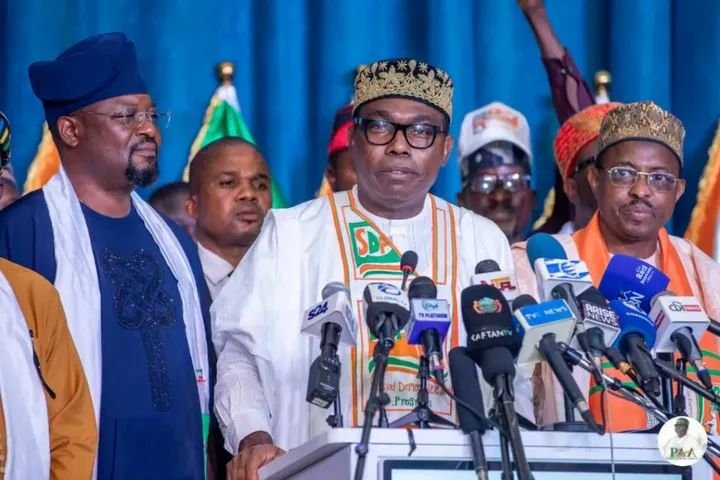
The APM formally launched its campaign office in Abuja in September, while Makinde has subsequently taken the message to town-hall meetings and other political events.
The campaign has also sought to build grassroots structures. The Reset Nigeria Movement said in September that it had more than 74,000 agents, volunteers and canvassers across the 36 states and the Federal Capital Territory. That figure is a claim by the campaign organisation and has not been independently verified by Weng Global.
The development illustrates the increasing organisation around the APM presidential campaign as the 2027 election approaches.
What remains to be explained?
For voters and observers, one of the major questions surrounding the four-year “reset” proposal is implementation.
A presidential campaign can outline objectives, but converting those objectives into national policy requires detailed plans covering funding, legislation, institutions, timelines and measurable targets.
Questions about the proposed programme include how much each major reform would cost, which policies would be implemented during the first 100 days, which would require legislation, how federal and state governments would cooperate, and how progress would be measured.
Those details will be important as the campaign develops its manifesto and communicates its policies to voters.
What happens next?
Makinde and the APM are expected to continue nationwide campaign activities and policy engagements ahead of the 2027 presidential election.
The campaign has already begun presenting the “Reset Nigeria” agenda through zonal town halls and its official campaign platforms.
The next stage will be for the campaign to provide further details on the proposed policies, including implementation timelines, financing mechanisms and measurable targets.
For Nigerians following the 2027 election, the distinction between campaign promises, proposed policies and demonstrated results will remain important when evaluating the competing presidential platforms.
Weng Global – Stories beyond borders
Sources
- Channels Television — reporting on Makinde’s “Reset Nigeria” agenda and September 22, 2026 North-West town hall meeting.
- The Guardian Nigeria — report on Makinde’s unveiling of the “Reset Nigeria” agenda and petroleum-sector position.
- Seyi Makinde official campaign platform — campaign agenda and proposed governance, economic and youth reforms.
- Seyi Makinde — remarks at the commissioning of the APM campaign office in Abuja.
- TheCable — reporting on APM’s security-policy claims and Makinde’s proposed security blueprint.
Meta Description:
Seyi Makinde’s “Reset Nigeria” agenda explained, including his proposed four-year plan for economic, education, security and governance reforms ahead of Nigeria’s 2027 presidential election.
Tags: Seyi Makinde, APM, 2027 Nigeria Election, Reset Nigeria, Nigerian Politics,Weng Global,