Reported by Weng Patrick Atokor l Journalist at Weng Global
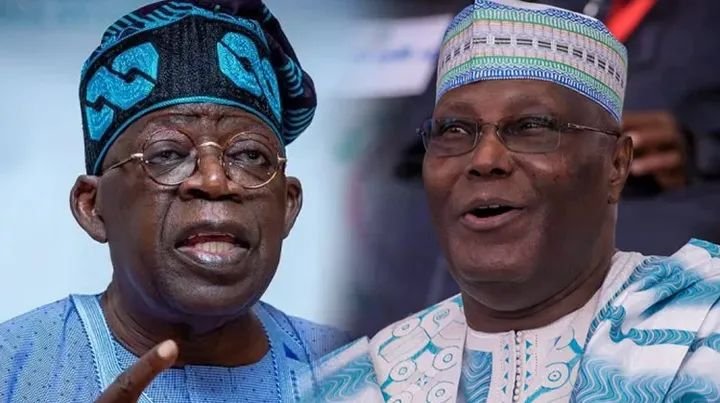
Former Vice-President Atiku Abubakar has questioned the Federal Government’s move to seek an additional $1.5 billion in financing from the World Bank, urging President Bola Tinubu’s administration to provide a detailed account of Nigeria’s existing debts and new borrowing.
Atiku’s intervention comes after the Federal Government opened discussions with the World Bank on three proposed financing facilities worth a combined $1.5 billion, even as official figures show that Nigeria’s total public debt reached N166.79 trillion as of June 30, 2026.
The proposed World Bank financing has not been presented as a single approved loan. Documents reported from the World Bank indicate that it consists of three separate facilities of $500 million each, targeting climate resilience, social protection and early childhood development programmes.
Atiku seeks explanation of Nigeria’s debt
Atiku, who is a former vice-president and the presidential candidate of the African Democratic Congress, made his latest comments in a statement issued by Phrank Shaibu, Director of Strategic Communications of the ADC Presidential Campaign Council.
His comments followed the release of Nigeria’s latest public debt figures by the Debt Management Office on September 25.
The DMO reported total public debt of N166.79 trillion at the end of June 2026, comprising N91.59 trillion in domestic debt and N75.20 trillion in external debt.
Atiku called for a reconciliation of the debt figures, asking the government to identify inherited obligations, debt affected by exchange-rate movements and new borrowing undertaken since President Tinubu assumed office.
He also requested details of amounts already repaid and liabilities that remain outstanding.
According to reports of his statement, Atiku argued that increased government revenue should be accompanied by an explanation of why the country continues to contract additional debt.
The former vice-president also questioned the treatment of the N22.71 trillion Ways and Means advances that were securitised and incorporated into Nigeria’s debt stock from June 2023.
Nigeria’s public debt reaches N166.79tn
The latest DMO figures provide the official basis for the current debate over Nigeria’s borrowing.
Nigeria’s total public debt increased from N159.35 trillion at the end of March 2026 to N166.79 trillion by June 30, representing an increase of N7.44 trillion, or 4.67 per cent, during the quarter.
Year-on-year, the debt stock increased from N152.40 trillion in June 2025 to N166.79 trillion in June 2026, representing a 9.44 per cent increase.
The composition of the debt is also significant.
Domestic debt accounted for N91.59 trillion, or 54.91 per cent of the total, while external debt stood at N75.20 trillion, representing 45.09 per cent.
The DMO figures show that domestic debt increased by N11.04 trillion between June 2025 and June 2026. External debt increased from $46.98 billion to $54.52 billion over the same period.
The difference between the naira and dollar movements in the debt figures is partly connected to exchange-rate valuation. The DMO used an official exchange rate of N1,379.1842 to the dollar in valuing June 2026 external debt, compared with N1,529.2105 to the dollar a year earlier.
The figures therefore need to be read carefully: an increase in the naira value of foreign debt does not necessarily mean that an equivalent amount of new foreign borrowing occurred during the period.
What the proposed $1.5bn World Bank financing covers
The proposed financing currently under discussion consists of three separate $500 million facilities.
The first involves additional financing for the Agro-Climatic Resilience in Semi-Arid Landscapes project, commonly known as ACReSAL.
According to documents reported from the World Bank, the proposed additional $500 million would increase total financing for ACReSAL from $700 million to $1.2 billion. The Federal Ministry of Environment is identified as the implementing agency, while the Federal Republic of Nigeria is the borrower. The World Bank has indicated October 29, 2026, as the estimated date for consideration of the facility by its board.
ACReSAL operates across 19 northern states and the Federal Capital Territory, with a focus on challenges including land degradation, water insecurity, climate vulnerability and declining agricultural productivity.
The other proposed $500 million facilities are expected to support social protection and early childhood development.
This means the $1.5 billion figure represents proposed financing at different stages of preparation rather than money that Nigeria has already received.
That distinction is important when assessing Nigeria’s current debt position.
Nigeria already has substantial World Bank exposure
Nigeria is already a major borrower from the World Bank Group.
World Bank financial data show that, as of June 30, 2026, Nigeria had substantial outstanding exposure to both the International Development Association and the International Bank for Reconstruction and Development. The World Bank’s current country financing records also show hundreds of millions of dollars in recently approved operations, including financing for investment and jobs acceleration.
The latest reporting on Nigeria’s debt profile puts the country’s World Bank Group obligations at about $20.73 billion as of June 2026, comprising approximately $19.12 billion owed to IDA and $1.61 billion to IBRD. That represents about 38 per cent of Nigeria’s $54.52 billion external debt at the end of June.
The World Bank’s own financing database lists Nigeria among countries with multiple active projects and reports total project commitments of more than $45 billion across 215 projects as of August 31, 2026. Project commitments, however, should not be confused with the amount currently disbursed or outstanding as debt.
The broader borrowing debate
The debate over the proposed financing comes against the background of the Federal Government’s wider economic reform programme.
The World Bank has previously approved major financing for Nigeria. In June 2024, for example, it approved $1.5 billion under the Nigeria Reforms for Economic Stabilization to Enable Transformation programme, alongside another $750 million operation, bringing that particular financing package to $2.25 billion. The World Bank said the programmes were designed to support economic stabilisation, revenue mobilisation and reforms aimed at strengthening Nigeria’s fiscal position.
The current proposal is separate from that 2024 financing.
The Federal Government’s argument for development financing is generally linked to funding reforms and programmes that require significant resources, while critics such as Atiku are questioning whether additional borrowing is sustainable and whether the government is providing sufficient information about the country’s existing obligations.
These are different questions from whether individual projects have development objectives.
A World Bank loan can be attached to a specific development programme, while still adding to the country’s overall obligations. The relevant issue for assessing the borrowing therefore includes the financing terms, repayment obligations, project implementation, expected economic or social returns and Nigeria’s wider fiscal position.
Atiku’s position
Atiku has argued that Nigerians deserve a clearer explanation of how the country’s debt stock changed and what portion represents new borrowing.
He has specifically called for the government to distinguish old obligations from genuinely new loans and to explain the effect of exchange-rate changes on foreign-denominated debt.
He has also asked the government to disclose what has been repaid and what remains outstanding.
His comments form part of a broader political debate over the economic reforms of the Tinubu administration, including the removal of the petrol subsidy and changes to the foreign-exchange system.
Atiku has linked rising debt and the cost of living to his criticism of the administration’s economic policies. Those assessments represent his political position and should be distinguished from the underlying debt figures published by the DMO.
Why the proposed borrowing matters
The proposed $1.5 billion financing matters because it comes at a time when Nigeria’s public debt has reached a record level in nominal naira terms.
For the government, development financing can provide resources for programmes in areas such as climate resilience, social protection and early childhood development. The effectiveness of such borrowing ultimately depends on how the funds are used, the terms attached to the financing and whether the projects achieve their stated objectives.
For taxpayers, however, additional borrowing also creates future repayment obligations.
This makes transparency particularly important. Clear disclosure of loan terms, implementation arrangements, disbursements and project outcomes would allow citizens and policymakers to assess how additional borrowing affects the country’s fiscal position.
The distinction between approved financing, proposed financing, disbursed funds and outstanding debt is equally important. A proposal to borrow $1.5 billion does not by itself mean that Nigeria has already added $1.5 billion to its outstanding debt.
What happens next
The next major development will be the World Bank’s consideration of the proposed additional $500 million for ACReSAL, which is currently scheduled for October 29, 2026, according to documents reported from the bank.
The other proposed $500 million facilities for social protection and early childhood development are also at different stages of preparation. Their eventual approval, terms and implementation arrangements will determine whether and when the financing becomes part of Nigeria’s borrowing programme.
Meanwhile, the political debate over Nigeria’s debt position is likely to continue as parties and political figures scrutinise the government’s economic record ahead of the 2027 general elections.
For now, the established figures are clear: the DMO puts Nigeria’s total public debt at N166.79 trillion as of June 30, 2026, while the Federal Government is discussing three proposed World Bank facilities totalling $1.5 billion. Atiku has called for a detailed accounting of existing and new obligations before further borrowing proceeds.
Weng Global – Stories beyond borders
Sources
- Debt Management Office (DMO) — Nigeria’s Total Public Debt as at June 30, 2026. DMO debt publication
- World Bank — Nigeria country financing and project data. World Bank Nigeria financing data
- PUNCH — Federal Government seeks fresh $1.5bn World Bank loan. PUNCH report on proposed $1.5bn World Bank financing
- PUNCH — Atiku demands answers as Nigeria’s debt hits N166.79tn. PUNCH report on Atiku’s debt demands
- The Guardian Nigeria — FG seeks $1.5bn World Bank loans as debt hits N166.79tn. The Guardian report