Reported by Weng Patrick Atokor l Journalist at Weng Global
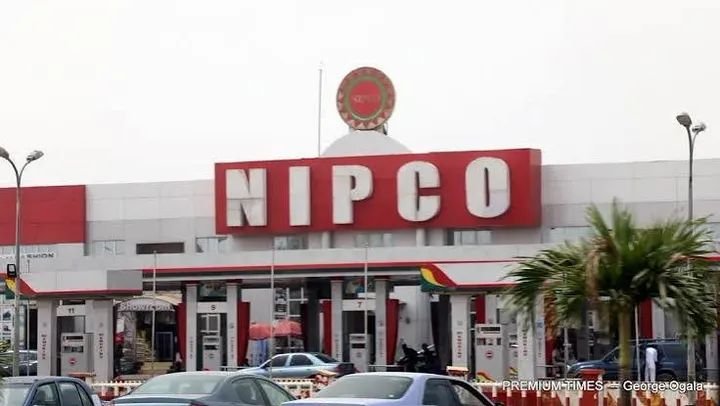
NIPCO Group has announced plans to develop a Floating Liquefied Natural Gas (FLNG) project in Nigeria with an estimated investment of more than $3 billion, potentially positioning the indigenous energy company for a larger role in the country’s LNG industry.
The proposed project is expected to have an LNG production capacity of approximately three million tonnes per annum, although NIPCO stressed that the capacity, location, financing structure and other major project parameters remain subject to ongoing feasibility studies, regulatory approvals, project economics and a final investment decision.
NIPCO Managing Director Nagendra Verma disclosed the plans during a press conference on Thursday, September 24, 2026.
According to the company, the project is being considered for locations around the Escravos area of Delta State and the Akwa Ibom region. The final location has not yet been determined.
The announcement comes as Nigeria continues to pursue greater utilisation of its natural gas resources, attract investment into gas infrastructure and increase participation by Nigerian companies across the energy value chain.
NIPCO’s proposed FLNG project
NIPCO said it has been evaluating the proposed FLNG development for approximately six to nine months.
The company is currently conducting preliminary technical, commercial and feasibility assessments covering several components of the proposed development.
These include upstream gas supply and reserves, FLNG technology and configuration, LNG production capacity, marine and export infrastructure, domestic LNG opportunities, shipping and logistics, project economics and financing.
Verma said NIPCO was examining different development concepts, technology solutions, financing structures and commercial arrangements before determining whether the project could proceed on a technically robust and commercially sustainable basis.
The proposed development would comprise an FLNG facility together with associated marine and export infrastructure.
The company said the project could potentially supply both international LNG markets and Nigeria’s growing domestic gas market.
However, NIPCO’s announcement does not represent a final investment decision.
The company has made clear that the proposed three-million-tonne annual production capacity remains subject to the results of the feasibility and technical studies as well as regulatory requirements and project economics.
That distinction is important because large-scale energy projects can undergo substantial changes between the feasibility stage and construction.
Why the location matters
The two areas being considered by NIPCO — the Escravos area of Delta State and Akwa Ibom — are strategically relevant to Nigeria’s oil and gas industry.
Escravos, in the Niger Delta, has long been associated with oil and gas production and energy infrastructure, while Akwa Ibom is also an important hydrocarbon-producing state with offshore energy assets and established links to Nigeria’s petroleum industry.
NIPCO said the location assessment is focused on access to upstream gas resources, LNG processing, marine transportation and both international and domestic markets.
For an FLNG project, these factors are particularly important because the development must connect gas resources to processing facilities and then to transportation and export systems.
The final location will therefore depend not only on the availability of gas but also on the commercial and logistical advantages of each potential site.
What FLNG means
Floating Liquefied Natural Gas technology allows natural gas to be processed and converted into LNG on a floating offshore facility.
Instead of transporting untreated gas to a large onshore LNG plant, an FLNG facility can perform key processing and liquefaction operations offshore before the LNG is transferred to specialised vessels for transportation.
For Nigeria, the technology could provide another route for developing offshore gas resources and expanding LNG production.
It could also reduce dependence on building every element of a large LNG development onshore, although FLNG projects still require substantial investment in vessels, processing equipment, marine infrastructure, gas supply systems, logistics and supporting facilities.
NIPCO’s proposed development would therefore require significant coordination between upstream gas suppliers, technology providers, financiers, regulators, contractors, shipping companies and potential LNG buyers.
Indigenous participation at the centre of the proposal
One of the most notable aspects of NIPCO’s announcement is the company’s stated interest in indigenous construction.
The proposed development comes at a time when Nigeria is seeking greater participation by local companies in major oil and gas projects.
Nigeria has historically relied heavily on international companies and foreign technical expertise for complex energy developments. Increasing Nigerian participation can potentially create opportunities for domestic engineering companies, contractors, financial institutions, logistics providers and skilled workers.
However, the extent of indigenous participation in NIPCO’s proposed FLNG project will only become clearer as the company completes its technical studies, determines its contracting strategy and identifies its financing partners.
At this stage, NIPCO has not announced a final construction consortium or confirmed the specific Nigerian companies that would undertake major components of the project.
That means the current announcement should be understood as a project proposal undergoing evaluation rather than a construction contract already awarded.
NIPCO’s growing role in Nigeria’s gas sector
NIPCO already has an established presence in Nigeria’s natural gas distribution industry.
NIPCO Gas says its distribution infrastructure serves customers across 22 states and the Federal Capital Territory, supplying natural gas through compressed natural gas, piped natural gas and mobility CNG solutions.
The company’s stated mission is to increase the use of indigenous natural gas as a major energy source in Nigeria.
The proposed FLNG project would represent a significant expansion from gas distribution into LNG production.
If eventually approved and developed, it could give NIPCO a presence across additional parts of the gas value chain, linking gas supply and processing with domestic consumption and international LNG markets.
NIPCO’s Managing Director, Nagendra Verma, also has extensive experience in oil and gas infrastructure, including pipeline construction, gas processing and distribution projects, according to the company’s leadership profile.
Nigeria’s wider push to develop gas
NIPCO’s announcement comes against the backdrop of renewed investment interest in Nigeria’s gas industry.
The Nigerian Upstream Petroleum Regulatory Commission said in August that 22 major offshore projects were expected between 2026 and 2030, with estimated investment potential of between $30 billion and $50 billion.
The commission said such investments could increase production, create employment and strengthen Nigeria’s energy security. It also identified gas gathering systems, processing facilities, pipelines and export infrastructure among areas requiring continued development.
The Federal Government has also highlighted gas development as part of its broader economic and industrial strategy.
On September 23, President Bola Tinubu welcomed the $800 million Final Investment Decision for the Ima Gas Project, developed by Nigerian independent AMNI International in partnership with TotalEnergies.
The State House said the project is expected to produce about 300 million standard cubic feet of gas per day at peak and highlighted increasing Nigerian participation in the upstream sector.
These developments illustrate the broader effort to move Nigeria’s gas resources from reserves in the ground into productive economic activity.
A growing LNG project landscape
NIPCO’s proposal also enters an increasingly active Nigerian FLNG and LNG development environment.
Other proposed gas projects are also seeking to increase Nigeria’s LNG capacity and expand the use of domestic gas resources.
For example, the proposed UTM Floating LNG project has progressed through a long development process and secured a 15-year gas supply agreement involving the NNPC/Seplat Energy joint venture and UTM FLNG Limited.
That agreement was described as an important step toward resolving gas-feedstock requirements for the project ahead of its Final Investment Decision.
The Federal Government has also been engaging with energy companies on projects including Oso Floating LNG, UTM FLNG and Ibom LNG as part of efforts to attract investment into Nigeria’s gas sector.
NIPCO’s proposed development would therefore add another major potential project to Nigeria’s expanding LNG ambitions.
Potential economic significance
If NIPCO’s project eventually reaches a final investment decision and construction, its potential economic effects could extend beyond LNG production.
A project of the proposed scale could create opportunities during engineering, procurement and construction, while an operating FLNG facility would require workers and services for operations, maintenance, marine transportation, logistics and other activities.
The project could also create opportunities for Nigerian contractors if the company follows through on its interest in indigenous construction.
For the Nigerian economy, LNG exports can generate foreign exchange, while domestic LNG supply can provide an additional source of gas for industrial and commercial users.
However, the eventual economic impact would depend on several factors, including the project’s final cost, financing arrangements, gas supply, construction timeline, LNG market conditions, regulatory approvals and operational performance.
The challenges ahead
The proposed $3 billion development faces several stages before construction can begin.
First, NIPCO must complete its feasibility and technical assessments.
The company must also determine the availability and reliability of upstream gas supplies, select the appropriate FLNG technology, establish the project’s final configuration and determine the most commercially viable location.
Financing will be another major consideration.
Projects involving billions of dollars require substantial capital and normally depend on carefully structured financing, long-term commercial arrangements and confidence that future revenues will support the investment.
Regulatory approvals will also be required.
Nigeria’s petroleum regulators oversee different aspects of the country’s oil and gas value chain, including gas facilities and LNG-related activities. The NMDPRA, for example, operates regulatory systems covering gas infrastructure and LNG-related permits and facilities.
NIPCO must therefore progress from preliminary assessment to a bankable project before construction can become a reality.
What happens next
The immediate next step is for NIPCO to continue its feasibility, technical and commercial assessments.
The company will have to determine which proposed location provides the best combination of gas access, processing requirements, marine logistics and market connectivity.
It will also need to settle the project’s technology, financing structure, commercial model and potential partnerships.
Only after those issues are sufficiently resolved can the project move toward a final investment decision.
For now, NIPCO’s proposed FLNG development remains an ambitious project under evaluation, rather than an approved $3 billion construction project.
Its significance lies in the scale of the proposed investment, the potential three-million-tonne annual LNG capacity and the possibility of greater Nigerian participation in a technically demanding part of the gas industry.
The bigger picture
Nigeria possesses significant natural gas resources, but converting those resources into economic value requires infrastructure, investment, technical expertise and reliable markets.
NIPCO’s proposed FLNG project reflects that challenge.
If the company can successfully move from feasibility studies to financing, regulatory approvals and a final investment decision, the project could become another major development in Nigeria’s effort to expand its gas industry.
For now, however, the key milestones remain ahead.
The location has not been finalised. The proposed production capacity remains subject to technical and commercial studies. Financing arrangements have not been concluded publicly, and a final investment decision has yet to be announced.
What happens during those stages will determine whether NIPCO’s proposed $3 billion FLNG development progresses from an ambitious concept into a major operating LNG project.
For Nigeria, the broader issue is equally important: whether the country’s gas resources can increasingly support domestic industry, generate export revenues and create opportunities for indigenous companies to participate more deeply in the energy value chain.
Weng Global – Stories beyond borders
Sources
- Punch Newspapers — report on NIPCO’s proposed $3 billion FLNG project and statements by Managing Director Nagendra Verma.
- NIPCO Gas Limited — company information on its gas distribution operations and Nigerian gas-sector activities.
- Nigerian Upstream Petroleum Regulatory Commission (NUPRC) — information on projected offshore investment and gas infrastructure development.
- State House, Abuja — information on Nigeria’s recent gas investment and the $800 million Ima Gas Project FID.
- NMDPRA — regulatory information covering gas and LNG-related facilities and permits.