Reported by Weng Patrick Atokor l Journalist at Weng Global
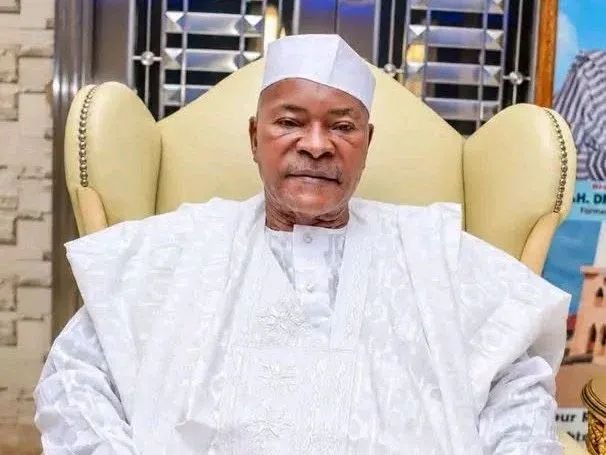
Abdulrasheed Maina, the former chairman of Nigeria’s Presidential Task Force on Pension Reforms, has once again become a subject of public attention as questions surrounding his financial dealings, criminal proceedings and relationship with the country’s anti-corruption authorities continue to resurface.
Maina’s case is one of the longest-running and most controversial episodes in Nigeria’s recent fight against pension fraud. His journey has taken him from leading efforts to investigate irregularities in the pension system to becoming a defendant in major criminal proceedings before Nigerian courts.
The controversy surrounding him has also involved questions about his disappearance from Nigeria, his controversial return to government service in 2017, his subsequent arrest, conviction, imprisonment and eventual release.
For Weng Global, the significance of the latest development lies not only in whether Maina is again being sought by the Economic and Financial Crimes Commission (EFCC), but in understanding the much longer history behind his name.
From pension reform official to wanted suspect
Maina became prominent through his role as chairman of the Presidential Task Force on Pension Reforms, an initiative established to address irregularities and alleged fraud within Nigeria’s pension system.
His work placed him at the centre of efforts to recover funds and investigate suspected pension fraud.
However, the allegations eventually extended to Maina himself.
In November 2015, the EFCC declared him wanted over allegations connected to fraudulent biometric contracts and the alleged theft of more than N2 billion in pension funds. At the time, the commission said Maina had been charged alongside former Head of Service Steve Oronsaye and others in a case involving procurement fraud and obtaining money under false pretences.
The declaration marked a dramatic reversal in Maina’s public profile.
A government official associated with pension reform had become the subject of an EFCC investigation and a wanted notice.
The EFCC later documented that Maina had been declared wanted twice before his eventual arrest and return to Nigeria.
The controversial return to government
The Maina controversy became even more politically significant in 2017 when he resurfaced in Nigeria and returned to government service.
His reinstatement and subsequent promotion generated widespread criticism because he had previously been declared wanted by the EFCC.
The Federal Government eventually ordered his immediate disengagement from the civil service and called for an investigation into the circumstances surrounding his return and posting to the Ministry of Interior.
The episode raised broader questions about coordination between government institutions, the civil service and anti-corruption agencies.
It also became an important chapter in Nigeria’s continuing debate over accountability within public institutions.
Arrest and prosecution
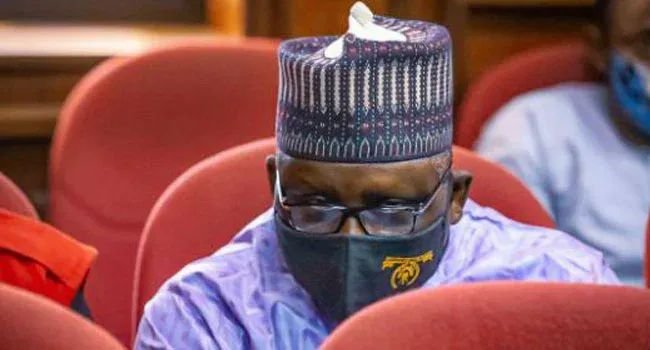
Maina was eventually arrested in September 2019 after the EFCC requested assistance from the Department of State Services.
The DSS said he was arrested at a hotel in Abuja on September 30, 2019, alongside his son, Faisal Maina.
His legal troubles subsequently expanded beyond the original pension-related allegations.
The EFCC prosecuted Maina in separate proceedings involving money laundering and alleged receipt of funds linked to unlawful activity.
In 2021, he was convicted and sentenced to eight years in prison for money laundering offences. Premium Times reported in January 2026 that the conviction related to the handling of about N2 billion in pension funds.
The conviction represented a major turning point in a case that had already lasted several years.
Why the case did not end with his conviction
Maina’s conviction did not bring all legal questions surrounding him to an end.
The EFCC has also pursued other cases involving him.
One of those proceedings concerns an alleged N738.6 million fraud case involving Maina and Ann Igwe Olachi. National Accord reported in February 2026 that the pair were facing a nine-count charge relating to alleged receipt of stolen funds.
The continued litigation illustrates the complexity of the Maina case. A conviction in one proceeding does not automatically resolve separate charges or investigations.
That distinction is important when reporting developments involving the former pension official.
Maina’s release from prison
Another major development came in 2025 when Maina was released from prison before completing the full eight-year sentence.
The Nigerian Correctional Service told Premium Times, following a Freedom of Information request, that Maina was released on February 25, 2025 because of good conduct while in custody. The service said the decision was made within the applicable legal framework and denied preferential treatment.
His release subsequently generated renewed public interest in his activities and the unresolved aspects of his financial history.
New questions over assets
In January 2026, an investigation by the Platform to Protect Whistleblowers in Africa, the Organised Crime and Corruption Reporting Project and Premium Times identified properties in the United States and Dubai linked to Maina.
The investigation examined properties acquired during the period in which Nigerian authorities had accused Maina of financial crimes.
Maina has disputed aspects of the allegations against him. According to the investigation, he argued that some claims against him were inconsistent with the dates of his appointment and maintained that he was not a signatory to accounts connected to the pension funds.
The EFCC, through its spokesperson, indicated that it could consider investigating information concerning assets held abroad if evidence showed that they were connected to illicit proceeds.
These developments have expanded the Maina story beyond the original Nigerian pension investigations into questions about international assets and possible recovery of proceeds.
The wider pension fraud problem
The Maina case also needs to be understood within the wider history of pension fraud investigations in Nigeria.
The pension system has repeatedly faced allegations involving diversion of funds, fraudulent beneficiaries, inflated contracts and manipulation of pension records.
The EFCC has described pension fraud as an area of sustained enforcement activity.
The commission’s own records show that its investigations into Maina extended across several years and involved allegations relating to pension fraud, money laundering and other financial offences.
The broader issue is therefore larger than one individual.
It concerns the ability of government institutions to protect pension funds, investigate financial crimes, recover public assets and ensure that court proceedings are concluded efficiently.
Why Maina’s case still matters
Maina’s case matters because it illustrates the difficulties that can arise when major corruption allegations intersect with government administration, court proceedings and international asset tracing.
It also demonstrates the importance of separating allegations from convictions and from matters that remain before the courts.
Maina was convicted of money laundering in 2021, but he has also disputed aspects of the allegations against him and has continued to face separate legal proceedings.
For readers, this distinction is crucial.
A declaration that a person is wanted is not itself a conviction. An allegation is not automatically proof of guilt. At the same time, a court conviction represents a judicial finding in a specific proceeding and should be reported as such.
The unanswered questions
The continuing Maina saga leaves several important questions for Nigerian institutions.
What is the current status of every outstanding case involving him?
What assets, if any, have been conclusively established by the courts as proceeds of crime?
What happened to assets recovered during earlier pension investigations?
And, more broadly, what safeguards have been introduced to prevent individuals facing serious criminal proceedings from being improperly reinstated or promoted within government institutions?
These questions extend beyond Maina personally.
They concern the credibility of Nigeria’s public institutions and the effectiveness of the country’s anti-corruption framework.
What happens next
Any fresh action involving Maina should be assessed against the status of his existing court proceedings and any formal statement issued by the EFCC or another competent authority.
If the EFCC has issued a new wanted declaration, the commission’s official statement and the legal basis for the action should be examined directly before the development is presented as a new fact.
The history, however, is already well documented: Maina was declared wanted by the EFCC in 2015, later returned to government service in controversial circumstances, was arrested in 2019, convicted of money laundering in 2021 and released from prison in 2025.
The latest developments therefore represent another chapter in a case that has remained closely connected to Nigeria’s long-running struggle with pension fraud, financial crime and institutional accountability.
Weng Global – Stories beyond borders
Sources
- Economic and Financial Crimes Commission (EFCC) — official publications and records on Abdulrasheed Maina and pension-fraud investigations.
- Channels Television — EFCC’s 2015 declaration of Abdulrasheed Maina as wanted.
- Channels Television — DSS arrest of Abdulrasheed Maina in 2019.
- Premium Times — Nigerian Correctional Service explanation of Maina’s 2025 release.
- Platform to Protect Whistleblowers in Africa/OCCRP investigation into assets linked to Maina.
- National Accord — 2026 reporting on the separate N738.6 million case.