Reported by Weng Patrick Atokor l Journalist at Weng Global
Nigeria’s electricity crisis has persisted despite more than a decade of private ownership in generation and distribution, successive regulatory reforms and billions of naira committed to stabilising the sector.
The country’s power industry has changed substantially since the Federal Government began restructuring and privatising electricity assets. The former state-dominated system was unbundled, generation and distribution companies were transferred to private investors, the Nigerian Electricity Regulatory Commission (NERC) was established as an independent regulator, and the Electricity Act 2023 introduced further changes, including greater roles for state governments.
Yet for millions of Nigerians, the central question remains largely unchanged: why is reliable electricity still difficult to obtain?
The answer is not simply that privatisation “failed”. Nigeria’s electricity problem is the result of several interconnected weaknesses involving generation, gas supply, transmission infrastructure, distribution losses, metering, electricity payments, tariffs, regulation and investment.
Understanding those weaknesses is essential to understanding why changing ownership alone has not solved the country’s power problem.
How Nigeria’s Electricity Privatisation Began
Nigeria’s modern electricity reform programme grew out of decades of problems within the former state-controlled system.
According to the Bureau of Public Enterprises, the Federal Government unbundled the Power Holding Company of Nigeria into successor companies covering generation, transmission and distribution. In 2013, control of several generation and distribution companies was transferred to private investors, while the Transmission Company of Nigeria remained under government ownership.
The objective was to introduce private capital and commercial management while reducing inefficiencies associated with the previous state monopoly.
The reforms also created a regulatory framework intended to establish clearer rules for electricity pricing, competition, investment and consumer protection.
The BPE says installed generation capacity has increased from about 6,000 megawatts before the reform programme to more than 13,000MW today.
That increase is significant, but installed capacity is not the same as electricity actually available to consumers.
A power plant can have hundreds of megawatts of installed capacity but produce much less because of gas shortages, mechanical problems, maintenance requirements, transmission constraints, financial difficulties or insufficient demand from the grid.
That distinction helps explain one of the central contradictions in Nigeria’s electricity sector: the country can have substantial installed capacity while households and businesses continue to experience inadequate supply.
The Problem Does Not End at the Power Plant
Electricity has to pass through several stages before it reaches a consumer.
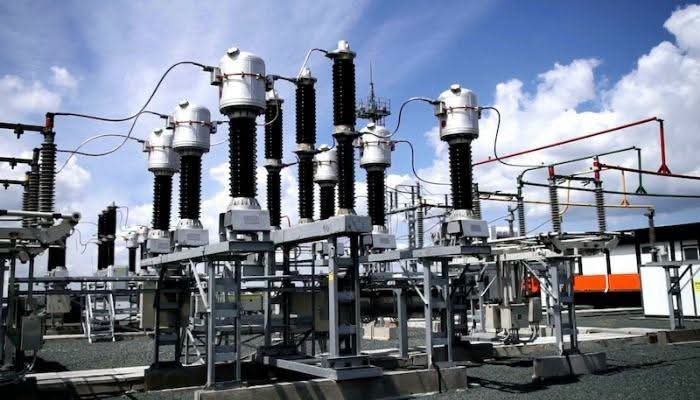
Generation companies produce electricity. Transmission infrastructure moves bulk electricity over long distances. Distribution companies then deliver electricity to homes and businesses.
A weakness at any stage can affect the entire system.
Nigeria’s transmission network has repeatedly faced limitations, including infrastructure constraints and grid instability. The Federal Ministry of Power announced in July 2026 that the government was planning additional investment in grid stabilisation, including interventions aimed at transmission bottlenecks, ageing infrastructure and recurring system disruptions.
The ministry said a technical working committee had been established to identify priority interventions and work with the Transmission Company of Nigeria and the Nigerian Independent System Operator.
This demonstrates why increasing generation alone cannot solve the crisis. Electricity produced at a power station is of limited value to consumers if the transmission and distribution networks cannot reliably move it to them.
Distribution Remains a Major Weakness
The distribution end of the electricity chain presents another challenge.
Distribution companies must collect enough revenue from customers to pay for electricity purchased from the market, maintain their networks, invest in infrastructure and meet other operating costs.
Where electricity is delivered but payment is not adequately collected, financial problems can spread through the entire value chain.
A 2026 analysis published by BusinessDay identified revenue leakage, weak collection performance, inadequate metering and payment insecurity among the structural weaknesses affecting the sector.
The problem is particularly complicated by Nigeria’s history of estimated billing.
Customers without functioning meters may receive estimated bills, while electricity theft and technical losses can further reduce the amount of revenue collected from electricity supplied.
The Federal Government and development partners have therefore continued to invest in metering.
The Bureau of Public Enterprises reported in August 2026 that 668,000 electricity meters had been installed out of 1.033 million meters delivered under the first international competitive bidding component of the World Bank-financed Distribution Sector Recovery Programme.
The programme is intended to improve metering and strengthen the distribution side of the electricity market.
The Gas Problem
Nigeria relies heavily on gas-fired electricity generation.
That creates another vulnerability because electricity generation can be affected when gas supplies are disrupted or when power plants cannot obtain fuel under commercially viable conditions.
The Federal Government has said repairs to disrupted gas pipelines have helped improve gas availability to thermal power plants.
But the underlying relationship between gas producers, power generators and electricity distributors remains important.
If generators cannot reliably pay gas suppliers because money is not flowing through the electricity market, gas supply can be affected. Reduced gas supply can then lower electricity generation, worsening the supply available to consumers.
This creates a cycle in which financial problems in one part of the electricity value chain can eventually become an electricity supply problem for households and businesses.
Nigeria’s Debt Problem
Financial obligations accumulated across the electricity value chain have also become a major part of the reform debate.
In April 2026, the Presidency announced a ₦3.3 trillion settlement plan covering verified legacy debts accumulated between February 2015 and March 2025.
The government said 15 power plants had signed settlement agreements worth ₦2.3 trillion and that ₦501 billion had been raised to support payments, with ₦223 billion already disbursed at the time of the announcement.
The government presented the programme as a way to restore confidence in the electricity market and enable gas suppliers and power plants to operate more reliably.
Whether the settlement produces lasting improvements depends on whether the wider electricity market becomes financially sustainable after the historical debts are addressed.
Clearing old debts can provide breathing room, but it does not by itself eliminate technical losses, inadequate metering, transmission constraints or problems with electricity collection.
The Tariff Question
Electricity tariffs are another difficult part of Nigeria’s power-sector debate.
The basic challenge is straightforward: electricity costs money to generate, transmit and distribute. If the amount consumers pay is significantly below the cost of providing the service, the difference has to be covered through subsidies, government intervention or other financing arrangements.
But increasing tariffs also affects households and businesses, particularly during periods when incomes and operating costs are under pressure.
Nigeria therefore faces a difficult policy balance.
Electricity companies need enough revenue to maintain infrastructure and invest in improvements. Consumers, meanwhile, expect the quality and quantity of electricity supplied to justify the amount they pay.
This is one reason NERC has continued to use service-based tariff arrangements, under which electricity pricing is connected to expected service levels.
The regulatory framework is designed to make the relationship between payment and service more transparent, although implementation remains a major issue.
The Electricity Act 2023 Changes the Structure
Nigeria’s electricity reforms have not stopped with privatisation.
The Electricity Act 2023 created a framework that allows states to establish electricity markets and regulatory structures within the limits set by law.
The Bureau of Public Enterprises reported in August 2026 that 17 states had established their own electricity regulatory commissions since April 2024.
This represents a significant structural change.
Instead of relying entirely on one national electricity market, Nigeria is moving towards a more decentralised system in which states can play a greater role in electricity generation, distribution and regulation.
The reform could create opportunities for states to develop electricity solutions based on local needs and resources.
However, decentralisation also creates new demands for coordination, regulation, investment and technical capacity.
The existence of state-level regulators does not automatically guarantee reliable electricity. The institutions must still be able to attract investment, enforce rules, protect consumers and ensure that electricity businesses can operate sustainably.
What the Numbers Tell Us
Nigeria’s electricity challenge is also an access problem.
World Bank data show that about 62.5 per cent of Nigeria’s population had access to electricity in 2024. That means a substantial share of the population remained without access.
Access, however, is different from reliability.
A household can technically be connected to the electricity grid while still experiencing frequent outages or receiving insufficient electricity for its needs.
The World Bank has previously highlighted this distinction, noting that Nigerians connected to the grid have also faced frequent outages and inadequate supply, resulting in widespread dependence on private generators.
This means Nigeria has two related challenges: connecting people who remain without electricity and improving the reliability of electricity supplied to those who are already connected.
Has Privatisation Failed?
The answer depends on what is being measured.
If the objective is to determine whether private ownership alone has produced the reliable electricity system Nigerians expected, the continuing problems demonstrate that ownership change by itself has not been sufficient.
But the sector has also recorded measurable structural changes since privatisation, including increased installed generation capacity, private investment, regulatory development and further market reforms.
The more useful question is therefore not simply whether privatisation succeeded or failed.
It is whether the institutional, technical and financial conditions required for a functioning electricity market have been established strongly enough.
Recent evidence suggests that major gaps remain.
A 2026 academic study published through African Journals Online argued that decades of reform, including liberalisation, unbundling and privatisation, had not yet produced a technically reliable and financially credible electricity system. The authors linked the continuing difficulties to institutional and governance weaknesses as well as problems involving tariffs, metering, fuel supply and payment mechanisms.
That assessment is consistent with the continued emphasis by NERC and the Federal Government on grid stability, commercial viability, metering, customer service and financial reform.
What Needs to Change?
The electricity crisis cannot be solved through one intervention.
Nigeria needs sufficient and dependable generation, but that generation must have reliable gas or other fuel sources.
The country needs stronger transmission infrastructure capable of moving available electricity across the grid.
Distribution companies need functioning networks, better metering, improved collection systems and the financial capacity to invest.
Consumers need transparent billing and service that corresponds with the tariffs they are asked to pay.
Regulators need sufficient institutional capacity to enforce market rules and protect consumers.
Government interventions must also address legitimate public-interest concerns without creating a system permanently dependent on emergency financial support.
Renewable and distributed energy can also play a greater role.
In September 2026, Nigeria launched a $300 million Distributed Renewable Energy Fund aimed at expanding off-grid electricity access, particularly in underserved areas. The initiative reflects growing recognition that solving Nigeria’s electricity problem may require both improvements to the national grid and expansion of decentralised power systems.
Why Reliable Electricity Matters
Electricity is not simply an infrastructure issue.
It affects the cost of running businesses, the price of goods and services, industrial production, employment, education, healthcare and household living conditions.
Small businesses that depend on generators face additional fuel and maintenance expenses. Manufacturers must factor energy reliability into production costs. Hospitals and other critical institutions require dependable power to operate essential equipment.
For households, unreliable electricity can mean additional spending on alternative energy sources.
For the Nigerian economy, unreliable power can reduce productivity and make investment more difficult.
This is why the electricity debate extends beyond the power sector itself.
What Happens Next?
The Federal Government is continuing several interconnected reforms, including grid stabilisation, metering, financial settlement, electricity-market reforms and efforts to improve gas supply.
NERC is also continuing to oversee the evolving electricity market, including the implementation of the Electricity Act 2023 and the development of state-level regulatory structures.
The success of these measures will ultimately be judged not by the number of announcements or reform documents produced, but by measurable improvements in electricity availability, reliability, affordability, financial sustainability and consumer service.
Nigeria has spent decades changing the structure of its electricity industry.
The next challenge is ensuring that those structural changes translate into a power system capable of consistently delivering electricity to the people and businesses that depend on it.
The central lesson from Nigeria’s experience is that privatisation is neither a complete solution nor an isolated explanation for the electricity crisis. Reliable electricity requires the entire chain — generation, fuel supply, transmission, distribution, metering, payment, regulation and investment — to function together.
For Nigerians, the most important measure of progress will remain straightforward: whether electricity becomes more available, more predictable and more sustainable in everyday life.
Weng Global – Stories beyond borders
Sources
Federal Ministry of Power, Nigeria — updates on grid stabilisation and electricity-sector reforms.
Nigerian Electricity Regulatory Commission (NERC) — 2026 Nigerian Electricity Supply Industry stakeholder updates and regulatory reports.
Bureau of Public Enterprises (BPE) — background and current updates on Nigeria’s power-sector reform and privatisation programme.
State House, Abuja — 2026 announcement on the ₦3.3 trillion power-sector legacy debt settlement programme.
World Bank — Nigeria electricity access and energy-sector data.
African Journals Online — 2026 research on institutional credibility and Nigeria’s electricity-sector reforms.
Reuters — September 2026 report on Nigeria’s $300 million Distributed Renewable Energy Fund.
BusinessDay — 2026 analysis of Nigeria’s electricity-sector structural and financial challenges.