Reported by Weng Patrick Atokor l Journalist at Weng Global
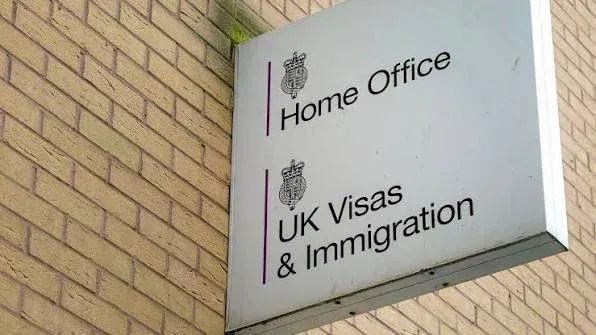
The United Kingdom has removed Nigeria, Ghana and India from the countries whose teachers can use the Department for Education’s direct “Apply for Qualified Teacher Status in England” service, with the change taking effect on September 9, 2026.
The Department for Education (DfE) said the eligibility requirements for the service had been updated and that teachers trained in Nigeria, Ghana or India would no longer be eligible to use the route from that date.
The change affects the professional recognition route used by overseas-trained teachers seeking Qualified Teacher Status (QTS) in England. QTS is a professional status that is required in many English schools and is generally preferred by schools when recruiting teachers.
The decision was announced alongside updated DfE guidance and follows the publication of official data covering applications submitted through the QTS service during the 2024–25 academic year.
Why the UK changed the eligibility rules
According to the DfE, countries remaining eligible for the direct service must have a national regulator capable of confirming a teacher’s professional standing and must be able to provide references that meet the department’s requirements.
The department gave a specific explanation for the exclusion of Nigeria and Ghana.
It said more than 70 per cent of applications from teachers in both countries contained work-history references using public email services, including Gmail and Hotmail, rather than official email domains belonging to schools.
The DfE said this required assessors to spend additional time and resources attempting to verify information supplied by applicants.
The department said it needed confidence that information provided by overseas-trained teachers was genuine so that teachers awarded QTS would have the skills and experience required to teach in English schools.
The DfE gave a separate reason for India’s removal, stating that the country does not have a national regulator capable of confirming professional standing under the requirements of the service.
What the official figures show
The DfE’s recently published data provides a picture of applications made during the 2024–25 academic year, from September 1, 2024, to August 31, 2025.
Nigeria recorded 1,076 applications through the service. Of these, 364 resulted in QTS and 599 were declined. The remaining applications were not necessarily successful or unsuccessful because some were still being processed or had been withdrawn.
Ghana recorded 1,067 applications during the same period. A total of 196 resulted in QTS, while 749 were declined.
The figures therefore show that Nigeria and Ghana were among the countries with substantial numbers of teachers using the service.
However, the official data does not say that 95 per cent of Nigerian applications were rejected or that 97 per cent of Ghanaian applications were rejected.
Instead, the 95 per cent figure attached to Nigeria and the 97 per cent figure attached to Ghana refer to the percentage of successful applications whose recipients had at least two years of teaching experience and were therefore exempt from an induction requirement.
This distinction is important when interpreting the figures.
What Nigerian and Ghanaian teachers must now know
The removal means newly applying teachers trained in Nigeria or Ghana can no longer use the specific DfE professional-recognition service that was available to eligible overseas-trained teachers.
The DfE, however, has explicitly said that teachers who are no longer eligible for the service can explore alternative routes into teaching in England.
The wider UK guidance identifies several routes to QTS for teachers and people with teaching experience outside the UK.
These include the direct professional-recognition service where available, the assessment-only route to QTS, teacher training in England and international Qualified Teacher Status (iQTS). The appropriate route depends on factors including where the teacher qualified, their qualifications, subject specialism and teaching experience.
What is QTS?
Qualified Teacher Status is the professional status associated with teaching in England.
The DfE says QTS is a legal requirement to teach in many schools in England, while it is considered desirable in most schools. It can make teachers more attractive to schools recruiting teachers, although obtaining QTS does not itself provide a teaching job or a visa.
Teachers must apply separately for employment and, where necessary, the appropriate immigration permission.
The DfE also makes clear that it does not directly employ teachers. Teachers seeking employment must apply to individual schools.
Countries that remain eligible
Under the updated rules, teachers with qualifications from countries and regions including Australia, Canada, the European Economic Area, Guernsey, Hong Kong, Jersey, New Zealand, Switzerland, Ukraine and the United States remain eligible to use the service if they satisfy the requirements.
Teachers qualified in Jamaica, Singapore and South Africa may also use the route under specified conditions.
For teachers from those countries, additional requirements can apply depending on whether they are already working in England, their subject specialism and the age groups they are qualified to teach.
South Africa therefore remains among the African countries covered by the updated arrangements, while Nigeria and Ghana have been removed from the direct service.
Requirements for teachers using the QTS service
For countries that remain eligible, the DfE requires applicants to meet several conditions.
Applicants generally need a valid passport, an undergraduate degree equivalent to a UK bachelor’s degree and professional recognition as a teacher in the country where they trained.
They must also have completed mandatory induction requirements where applicable and have qualifications showing that they can teach children between five and 16 years old.
The current application service also requires at least nine months, or one school year, of teaching experience gained after qualification. Applicants must provide references that can verify their employment history, with the relevant email address linked to the school’s official domain.
Depending on the applicant’s country and qualifications, further requirements may apply, including qualifications covering pupils aged 11 to 16 and subject specialisms in areas such as mathematics, science and selected languages.
Alternative routes remain available
The removal of Nigeria and Ghana from the direct recognition service does not mean that every Nigerian or Ghanaian teacher is permanently barred from teaching in England.
The DfE’s guidance lists alternative routes for teachers who cannot use the professional-recognition service.
One option is assessment-only QTS. This route is designed for experienced teachers who can demonstrate that they already meet the Teachers’ Standards without completing a conventional teacher-training programme.
The DfE says assessment-only applicants generally need at least two years of teaching experience, a bachelor’s degree and specified English and mathematics qualifications. Applicants are assessed by an approved teacher-training provider.
Another route is international Qualified Teacher Status, or iQTS, which allows eligible teachers to train for QTS while living and working outside England.
The available route will depend on an individual teacher’s qualifications, experience, current employment and other circumstances.
The significance for Nigerian and Ghanaian teachers
The change is significant because the direct QTS application service provided a route for internationally trained teachers to have their qualifications and professional status assessed for recognition in England.
The official 2024–25 data shows that 1,076 applications were submitted from Nigeria and 1,067 from Ghana during the reporting period. Together, that represents more than 2,100 applications through the service in one academic year.
The policy change therefore affects a sizeable group of teachers who may have considered England as a potential destination for their professional careers.
At the same time, the DfE’s guidance makes clear that the direct QTS service is only one route into the English teaching system. Alternative pathways remain available, although their requirements can differ substantially.
What happens next?
Nigerian and Ghanaian teachers considering teaching in England will need to examine the alternative routes rather than relying on the former direct QTS application service.
Teachers should also ensure that their qualifications, professional registration, employment history and references can be properly verified before pursuing an alternative route.
The DfE says overseas-trained teachers who are not eligible for the direct service can explore other routes into teaching in England.
The department’s current guidance also states that QTS does not itself guarantee employment or provide immigration permission. Teachers must separately secure employment and meet the relevant visa or immigration requirements.
For Nigerian and Ghanaian educators, the immediate issue is therefore not simply the removal of a qualification route but determining which alternative pathway matches their existing qualifications and teaching experience.
The policy also highlights the importance of reliable professional verification in international teacher-recognition systems, particularly the ability of regulators and schools to confirm professional standing and employment histories.
Weng Global – Stories beyond borders
Sources
- UK Department for Education — Overseas-trained teachers: apply for Qualified Teacher Status in England.
- UK Department for Education — QTS applicants and awards to overseas teachers, 2024–25 application data.
- UK Department for Education — Routes to Qualified Teacher Status for teachers and those with teaching experience outside the UK.
- UK Department for Education — Apply for Qualified Teacher Status in England eligibility guidance.