Reported by Simon Daniel Yusuph l Journalist at Weng Global
Nigeria is set to renew its campaign for a permanent seat on the United Nations Security Council as Vice President Kashim Shettima leads the country’s delegation to the 81st UN General Assembly (UNGA81) in New York.
The renewed diplomatic push comes as negotiations over reforming the 15-member Security Council continue at the United Nations, with Nigeria advocating greater African representation in the body responsible for major decisions on international peace and security.
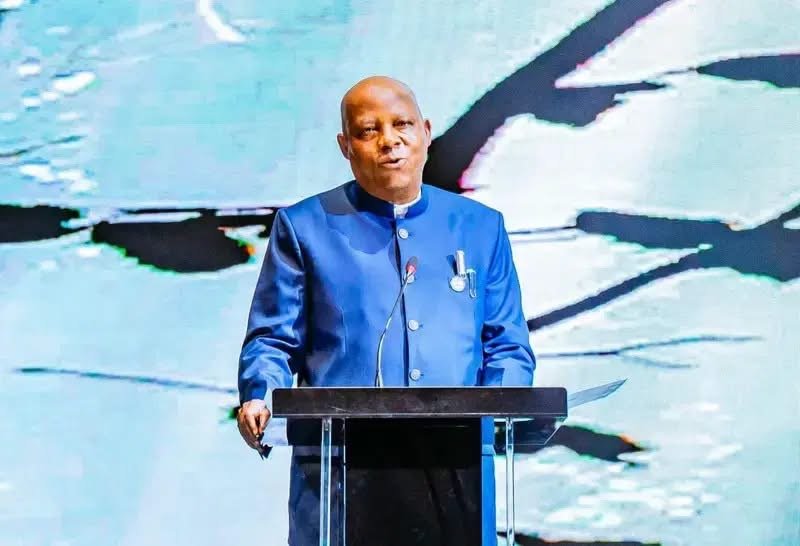
Shettima is representing President Bola Ahmed Tinubu at the high-level gathering and is scheduled to deliver Nigeria’s national statement during the General Debate on Thursday, September 24, 2026.
Nigeria Places Security Council Reform on UNGA Agenda
Nigeria’s renewed campaign builds on its position at the previous General Assembly, where Shettima called for the country to have a permanent seat on the Security Council as part of broader reforms to the international system.
In his statement to the 80th General Assembly, Shettima argued that the United Nations should reflect contemporary global realities rather than the conditions that existed when the organisation was established.
He said Nigeria’s case was linked to its population, role in regional security and contribution to international peacekeeping.
Nigeria’s position is also tied to the wider African demand for permanent representation on the Security Council.
In United Nations negotiations, Nigeria has supported the African position that the Council should be expanded in both its permanent and non-permanent categories.
During discussions on Security Council reform in 2026, Nigeria stated that Africa should receive at least two permanent seats, with the same prerogatives and privileges enjoyed by existing permanent members.
Africa’s Representation Remains Central to Reform Debate
The Security Council currently has five permanent members — China, France, Russia, the United Kingdom and the United States — and 10 non-permanent members elected by the General Assembly for two-year terms.
Africa does not currently hold a permanent seat.
Nigeria has argued that this structure no longer adequately reflects the distribution of political, economic and demographic power in the international system.
In a Nigerian statement submitted to the UN’s Special Committee on the Charter in February 2026, the country said Africa’s lack of a permanent seat represented a historical imbalance and called for permanent African representation with the privileges attached to permanent membership, including the veto.
Nigeria’s position is aligned with the broader Ezulwini Consensus, the African Union’s longstanding framework on Security Council reform.
Under the African position, the continent seeks at least two permanent seats and five additional non-permanent seats, while retaining the right to determine which African countries occupy the seats.
UN Reform Negotiations Continue
The push comes as the UN’s intergovernmental negotiations on Security Council reform enter another stage.
The General Assembly decided in July 2026 to continue the negotiations during its 81st session.
The negotiations cover questions including the categories of membership, regional representation, the size and working methods of the Council, and the relationship between permanent membership and veto rights.
The UN has also continued discussions around models proposed by individual countries and regional groups, with the aim of identifying areas of convergence that could eventually support a broader reform framework.
Nigeria has participated actively in these negotiations.
A Nigerian representative told the UN in 2026 that the country remained committed to “genuine, meaningful and comprehensive reform” of the Security Council.
The reform process, however, remains dependent on negotiations among UN member states and ultimately requires sufficiently broad political support for any changes to move forward.
Shettima to Lead Nigeria’s High-Level Engagements
Ahead of the General Assembly, Foreign Affairs Minister Bianca Odumegwu-Ojukwu and Nigeria’s Permanent Representative to the UN, Ambassador Jimoh Ibrahim, briefed Shettima on Nigeria’s priorities and planned engagements.
The diplomatic programme is expected to include discussions on global governance and the country’s wider foreign-policy priorities.
The Security Council campaign is part of a broader Nigerian argument for changes to international institutions, including reforms intended to give developing countries greater influence in global decision-making.
Nigeria has also repeatedly called for stronger African participation in institutions that shape international peace, security, finance and development.
Nigeria’s Previous Security Council Experience
Nigeria is not new to the Security Council.
The country has served several terms as an elected non-permanent member, most recently from 2014 to 2015.
It also served during 1966–1967, 1978–1979, 1994–1995 and 2010–2011.
Its previous experience gives Nigeria a record of participation in the Council’s work, although permanent membership would represent a fundamentally different status.
The Council’s permanent members have veto power over substantive resolutions, meaning a permanent African seat would significantly alter the continent’s formal position within the UN’s highest-level peace and security body.
Wider UN Reform Is Also on Nigeria’s Agenda
Nigeria’s position at UNGA81 is broader than the Security Council alone.
The country has supported reforms aimed at making the United Nations more representative, efficient and responsive to contemporary international challenges.
During the 80th General Assembly, Shettima linked Nigeria’s Security Council demand to wider institutional reform and also raised issues involving sovereign debt, access to trade and financing, critical minerals and the global digital divide.
Nigeria has also backed the UN Secretary-General’s reform efforts under the UN80 Initiative, which seeks to improve efficiency and reduce duplication across the UN system.
The wider reform debate comes at a time when the United Nations is facing pressure over financing, conflicts, geopolitical divisions and questions about the effectiveness of multilateral institutions.
Why the Security Council Campaign Matters
For Nigeria, securing permanent representation would give the country a formal role in decisions taken by the Security Council on international peace and security.
For Africa more broadly, the campaign addresses a longstanding concern that the continent is heavily affected by Security Council decisions but has no permanent seat in the body.
The issue is particularly significant because many of the Council’s peace and security discussions concern African conflicts, peacekeeping operations and regional crises.
However, reforming the Council is a complex diplomatic process. Changes to the UN Charter require broad international agreement, while the interests of existing permanent members and different regional groups remain part of the negotiations.
Nigeria’s renewed campaign therefore forms part of a longer diplomatic process rather than an immediate change to the Council’s composition.
What Happens Next
Shettima is expected to present Nigeria’s position during the UNGA81 General Debate on September 24.
Nigeria’s diplomatic engagements are expected to continue throughout the high-level segment of the General Assembly, with Security Council reform and broader changes to global governance remaining important elements of the country’s agenda.
At the United Nations, intergovernmental negotiations on Security Council reform will continue during the 81st General Assembly session.
The immediate outcome will depend on negotiations among member states, including discussions over the number and categories of new seats, regional representation, veto rights and the Council’s working methods.
For Nigeria, the latest campaign represents another effort to translate its longstanding argument for greater African representation into concrete changes within the UN system.
Weng Global – stories beyond borders
Sources
- United Nations General Assembly
- United Nations Security Council
- United Nations Office of Legal Affairs
- State House, Abuja
- Permanent Mission of Nigeria to the United Nations
- The Nigeria Lawyer
- The Nation
.