Reported by Simon Daniel Yusuph l Journalist at Weng Global
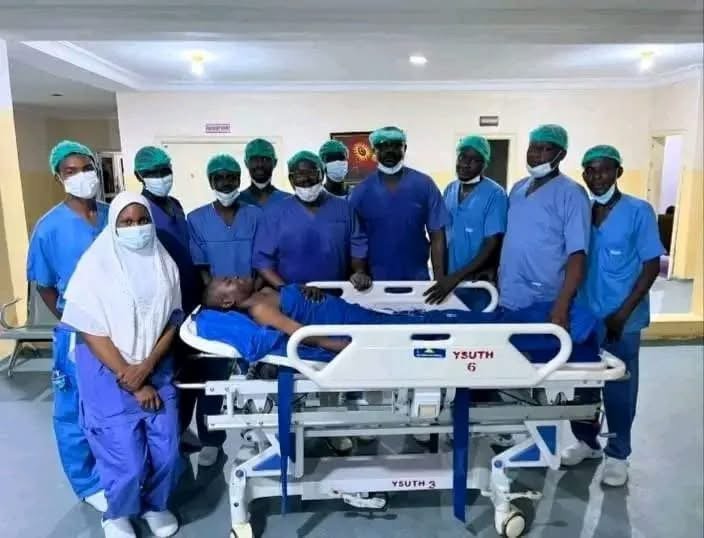
Yobe State University Teaching Hospital (YSUTH) in Damaturu has successfully performed its first total hip replacement surgery on a young man living with sickle cell disease, marking a significant development in the range of specialised medical procedures available in the state.
The surgery was performed on Saturday, September 19, 2026, after the patient developed avascular necrosis of the femoral head, a condition in which reduced blood supply causes bone tissue to deteriorate.
The procedure involved replacing the damaged hip joint and was carried out by a medical team led by Dr Lawan Musa Yari, alongside Dr Musa Abdulmalik, Dr Bashok Palagvi, Mr Manasseh Jonah and Mr Karumi Ibrahim.
The development was disclosed in a statement issued by the Director-General, Press and Media Affairs to the Yobe State Governor.
First Total Hip Replacement at YSUTH
According to the Commissioner for Health, Dr Muhammad Lawan Gana, total hip replacement had previously not been available in Yobe State.
The successful procedure therefore represents an expansion of orthopaedic services at the teaching hospital, allowing a complex form of joint replacement to be performed within the state.
Total hip replacement is a surgical procedure in which a damaged hip joint is removed and replaced with artificial components. It is commonly performed when severe joint damage causes significant pain and limits movement.
In the Yobe patient’s case, the underlying problem was associated with sickle cell disease and avascular necrosis affecting the head of the femur.
Sickle Cell Disease and Avascular Necrosis
Avascular necrosis occurs when the blood supply to a section of bone is disrupted. Without adequate blood flow, the affected bone can weaken and eventually collapse.
People living with sickle cell disease can develop complications affecting blood circulation because abnormal red blood cells can obstruct small blood vessels.
When avascular necrosis affects the hip, damage to the femoral head can make normal movement increasingly difficult and may eventually require joint replacement.
For patients with advanced damage, total hip replacement can provide a surgical option for restoring joint function after other treatment approaches are no longer sufficient.
The Yobe case demonstrates how complications associated with chronic medical conditions can require highly specialised surgical intervention.
Medical Team Behind the Procedure
The surgery was led by Dr Lawan Musa Yari, with Dr Musa Abdulmalik, Dr Bashok Palagvi, Mr Manasseh Jonah and Mr Karumi Ibrahim also participating in the procedure.
The operation represents a multidisciplinary effort involving surgical expertise and the supporting clinical personnel required for major orthopaedic procedures.
The successful intervention also demonstrates the importance of having specialised personnel, appropriate surgical equipment and postoperative care available within a health facility.
Expanding Specialist Healthcare in Yobe
The hip replacement procedure is part of a broader expansion of specialised healthcare services being reported from Yobe’s public hospitals.
YSUTH has also been providing free haemodialysis services. In September, the hospital’s Chief Medical Director, Prof. Baba Goni, said the state government spends about N360 million annually on the free dialysis programme.
He said the hospital conducts between 600 and 700 free haemodialysis sessions every month under a programme that began in 2017. The figures were reported by the News Agency of Nigeria.
The hospital has also been associated with specialist medical services in areas including nephrology, surgery and other forms of advanced care.
At Damaturu Specialist Hospital, another public facility in the state, medical teams have carried out complex procedures, including maxillofacial surgery, while patients requiring regular dialysis have continued to receive treatment.
These developments point to an increasing range of specialist services within Yobe’s public healthcare system.
Reducing the Need for Medical Referrals Outside the State
For patients requiring complex procedures, access to treatment close to home can reduce the need to travel to other states.
Patients who previously needed to seek specialised orthopaedic treatment outside Yobe may now have another option when such procedures are available locally and appropriate for their medical condition.
This can be particularly relevant for families dealing with chronic illnesses, for whom repeated travel can add transportation, accommodation and other financial pressures to the cost of medical care.
However, sustaining complex surgical services requires more than a successful first procedure. Specialist doctors, trained theatre staff, reliable equipment, postoperative monitoring, medicines and rehabilitation services are all important components of maintaining such programmes.
Yobe’s Broader Healthcare Development
The development comes as Yobe continues to invest in its public healthcare infrastructure.
Recent procurement records show that YSUTH has been pursuing the construction of a modern administrative block, while the hospital has continued to expand its clinical services.
The state’s support for specialised healthcare has also included funding for free dialysis treatment, with the hospital saying the programme requires substantial annual expenditure.
The combination of infrastructure development, specialist medical personnel and government-supported treatment programmes is intended to improve access to healthcare within the state.
Why the Surgery Matters
The first total hip replacement at YSUTH is significant because it adds another complex procedure to the medical services available in Yobe.
For people living with sickle cell disease who develop severe hip complications, access to appropriate orthopaedic care can be an important part of managing the consequences of the condition.
The development also illustrates the broader challenge facing healthcare systems across Nigeria: expanding specialised treatment beyond major metropolitan centres while ensuring that services remain safe, sustainable and accessible.
For Yobe, the procedure provides an example of how specialist surgical capacity can gradually develop within a state-based public hospital.
What Happens Next
The immediate priority following the operation will be the patient’s postoperative recovery, monitoring and rehabilitation.
Long-term outcomes will depend on continued clinical follow-up and the availability of appropriate rehabilitation and orthopaedic services.
For YSUTH, the procedure could provide a foundation for further development of its orthopaedic and surgical capabilities, although the extent of future procedures will depend on specialist availability, equipment, patient needs and other clinical requirements.
The successful operation nevertheless marks a new stage in specialised healthcare delivery at Yobe State University Teaching Hospital and provides another treatment option for patients who might otherwise have needed to leave the state for complex orthopaedic care.
Weng Global – Stories beyond borders
Sources
- Vanguard Nigeria
- News Agency of Nigeria (NAN)
- Premium Times
- Yobe State University Teaching Hospital
- Medical Rehabilitation Therapists (Registration) Board of Nigeria
- Yobe State Government