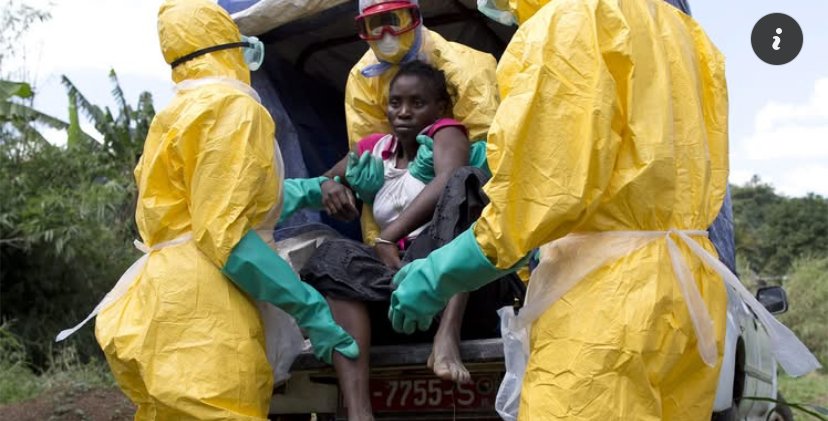
Ebola Outbreak in DR Congo Outpaces Response as Africa CDC and WHO Demand Stronger Community-Led Action!
The Democratic Republic of the Congo’s escalating Ebola outbreak has entered a critical phase, with the Africa Centres for Disease Control and Prevention (Africa CDC) and the World Health Organization (WHO) calling for a major expansion of community-led interventions as health authorities struggle to keep pace with transmission.
The appeal comes as the outbreak in eastern Democratic Republic of the Congo (DRC) has become the fastest-spreading Ebola epidemic recorded, according to health officials and recent reporting by The Associated Press. More than 4,000 confirmed cases and over 1,800 deaths had been reported by August 6, underscoring the scale of an emergency that has increasingly moved beyond the reach of conventional contact-tracing systems. (AP News)
The outbreak, declared on May 15, 2026, was first identified in Ituri Province in northeastern DRC and is being caused by the Bundibugyo species of Ebola virus. The strain presents a particular challenge because there is currently no approved vaccine or specific treatment for Bundibugyo virus disease, although clinical trials and research into potential vaccines and therapies are underway. (World Health Organization)
Community transmission emerges as a central challenge
At the heart of the growing concern is the inability of response teams to identify and monitor enough transmission chains through conventional contact tracing.
Africa CDC Director-General Jean Kaseya said in early August that between 60% and 70% of newly identified cases were occurring outside the network of people already being monitored as contacts of confirmed patients. That means a substantial proportion of infections are being detected without a clear epidemiological link, making it increasingly difficult for health workers to interrupt chains of transmission before the disease spreads further. (AP News)
The implications are significant. Contact tracing has traditionally been one of the principal tools used to contain Ebola outbreaks, allowing health teams to monitor people exposed to infected patients and rapidly isolate those who develop symptoms. But when cases emerge in communities without previously identified links, health authorities must shift resources toward active case finding, community surveillance and earlier detection.
WHO has repeatedly emphasized that community engagement is not a supplementary component of an Ebola response but a central requirement for controlling transmission. Its current DRC outbreak response includes strengthening surveillance, contact tracing, clinical preparedness, supplies and community engagement, alongside cross-border preparedness. (World Health Organization)
The agency has also documented examples of community volunteers working directly with displaced families and residents in Ituri to explain Ebola, address fears and encourage people to seek appropriate medical care. Such efforts are intended to build trust between communities and responders at a time when misinformation, fear and insecurity are undermining public-health operations. (WHO | Regional Office for Africa)
Conflict, mistrust and weak access complicate containment
The outbreak is unfolding in one of the DRC’s most difficult humanitarian environments. Eastern Congo has endured years of armed conflict, population displacement and insecurity, leaving many communities difficult for health teams to reach.
The situation has also been compounded by mistrust toward health authorities and international responders. In some affected communities, misinformation about Ebola and resistance to public-health measures have contributed to tensions, while attacks on health facilities and response teams have interrupted surveillance and treatment operations. (AP News)
Unsafe handling of bodies has emerged as another major concern. Africa CDC reported that a significant proportion of recent Ebola deaths occurred outside treatment centres, raising fears that traditional burial practices involving physical contact with deceased people could contribute to additional infections. (AP News)
The challenge is therefore not simply a medical one. It is also a question of trust, security, communication, logistics and local ownership.
For WengGlobal, this distinction is important because the effectiveness of an Ebola response cannot be measured solely by the number of treatment centres or laboratories deployed. A response that does not reach households, community leaders, religious figures, traditional authorities and local health workers risks missing the very transmission chains it is designed to stop.
Health workers under pressure
The condition of frontline health workers has further complicated the response.
Health workers in Ituri have protested over unpaid salaries and bonuses, with some facilities experiencing disruptions at a time when demand for Ebola-related services is increasing. The WHO has called for the protection and support of frontline workers, who face both the risk of infection and security threats while operating in affected communities. (AP News)
More than 100 health workers have reportedly been infected since the beginning of the outbreak, according to recent AP reporting, highlighting the risks faced by personnel working in Ebola treatment and surveillance operations. (AP News)
WHO Director-General Tedros Adhanom Ghebreyesus, during his latest visit to the DRC, called for a rapid expansion of every component of the response and stressed that affected communities must have a central role in the effort.
The emphasis reflects a lesson repeatedly demonstrated by previous Ebola emergencies: communities are not merely recipients of public-health instructions. They are essential partners in identifying cases, reporting symptoms, supporting safe burials, countering misinformation and helping responders reach vulnerable households.
Ituri remains the epicentre
Ituri Province continues to account for the overwhelming majority of reported cases, although the outbreak has spread beyond the province into other parts of the country.
WHO reported in July that confirmed cases had already been detected across five provinces, including Ituri, North Kivu, South Kivu, Haut-Uele and Tshopo. By late July and early August, the number of affected areas and confirmed infections had risen substantially. (World Health Organization)
The expansion has raised concerns about the movement of infected people through densely populated communities and transport corridors. On August 6, Congolese authorities quarantined nearly 200 passengers from a boat near Kinshasa after a traveller who had previously been aboard the vessel died with symptoms consistent with Ebola. Authorities stressed that Kinshasa had no confirmed Ebola case at the time, but the incident demonstrated the importance of surveillance beyond the outbreak’s eastern epicentre. (AP News)
Neighbouring Uganda, which recorded cases linked to the DRC outbreak, declared itself free of Ebola on July 28 after completing the required monitoring period without detecting new infections. The development demonstrates that rapid surveillance and containment can work when systems are sufficiently resourced and coordinated. (Reuters)
Funding and international support remain critical
The worsening situation has also renewed questions about the adequacy and sustainability of international financing.
Reuters reported on July 31 that Africa CDC estimated approximately $1.4 billion would be required to contain the epidemic, while available funding remained well below the level needed. Reuters also reported that WHO had warned the actual scale of the outbreak could be considerably larger than official figures because of limitations in surveillance and access. (Reuters)
The United States subsequently announced an additional $242 million in funding for Ebola response, preparedness and related humanitarian assistance, bringing its direct support connected to the emergency to more than $512 million, according to AP. (AP News)
The funding gap matters because community-led surveillance requires sustained investment. Volunteers need training and protective equipment. Health facilities need staff and supplies. Laboratories need testing capacity. Communities need reliable information delivered in languages and formats they understand. And frontline workers need to be paid and protected.
A race against transmission
The immediate objective for authorities is to regain control of transmission by identifying infections earlier, expanding community-based surveillance and rebuilding confidence in the response.
WHO and Africa CDC are increasingly emphasizing a strategy that places communities at the centre of that effort. This includes door-to-door case finding, stronger engagement with local leaders, better communication about symptoms and prevention, improved referral systems and closer collaboration with community health workers.
The urgency is heightened by the speed at which the outbreak has expanded. Reuters reported that by July 31, the epidemic had already become the second-largest Ebola outbreak on record, surpassed only by the 2014–2016 West Africa epidemic, which recorded more than 28,000 cases and over 11,000 deaths. (Reuters)
The current crisis is therefore more than another Ebola outbreak in a country that has experienced repeated epidemics. It is a test of whether national authorities and international partners can adapt quickly enough when conventional containment mechanisms fail.
For the DRC, the next phase will depend heavily on whether health authorities can transform communities from passive recipients of emergency interventions into active partners in disease detection and prevention.
The message from Africa CDC and WHO is clear: laboratories, treatment centres, vaccines and surveillance systems remain essential, but they cannot stop an outbreak that is spreading through communities that responders cannot consistently reach or whose trust they have not secured.
Containing Ebola will require the response to move closer to the people most at risk — and to give those communities a meaningful stake in stopping the outbreak.
Sources
- World Health Organization — Ebola outbreak in the Democratic Republic of the Congo, 2026
- WHO Africa — Democratic Republic of the Congo confirms new Ebola outbreak
- WHO Africa — Communities help drive progress against Ebola in the Democratic Republic of the Congo
- Associated Press — Ebola kills 1,700 in eastern Congo as the fastest-growing outbreak surges
- Associated Press — WHO chief says Ebola outbreak is outpacing response
- Associated Press — Congo monitors 200 boat passengers near Kinshasa after Ebola-like death
- Reuters — Congo’s Ebola outbreak is second-largest on record
- Reuters — Uganda declares end to latest Ebola outbreak