Reported by Weng Patrick Atokor | Journalist at Weng Global
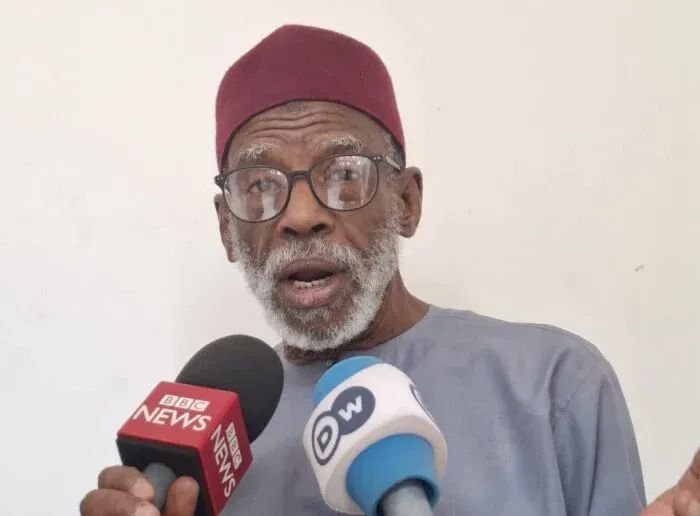
The Supreme Council for Sharia in Nigeria (SCSN) has called for wider national consultations before the Federal Government proceeds with the implementation of state police, warning that such a far-reaching security reform must not be rushed without broad consensus among Nigerians.
The council said while it recognises the urgent need to address Nigeria’s worsening security challenges, the establishment of state police requires careful deliberation involving religious organisations, traditional institutions, civil society groups, legal experts, and other stakeholders to ensure the reform strengthens rather than weakens the country’s unity.
The position of the council comes as the Federal Government intensifies efforts to operationalise state policing following recent constitutional amendments approved by the National Assembly. President Bola Ahmed Tinubu’s administration has already inaugurated a Presidential Working Group tasked with developing the legal, institutional and operational framework for the new policing system.
Security Reform Must Be Inclusive
Speaking on the proposal, the Sharia Council stressed that security reforms affecting all parts of the federation should emerge through transparent national dialogue.
According to the council, creating state police without adequate consultations could generate fresh political and constitutional concerns, especially in a country characterised by ethnic, religious and political diversity.
It argued that the success of any decentralised policing arrangement depends on public confidence, constitutional safeguards and mechanisms that prevent abuse of power.
The organisation urged the Federal Government to slow the implementation process until Nigerians from different backgrounds have had sufficient opportunities to contribute to discussions on the proposed framework.
Fear of Political Misuse
One of the council’s major concerns centres on the possibility that state-controlled police forces could become instruments of political intimidation if strong institutional safeguards are not established.
It noted that state governments already wield considerable influence over local political structures, warning that policing powers must be accompanied by robust accountability systems capable of preventing violations of citizens’ rights.
The council maintained that while decentralised policing has recorded success in several federal systems around the world, Nigeria’s unique political realities require additional constitutional protections.
According to the group, independent oversight institutions, transparent recruitment processes and clearly defined operational limits should form part of any state police framework.
Growing Support for State Police
Calls for state police have intensified in recent years following persistent insecurity across different parts of Nigeria.
Banditry, kidnapping, terrorism, communal clashes and violent crimes have continued to stretch the capacity of the centrally controlled Nigeria Police Force.
Supporters argue that state police would improve intelligence gathering, enhance community policing and enable faster responses to local security threats because officers would possess better knowledge of their communities.
Several governors have repeatedly advocated decentralised policing, insisting that state authorities are often better positioned to understand and respond to local security challenges.
Security analysts have also argued that Nigeria’s rapidly growing population has made it increasingly difficult for a single centrally controlled police organisation to effectively provide security nationwide.
Federal Government Moves Ahead
The Federal Government has continued preparations for the implementation of state police after receiving legislative backing for constitutional amendments aimed at restructuring Nigeria’s policing architecture.
The Presidential Working Group inaugurated by President Tinubu is expected to develop operational guidelines covering recruitment, funding, training, command structures, accountability mechanisms and collaboration between federal and state security agencies.
Officials say the objective is to create a policing model that complements the Nigeria Police Force rather than replacing it.
The administration believes decentralising policing responsibilities will improve public safety while allowing federal agencies to concentrate more resources on national security and transnational crimes.
Mixed Reactions Across Nigeria
The proposal has generated diverse reactions among political leaders, civil society organisations and constitutional experts.
While many governors and security professionals have welcomed the initiative, others remain cautious.
Some critics fear that governors could deploy state police against political opponents, suppress dissent or influence electoral processes if constitutional safeguards prove inadequate.
Human rights advocates have therefore recommended the creation of independent police service commissions, judicial oversight mechanisms and strong federal monitoring institutions before implementation.
Others have called for clear funding arrangements to ensure state police commands remain professional, adequately equipped and insulated from political interference.
Call for National Consensus
The Supreme Council for Sharia in Nigeria insisted that broad national engagement remains the best pathway to achieving lasting security reforms.
The council urged policymakers to place national unity above political expediency by ensuring every segment of society participates in shaping the future policing structure.
According to the organisation, reforms developed through consensus are more likely to enjoy public acceptance and long-term stability than policies introduced without widespread consultation.
It added that effective policing should strengthen trust between citizens and security institutions while protecting constitutional rights and preserving Nigeria’s democratic values.
Outlook
As discussions on state police gather momentum, the Federal Government faces the challenge of balancing demands for improved security with concerns over accountability and national cohesion.
Whether the proposed policing system ultimately succeeds will depend largely on the legal safeguards adopted, the transparency of its implementation and the extent to which stakeholders across Nigeria are carried along throughout the reform process.
With insecurity remaining one of the country’s most pressing concerns, the debate over state police is expected to remain at the centre of national discourse in the months ahead.
Sources:
- Channels Television
- The Punch
- Premium Times
- Supreme Council for Sharia in Nigeria (SCSN)