Russian Missile and
Reported by Simon yusuph, | Journalist at wengglobal
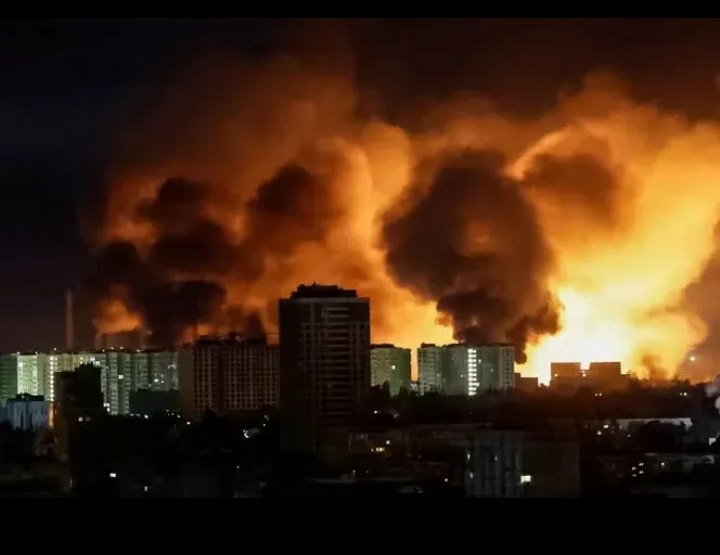
Ukraine has reported that at least four people were killed following a fresh wave of overnight Russian missile and drone attacks, underscoring the continuing humanitarian toll of Europe’s largest armed conflict since the Second World War. The latest strikes, confirmed by Ukrainian regional officials, targeted several communities across the country, damaging civilian infrastructure and residential buildings while renewing international concerns over the worsening security situation.
The attacks come at a time when diplomatic efforts to secure a ceasefire remain stalled and both Russia and Ukraine continue to exchange long-range strikes despite mounting international appeals for restraint. The renewed bombardment also highlights the persistent vulnerability of civilians living near conflict zones and major urban centres, where emergency services continue to respond to repeated air raid alerts and infrastructure damage.
According to Ukrainian authorities, emergency response teams were deployed immediately after the overnight attacks to rescue survivors, extinguish fires and assess the extent of the destruction. Local officials said residential buildings, public facilities and other civilian infrastructure were among the structures damaged during the strikes.
The Ukrainian Air Force reported that air defence units intercepted a significant number of incoming drones and missiles. However, several projectiles reportedly penetrated defensive systems, resulting in casualties and extensive property damage in affected regions.
Officials confirmed that at least four civilians lost their lives, while additional residents sustained injuries of varying severity. Medical personnel treated the wounded at local hospitals as emergency authorities continued search-and-rescue operations in damaged buildings.
The latest attacks once again demonstrate the growing reliance on long-range missile systems and unmanned aerial vehicles in the conflict, with both sides increasingly employing drones for reconnaissance and offensive operations. Ukrainian officials have consistently argued that sustained international military assistance remains critical to strengthening the country’s air defence capabilities against recurring aerial assaults.
Since Russia launched its full-scale invasion of Ukraine in February 2022, missile and drone attacks have become a recurring feature of the conflict. Cities far from the front lines have increasingly come under attack, with energy facilities, transportation networks, residential neighbourhoods and industrial sites frequently sustaining damage.
Russia maintains that it targets military infrastructure and strategic facilities supporting Ukraine’s defence operations. Ukrainian authorities, however, contend that many of the attacks have disproportionately affected civilian populations and essential infrastructure, resulting in significant humanitarian consequences.
Independent international organisations have documented widespread destruction across numerous Ukrainian regions since the conflict escalated, with millions of civilians displaced internally or forced to seek refuge abroad. The United Nations estimates that the war has caused thousands of civilian deaths, although the actual figures are believed to be considerably higher due to difficulties verifying casualties in occupied territories and active combat zones.
The overnight attacks triggered air raid sirens across several Ukrainian regions, prompting residents to seek shelter in underground stations, designated bunkers and other protected locations. Emergency officials worked through the night to assess structural damage, restore essential services and provide temporary assistance to displaced families.
Local authorities urged residents to remain vigilant and continue observing official safety guidance during air raid alerts. Emergency responders also warned that unexploded ordnance may remain in some affected areas, posing additional risks to civilians returning to damaged neighbourhoods.
The renewed attacks occurred amid continuing military operations along multiple sections of the front line, where fighting remains intense. Ukrainian military officials say Russian forces continue offensive operations in eastern and southern regions, while Ukrainian units maintain defensive positions and conduct counteroffensive actions where possible.
Military analysts note that aerial bombardments have become an increasingly significant component of Russia’s broader military strategy. By targeting logistics hubs, energy infrastructure and urban centres, Moscow is widely seen as attempting to weaken Ukraine’s operational capacity while placing sustained pressure on civilian morale.
Ukraine, meanwhile, has expanded domestic drone production and increasingly utilised long-range strikes against military-related targets within Russian territory. Russian authorities have similarly reported interceptions of Ukrainian drones targeting various regions, illustrating how the conflict continues to evolve beyond conventional battlefield engagements.
International reactions to the latest attacks were swift. Several Western governments reiterated their condemnation of strikes affecting civilian areas and reaffirmed support for Ukraine’s sovereignty and territorial integrity. Officials from the European Union and NATO have repeatedly stated that continued military assistance remains necessary to help Ukraine defend itself against ongoing attacks.
The United Nations has consistently called on all parties to respect international humanitarian law and minimise civilian harm. UN agencies continue to provide humanitarian assistance to millions of Ukrainians affected by displacement, damaged infrastructure and disrupted access to healthcare, education and essential public services.
Humanitarian organisations warn that repeated attacks on energy facilities and public infrastructure could further complicate living conditions, particularly during periods of extreme weather. Damage to electricity generation and distribution networks has previously resulted in prolonged power outages affecting hospitals, schools and water supply systems.
Beyond the immediate humanitarian impact, the ongoing conflict continues to generate significant economic consequences both regionally and globally. Ukraine’s agricultural sector, a critical contributor to global food supplies, has faced repeated disruptions due to damaged infrastructure, mined farmland and logistical challenges affecting exports.
The war has also influenced global energy markets, supply chains and inflationary pressures, affecting countries far beyond Eastern Europe, including many African economies that depend on imported grain, fertilisers and fuel. Governments across Africa have closely monitored developments, balancing diplomatic engagement with concerns over food security and economic stability.
For African nations, including Nigeria, the conflict carries important geopolitical implications. Rising commodity prices linked to the war have influenced domestic inflation, while disruptions to international trade have highlighted the interconnected nature of global supply chains. African leaders have repeatedly called for peaceful dialogue and diplomatic solutions capable of restoring stability.
The African Union has consistently advocated negotiations aimed at ending hostilities while supporting international efforts to alleviate humanitarian suffering. Several African countries have also participated in diplomatic initiatives designed to encourage constructive dialogue between Moscow and Kyiv.
Despite periodic discussions involving international mediators, prospects for a comprehensive ceasefire remain uncertain. Analysts suggest that fundamental disagreements regarding territorial control, security guarantees and future political arrangements continue to impede meaningful negotiations.
Military experts believe both Russia and Ukraine are likely to continue pursuing strategic objectives on the battlefield while simultaneously seeking diplomatic advantages through international engagement. As a result, civilian populations remain at significant risk from continued missile and drone attacks.
The latest fatalities serve as another reminder of the human cost of a conflict that has entered its fifth year with no immediate resolution in sight. Families across Ukraine continue to endure displacement, loss of loved ones and repeated disruptions to daily life as emergency workers struggle to respond to successive waves of attacks.
International humanitarian organisations continue urging increased protection for civilians and expanded support for communities affected by the fighting. Aid agencies stress that humanitarian assistance alone cannot substitute for a durable political settlement capable of ending the violence.
As investigations into the latest strikes continue, Ukrainian authorities are documenting damage and collecting evidence related to the attacks. Officials have pledged continued cooperation with international institutions examining alleged violations of international humanitarian law during the conflict.
Meanwhile, Russia has not always publicly commented on individual overnight strike reports immediately after such incidents, though Moscow has consistently defended its military operations, stating that its forces target strategic military objectives. Independent verification of battlefield claims by either side remains challenging due to restricted access to active combat areas.
With diplomatic efforts yet to produce a lasting breakthrough, the conflict continues to reshape regional security dynamics and international relations. The latest overnight strikes reinforce the urgency of renewed diplomatic engagement while highlighting the resilience of Ukrainian emergency services and affected communities confronting ongoing insecurity.
As the war continues, the international community faces the complex challenge of supporting humanitarian relief, maintaining diplomatic channels and preventing further escalation in a conflict whose consequences extend far beyond the borders of Ukraine and Russia.
Sources:
- Reuters
- Associated Press (AP)
- BBC News
- Agence France-Presse (AFP)
- Al Jazeera
- The Guardian
- United Nations Office for the Coordination of Humanitarian Affairs (UNOCHA)
- Ukrainian Air Force official updates
- Statements from Ukrainian regional authorities