Reported by Weng Patrick Atokor l Journalist at Weng Global
Africa’s climate negotiators have accused countries advocating an end to fossil fuel production of applying double standards, alleging that some governments are simultaneously pursuing petroleum supply arrangements while publicly supporting a transition away from oil, gas and coal.
The criticism was raised by the African Group of Negotiators on Climate Change (AGN) during the 31st United Nations Climate Change Conference (COP31) in Antalya, Türkiye, as negotiations over fossil fuels, climate finance and the future of global energy policy approached their scheduled conclusion on November 20, 2026.
The group’s position highlights growing disagreements between developed and developing countries over how quickly the world should move away from fossil fuels and whether African economies should be expected to follow the same transition timetable as wealthier industrialised nations.
The African negotiators argue that climate commitments must be consistent with actual government policies and energy arrangements. They also insist that Africa’s development priorities, industrialisation needs, employment opportunities and access to affordable energy must be considered in international climate decisions.
The controversy has added another dimension to already difficult negotiations at COP31, where the future of fossil fuel production and the financial support required by developing countries have emerged as major areas of disagreement.
African Negotiators Challenge Countries Calling for Fossil Fuel Phase-Out
The Chair of the African Group of Negotiators, Nana Dr Antwi-Boasiako Amoah, criticised what he described as contradictions between some countries’ public climate commitments and their reported efforts to secure petroleum supplies.
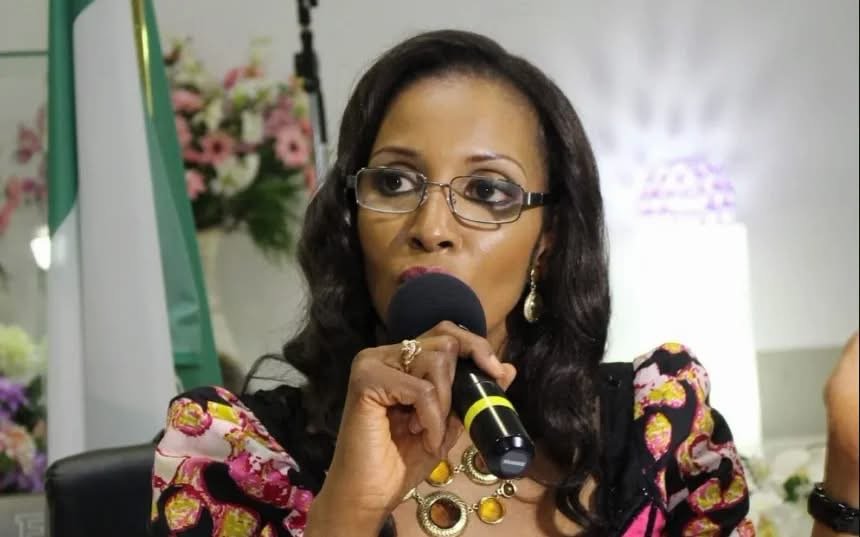
Speaking during a press conference at COP31, Amoah argued that governments advocating the complete removal of fossil fuels should demonstrate consistency in their domestic and international energy policies.
He maintained that countries should not publicly promote the abandonment of fossil fuels while privately pursuing arrangements that could sustain petroleum supply.
However, Amoah clarified that he did not have specific information about the reported petroleum arrangement involving China, the United States and Russia. His criticism was directed at what he considered a broader inconsistency in the international approach to fossil fuel production and consumption.
His intervention placed the question of credibility at the centre of the debate, particularly as African countries continue to challenge what they regard as unequal expectations within global climate negotiations.
The African group is calling for governments to demonstrate that their climate commitments are reflected in their actions rather than relying on declarations that may not correspond with their energy policies.
Reported Petroleum Cooperation Raises Questions at COP31
The controversy followed reports of a trilateral declaration involving China, the United States and Russia, which reportedly included discussions about increasing petroleum supplies alongside other areas of international cooperation.
The reported arrangement emerged against the background of energy market pressures associated with the conflict involving Iran and disruptions around the Strait of Hormuz, a strategically important route for international oil shipments.
The development attracted attention because of the participation of major global powers whose decisions have considerable influence on international energy markets and climate policy.
European Union Climate Chief Wopke Hoekstra reportedly criticised the petroleum-related development, describing it as unfortunate and urging governments to strengthen domestic clean-energy investment.
The disagreement illustrates the difficulty of reconciling energy security with international commitments to reduce greenhouse gas emissions.
For countries dependent on imported petroleum, securing reliable supplies remains an important economic and strategic consideration. At the same time, continued investment in fossil fuel infrastructure can complicate efforts to reduce emissions and accelerate the transition towards cleaner energy.
The African negotiators’ intervention has therefore raised a broader question: whether countries advocating a global fossil fuel phase-out are prepared to apply the same expectations to their own energy policies.
Africa Demands a Just and Credible Energy Transition
Beyond its criticism of international energy policies, the African Group of Negotiators is pushing for a transition framework that recognises the continent’s economic circumstances.
Amoah argued that moving away from fossil fuels should not create additional economic difficulties for African countries or undermine their ability to develop industries, generate employment and improve living standards.
The group identified several priorities that should guide the transition:
- Protecting farmers and agricultural communities from the economic consequences of climate policies.
- Safeguarding workers whose livelihoods depend on fossil fuel industries.
- Supporting African countries in processing their natural resources locally.
- Expanding industrialisation and employment opportunities.
- Establishing credible institutions to manage the energy transition.
- Providing adequate financial and technological support to developing economies.
The position reflects a longstanding disagreement over how climate policies should accommodate countries at different stages of economic development.
Many African economies continue to face challenges involving electricity access, industrial capacity, infrastructure financing and unemployment. Oil, gas and other natural resources remain important components of their development strategies.
African negotiators argue that countries should be allowed to pursue responsible economic development while gradually expanding renewable energy and reducing emissions.
However, this position does not remove the need for African governments to address environmental damage, improve energy efficiency and invest in cleaner technologies.
The central demand is that climate action should not impose disproportionate economic costs on countries with limited financial resources and relatively low historical contributions to global greenhouse gas emissions.
Climate Finance Remains a Major African Priority
The African Group of Negotiators has also placed climate finance at the centre of its COP31 demands.
Amoah maintained that international climate commitments cannot be implemented without the financial resources required to support developing countries.
He argued that governments and institutions with responsibility for providing climate finance must translate their commitments into practical assistance, particularly for adaptation programmes.
Climate adaptation involves measures that help communities and economies prepare for and manage the consequences of climate change.
For African countries, this includes improving agricultural resilience, strengthening water management systems, developing flood protection infrastructure and preparing communities for extreme weather events.
The continent is particularly exposed to climate-related risks, including prolonged droughts, flooding, desertification and changing rainfall patterns.
These challenges can affect food production, livelihoods, public infrastructure and economic stability.
The African negotiators therefore want international climate agreements to place greater emphasis on implementation rather than announcing commitments that do not produce measurable improvements.
The debate is particularly important because developing countries often face higher borrowing costs and limited domestic resources when financing climate-related infrastructure.
At COP31, disagreements over adaptation finance became more pronounced after a revised draft agreement published on November 19 removed a proposed $120 billion adaptation-finance target.
According to Reuters, the revised document also removed references to ending fossil fuel use that had appeared in an earlier draft.
The changes attracted criticism from climate campaigners, who argued that the revised language weakened the summit’s ambition.
Türkiye and Australia, which are sharing leadership responsibilities for the conference, defended the revised approach, saying negotiators were seeking an outcome that could secure international consensus.
Reuters
COP31 Faces Difficult Negotiations Over Fossil Fuels
The African negotiators’ criticism comes at a sensitive moment for international climate diplomacy.
COP31, which began on November 9 in Antalya, is scheduled to conclude on November 20, bringing together representatives of governments, international organisations, environmental groups and other stakeholders.
The conference is intended to advance international cooperation on reducing greenhouse gas emissions, adapting to climate impacts and mobilising financial resources.
However, disagreements over the future of fossil fuels have continued to complicate negotiations.
At COP28 in Dubai in 2023, countries agreed to transition away from fossil fuels in energy systems in a just, orderly and equitable manner, accelerating action during the critical decade.
Turning that commitment into more detailed and enforceable national measures has proved difficult.
According to Reuters, subsequent negotiations have struggled to establish stronger language on how quickly countries should reduce fossil fuel production and consumption.
The latest COP31 draft has further exposed these differences by removing explicit references to ending fossil fuel use.
Reuters
The Associated Press also reported on November 20 that negotiators entered the summit’s scheduled final day without major new commitments to move away from fossil fuels.
The news agency reported that countries remained divided over stronger action, while vulnerable nations continued to raise concerns about inadequate funding for climate adaptation and disaster recovery.
AP News
These developments underline the difficulty of reaching agreements that satisfy countries with different economic interests, energy requirements and climate vulnerabilities.
Developed economies generally have greater financial and technological capacity to invest in renewable energy infrastructure. Many developing countries, meanwhile, argue that they need additional support to expand electricity access and build competitive industries.
Why the Disagreement Matters for Africa
The disagreement has important implications for Africa’s economic future.
The continent possesses substantial oil and natural gas resources, alongside considerable renewable energy potential, including solar, wind and hydropower.
Countries such as Nigeria, Angola, Algeria, Libya and Mozambique have significant interests in the future of fossil fuel production and energy investment.
For oil-producing economies, petroleum revenues can contribute to government budgets, foreign exchange earnings, infrastructure development and employment.
However, dependence on oil and gas also exposes these economies to international price fluctuations, changing demand and the possibility of declining long-term fossil fuel consumption.
A global transition towards cleaner energy could therefore create both risks and opportunities for African economies.
The challenge is to manage these changes without undermining economic stability or delaying the development of more sustainable energy systems.
Africa’s renewable energy potential could support electricity generation, manufacturing, agricultural processing and other economic activities if governments can secure the necessary investment and infrastructure.
Solar energy, in particular, offers opportunities for expanding electricity access in communities that remain poorly connected to national power grids.
But renewable energy development requires investment in electricity transmission, storage facilities, technical expertise and reliable regulatory systems.
African negotiators are therefore calling for international climate policies that combine emissions reduction with development financing and opportunities for local industrialisation.
Their position also raises questions about whether African countries can secure a meaningful role in the emerging global clean-energy economy rather than remaining primarily suppliers of raw materials.
The Credibility Challenge Facing Global Climate Leadership
The accusations of hypocrisy raise a wider issue concerning the credibility of international climate leadership.
Countries that advocate ambitious climate targets are expected to demonstrate how their domestic policies, investment decisions and international energy arrangements support those commitments.
Energy security remains a legitimate concern for governments, particularly during periods of geopolitical instability and supply disruptions.
Nevertheless, the pursuit of energy security can create tensions with climate commitments when governments continue to support long-term fossil fuel dependence.
For African negotiators, the issue is not simply whether countries should continue using petroleum. It is whether the international community is applying climate expectations consistently and recognising the different responsibilities and capabilities of individual economies.
The distinction is important because a fair transition requires more than setting a common global objective.
It also requires credible financing arrangements, technology transfers, institutional support and policies that protect communities affected by changes in energy production.
The debate is unlikely to be resolved through declarations alone. Governments must demonstrate how their commitments will translate into measurable changes in energy production, consumption and investment.
What Happens Next at COP31?
With COP31 scheduled to conclude on November 20, negotiations are entering a critical stage.
Countries are expected to continue working towards an agreed outcome covering climate finance, adaptation, emissions reduction and the global energy transition.
The final agreement will be particularly important in determining whether governments can maintain meaningful commitments on fossil fuels while addressing the financial concerns raised by developing countries.
For African negotiators, the priorities remain the protection of multilateral cooperation, adequate climate finance and a just transition that reflects the continent’s development needs.
The outcome will also provide an indication of how much progress countries can achieve in translating previous climate commitments into practical action.
The African Group of Negotiators has made clear that it does not want climate policies to become additional economic burdens for the continent.
Its intervention has placed a fundamental question before global climate leaders: can the international community pursue a credible transition away from fossil fuels while ensuring that the economic responsibilities and benefits are distributed fairly?
For Africa, the answer will influence not only its energy future but also its industrial development, employment prospects and ability to respond to climate change.
Weng Global – Stories beyond borders
Sources
- Punch – Africa faults nations preaching fossil phase-out, pursuing oil deals (November 20, 2026).
- African Group of Negotiators – African negotiators to COP31: Make decisions happen on the ground.
- Reuters – COP31 draft drops fossil fuel language as talks near deadline (November 19, 2026).
- Associated Press – Nations still seeking deeper fossil fuel cuts as climate summit enters final day.
- UNFCCC – Official COP31 conference information.