Reported by Weng Patrick Atokor l Journalist at Weng Global
Nigeria’s High Commissioner to South Africa, Femi Fani-Kayode, has revealed that he personally appealed to President Bola Ahmed Tinubu to be reassigned to South Africa after initially receiving a diplomatic posting to a European country.
Fani-Kayode said his decision was influenced by his belief that Nigeria and South Africa could work together to advance African interests, strengthen regional cooperation and contribute to the development of the continent.
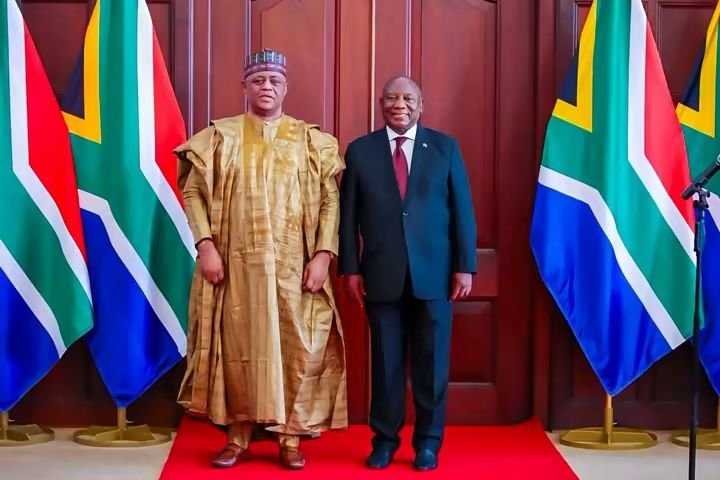
He made the disclosure during a dinner and reception organised by the Nigerian High Commission and Consular Office in Pretoria, following the presentation of his letters of credence to South African President Cyril Ramaphosa on November 13, 2026.
The envoy said he had requested the South African assignment because he considered the relationship between the two African countries important to the continent’s future.
His remarks come amid renewed attention on diplomatic relations between Nigeria and South Africa, particularly concerns surrounding xenophobic attacks, the treatment of Nigerian nationals and the need to strengthen economic and political cooperation between both countries.
Why Fani-Kayode Preferred South Africa
Explaining his decision, Fani-Kayode said he approached President Tinubu to express his preference for South Africa instead of the European country to which he was initially assigned.
He acknowledged the President’s approval of his request and described the opportunity to represent Nigeria in South Africa as an important diplomatic responsibility.
According to him, both countries have resilient populations, rich histories and significant potential to contribute to Africa’s development.
He argued that disagreements and misunderstandings should not prevent Nigeria and South Africa from working together.
Fani-Kayode also stressed the importance of maintaining unity between the two countries, noting that their relationship has implications beyond their respective national interests.
He said Nigeria and South Africa could jointly contribute to moving sub-Saharan Africa and the wider continent forward.
The envoy did not identify the European country during his November 19 remarks. However, he had previously confirmed in May that Germany was his initial posting and that he personally requested reassignment.
Germany Posting and Tinubu’s Approval
Fani-Kayode’s diplomatic reassignment became a subject of public discussion in May 2026 after President Tinubu approved changes to the ambassadorial postings.
The former Minister of Aviation had initially been designated for Germany but subsequently emerged as Nigeria’s ambassador-designate to South Africa.
In a statement issued in May, Fani-Kayode explained that he had formally approached the then Minister of Foreign Affairs, Yusuf Tuggar, to communicate his reservations about the Germany assignment.
He cited personal considerations, including having spent much of his life in Europe, and expressed a preference for serving in an African country.
He also identified South Africa’s strategic position on the continent, its relationship with Nigeria and his interest in Pan-African cooperation as important considerations.
According to his earlier explanation, he submitted the redeployment request two days after the initial ambassadorial postings were announced.
Tuggar considered the request and forwarded it to President Tinubu, who subsequently approved the change.
The arrangement also involved Senator Ita Enang, who had initially been assigned to South Africa but agreed to take the Germany posting instead.
Fani-Kayode rejected reports suggesting that Germany had formally refused his appointment, maintaining that the change resulted from his personal request rather than a rejection by the German government.
The distinction is important because an ambassadorial nominee requesting a change of assignment is not the same as a host country rejecting a diplomatic nomination.
Fani-Kayode Addresses Xenophobic Attacks
Beyond explaining his choice of posting, Fani-Kayode addressed concerns affecting Nigerians living in South Africa.
He said he began examining issues concerning the Nigerian community shortly after arriving in the country.
His comments come against the background of recurring tensions involving foreign nationals in South Africa, including incidents of xenophobic violence and protests targeting migrants.
The treatment of Nigerian nationals has remained an important issue in relations between Abuja and Pretoria.
Fani-Kayode described those responsible for xenophobic attacks as a small minority and argued that their actions should not be used to define the entire South African population.
He characterised the majority of South Africans as decent and accommodating, distinguishing them from individuals involved in attacks against foreign nationals.
His position reflects an attempt to address concerns about the safety and welfare of Nigerians without allowing incidents of violence to undermine relations between the two countries.
However, the safety of foreign nationals remains an important responsibility for South African authorities, while Nigeria has a diplomatic obligation to protect and support its citizens abroad.
Nigeria and South Africa’s Strategic Relationship
Nigeria and South Africa are among the most influential countries on the African continent, with significant political, economic and diplomatic roles.
Their relationship is important to regional integration, continental trade, investment, security cooperation and Africa’s engagement with international institutions.
Both countries have also been influential participants in discussions about African development, economic transformation and the continent’s position in global affairs.
South Africa’s industrial and financial sectors and Nigeria’s large population and economic market provide opportunities for cooperation across several industries.
These include energy, manufacturing, telecommunications, financial services, infrastructure, agriculture and technology.
The two countries also participate in continental initiatives aimed at expanding trade and strengthening economic integration, including the African Continental Free Trade Area.
Nevertheless, their relationship has experienced periods of tension, particularly over xenophobic incidents and the treatment of foreign nationals in South Africa.
Such developments have occasionally generated public anger in Nigeria and calls for stronger diplomatic responses.
Fani-Kayode’s emphasis on cooperation suggests that his approach will involve maintaining diplomatic engagement while addressing concerns affecting Nigerians in South Africa.
Nigeria Rules Out Severing Economic Relations
During his remarks, Fani-Kayode also indicated that Nigeria would not sever economic relations with South Africa despite calls from some Nigerians for such action.
His position highlights the importance of separating concerns about the treatment of Nigerian citizens from the broader economic relationship between the two countries.
South Africa and Nigeria maintain commercial interests that extend beyond government-to-government relations.
Businesses operating in both markets have investments, commercial partnerships and economic interests that could be affected by a deterioration in bilateral relations.
A breakdown in diplomatic engagement could also make it more difficult for both governments to address disputes involving their citizens and businesses.
For Nigeria, maintaining diplomatic channels provides an avenue to raise concerns about the welfare of its nationals, seek cooperation from South African authorities and pursue solutions through established bilateral mechanisms.
For South Africa, continued engagement with Nigeria is important given Nigeria’s influence in West Africa and its wider role in continental affairs.
Fani-Kayode’s Diplomatic Responsibilities
Fani-Kayode’s assignment places him at the centre of an important diplomatic relationship at a time when both countries face the challenge of maintaining cooperation amid public concerns.
His responsibilities include representing Nigeria’s interests, strengthening political engagement, promoting economic partnerships and supporting Nigerians living in South Africa.
Nigeria’s Ministry of Foreign Affairs has previously confirmed that Fani-Kayode formally began his diplomatic duties after presenting copies of his Letters of Credence to South Africa’s Department of International Relations and Cooperation on October 30, 2026.
The subsequent presentation of his letters to President Ramaphosa on November 13 formed part of the formal diplomatic process.
His latest remarks in Pretoria provide further insight into the reasons behind his preference for the South African assignment.
What Happens Next?
The effectiveness of Fani-Kayode’s diplomatic mission will depend on how his administration translates its stated commitment to cooperation into practical engagement.
Key areas to watch include the protection of Nigerians in South Africa, responses to xenophobic violence, stronger trade and investment relations and improved diplomatic communication between Abuja and Pretoria.
His comments indicate that he favours continued engagement rather than economic disengagement as a response to disagreements between the two countries.
Whether this approach produces measurable improvements will depend on cooperation between both governments and their willingness to address outstanding concerns.
For Nigerians living in South Africa, the immediate priority remains safety, equal protection under the law and access to effective diplomatic assistance when problems arise.
For both countries, the wider challenge is ensuring that disagreements do not undermine a relationship that carries significant importance for Africa.
Fani-Kayode’s decision to request a South African posting rather than remain in Europe therefore reflects not only a personal diplomatic preference but also his stated interest in strengthening Nigeria’s relationship with one of Africa’s major political and economic partners.
Weng Global – Stories beyond borders
Sources
- TheCable – Fani-Kayode explains why he requested South Africa posting (November 19, 2026).
- Voice of Nigeria – Fani-Kayode assumes duties as Nigeria’s envoy to South Africa (October 31, 2026).
- Vanguard – Why Fani-Kayode preferred South Africa over Germany (November 19, 2026).
- THISDAY – Fani-Kayode explains his earlier decision to reject Germany posting (May 8, 2026).