Reported by Weng Patrick Atokor l Journalist at Weng Global
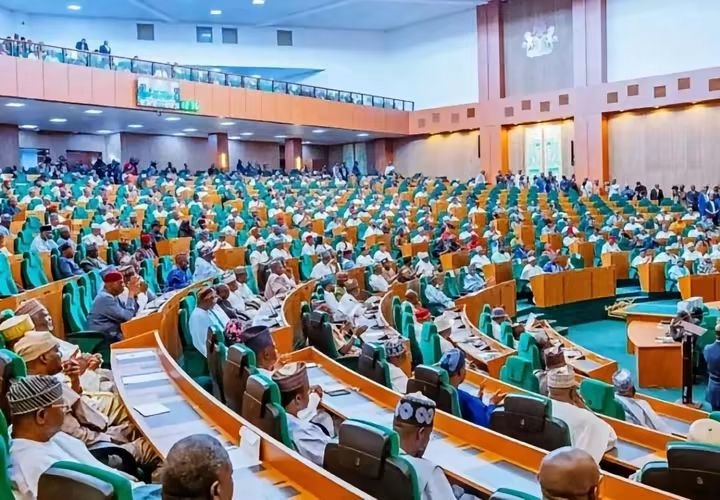
Nigeria’s House of Representatives has been divided over a proposal to write off outstanding loans obtained by farmers under government-backed agricultural intervention programmes, with lawmakers disagreeing over whether blanket debt forgiveness would rescue struggling farmers or undermine accountability for public funds.
The disagreement emerged during Wednesday’s plenary session, November 18, 2026, when a motion sponsored by Inuwa Garba, representing Yamaltu/Deba Federal Constituency in Gombe State, sought the cancellation of outstanding agricultural loans.
Garba argued that many farmers had become financially distressed because of circumstances beyond their control, including insecurity, flooding, drought, climate-related disasters and economic difficulties that had disrupted agricultural production and reduced farm incomes.
However, other lawmakers opposed an immediate blanket waiver, citing allegations that some beneficiaries had diverted government-backed agricultural loans into businesses and personal investments unrelated to farming.
The disagreement prevented the House from reaching a resolution, with further consideration of the motion deferred until Tuesday, November 24, 2026.
Garba Seeks Relief for Farmers Facing Repayment Difficulties
Presenting the motion, Garba argued that agricultural financing beneficiaries across Nigeria were increasingly struggling to meet their repayment obligations because insecurity and environmental challenges had significantly affected their ability to sustain farming activities.
He highlighted the impact of banditry, insurgency, farmer-herder conflicts, flooding, drought and other natural disasters on agricultural communities.
According to the lawmaker, these challenges have contributed to crop failures, food shortages, loss of investments and declining incomes among farmers who previously accessed government-supported financing.
He maintained that the inability of some beneficiaries to repay their loans should not automatically be interpreted as unwillingness to fulfil their financial obligations.
Garba also warned that continued enforcement of outstanding debts, including accumulated interest and penalties, could expose financially distressed farmers to asset seizures and further economic hardship.
He argued that such measures could discourage farmers from returning to agricultural production and weaken the objectives of government intervention programmes.
The lawmaker further suggested that forcing struggling beneficiaries to repay loans under difficult economic conditions could worsen rural poverty, unemployment and food insecurity.
His proposal therefore seeks to provide financial relief to farmers whose productive capacity has been significantly affected by circumstances beyond their control.
Salam Opposes Blanket Waiver, Raises Allegations of Loan Diversion
The proposal encountered strong opposition from Bamidele Salam, who represents Ede South/Ede North/Ejigbo/Egbedore Federal Constituency in Osun State.
Salam, who chairs the House Committee on Public Accounts, argued that the proposed cancellation could reward individuals who allegedly obtained agricultural loans but diverted the funds into unrelated business activities.
He referred to an audit report by the Auditor-General for the Federation before the National Assembly, which he said exposed serious problems in the management of agricultural financing programmes.
According to Salam, more than ₦1 trillion released under the Central Bank of Nigeria’s Anchor Borrowers’ Programme had been affected by alleged misuse, with some beneficiaries reportedly investing the money in real estate and other businesses instead of agricultural production.
He specifically alleged that some individuals used funds obtained for farming to acquire properties in Abuja, Lagos and Dubai.
The lawmaker also raised concerns about the Bank of Agriculture, claiming that approximately ₦795 billion in borrowed funds had contributed to the institution’s financial difficulties because of alleged diversion by beneficiaries.
Salam maintained that lawmakers needed to establish how the loans were utilised before considering a general cancellation.
He warned that approving a blanket waiver without distinguishing genuine agricultural losses from deliberate misuse could create a dangerous precedent.
He consequently called for the establishment of an investigative committee to examine the intervention programmes or for the motion to be rejected.
His position reflects concerns that public agricultural financing must remain subject to proper financial controls, transparency and accountability.
Other Lawmakers Demand Investigation Before Debt Relief
Other members of the House also expressed reservations about immediately cancelling the outstanding loans.
An Ogun State lawmaker, Isiaka Ibrahim, cited cases of beneficiaries who allegedly obtained government-backed agricultural financing but spent the money on personal activities rather than farming.
He referred to reported instances involving beneficiaries who allegedly used the funds for personal engagements, including marrying additional wives.
However, Ibrahim acknowledged that a comprehensive investigation could help identify farmers who genuinely suffered losses and were unable to meet their repayment obligations.
Similarly, Paul Kalejaiye, an All Progressives Congress lawmaker from Lagos State, urged the House to exercise caution.
Kalejaiye argued that the utilisation of funds under the various agricultural intervention programmes needed to be properly investigated before lawmakers could determine whether debt relief was justified.
The lawmakers’ positions indicate that the disagreement is not necessarily about whether distressed farmers deserve assistance, but about how such assistance should be administered without undermining accountability.
Background: Nigeria’s Anchor Borrowers’ Programme and Agricultural Financing
The disagreement has renewed attention on Nigeria’s agricultural financing interventions, particularly the Anchor Borrowers’ Programme introduced by the Central Bank of Nigeria in November 2015.
The programme was designed to establish economic links between smallholder farmers and agricultural processors or companies known as anchors.
Under the initiative, eligible farmers received financing in cash or agricultural inputs to support production, while participating companies were expected to provide a reliable market for their produce.
The programme covered several agricultural commodities, including rice, maize, wheat, cassava, cotton, soybean, ginger and other crops.
According to the Central Bank of Nigeria’s revised September 2021 guidelines, the initiative was intended to increase agricultural productivity, strengthen food production, reduce food imports and improve the financial inclusion of smallholder farmers.
Other government-backed financing initiatives, including the Commercial Agriculture Credit Scheme and facilities supported by the Nigeria Incentive-Based Risk Sharing System for Agricultural Lending (NIRSAL), were also established to improve access to agricultural capital.
However, the performance and management of these programmes have faced scrutiny over loan recovery, transparency, implementation challenges and the utilisation of public funds.
Audit Raises Questions Over ₦629 Billion in Outstanding Anchor Borrowers’ Loans
Concerns about loan recovery under the Anchor Borrowers’ Programme have previously featured in findings attributed to the Auditor-General for the Federation.
A report published by Premium Times on November 30, 2025, said the Auditor-General’s findings showed that the Central Bank of Nigeria had failed to recover ₦629.04 billion disbursed under the programme.
According to the report, the outstanding amount was recorded as of December 31, 2022, based on the CBN’s financial statements.
The figure represented a decline from ₦949.18 billion recorded in 2021, although auditors reportedly identified inadequate disclosure regarding the number of beneficiaries and the programme’s overall impact.
The audit findings also raised concerns about weaknesses in internal controls and the recovery of outstanding funds from anchor companies and other beneficiaries.
However, the Central Bank reportedly defended the programme’s performance, explaining that some outstanding loans had been affected by flooding, the COVID-19 pandemic and subsequent restructuring arrangements.
The bank also said repayment extensions and other restructuring measures had been approved to provide beneficiaries with additional time to meet their obligations.
The audit controversy demonstrates the complexity surrounding the proposed loan cancellation. While some farmers may have experienced genuine production losses, questions about the management and recovery of intervention funds remain significant.
CBN Guidelines Already Provide for Certain Loan Write-Off Arrangements
Nigeria’s agricultural financing framework also contains provisions addressing risk-sharing and loan write-offs.
Under the Central Bank of Nigeria’s revised 2021 Anchor Borrowers’ Programme guidelines, the CBN is expected to bear 50 per cent of credit risk after a participating financial institution provides satisfactory evidence that all available loan recovery measures have been exhausted.
The guidelines also state that the Central Bank may adjust the risk-sharing arrangement depending on the circumstances and prospects of a particular project.
Furthermore, financial institutions are expected to bear full responsibility for losses arising from their negligence or failure to perform their obligations during project implementation.
These provisions are important because they distinguish an established loan recovery and risk-sharing mechanism from a general political decision to cancel outstanding agricultural debts.
Consequently, any broader debt relief proposal would require careful consideration of existing contractual arrangements, the responsibilities of participating financial institutions and the circumstances surrounding individual loan defaults.
Why the Disagreement Matters for Nigeria’s Food Security
The disagreement carries significant implications for Nigeria’s agricultural sector, particularly at a time when improving domestic food production remains an important economic and national development priority.
Farmers require access to affordable financing to purchase seeds, fertilisers, equipment, livestock, irrigation facilities and other essential production inputs.
When farmers lose their investments because of insecurity, flooding or other disasters, their capacity to repay loans can be severely affected.
Allowing genuine agricultural borrowers to remain trapped in unsustainable debt could discourage further investment in farming and weaken the participation of smallholder farmers in government-supported programmes.
However, cancelling loans without investigating how the funds were used could also weaken financial discipline and encourage the misuse of future intervention funds.
The challenge for policymakers is therefore to develop a system that protects genuine farmers while ensuring that individuals who deliberately diverted public agricultural financing are not rewarded.
A transparent assessment of beneficiaries would help distinguish between farmers who suffered verified agricultural losses, borrowers experiencing temporary financial difficulties and individuals who allegedly misused the funds.
Such an approach could also strengthen confidence among financial institutions, agricultural cooperatives and development partners supporting Nigeria’s food production objectives.
What Happens Next?
The House of Representatives has deferred further consideration of the proposed loan waiver until Tuesday, November 24, 2026, following the disagreement among lawmakers.
The next consideration will be important in determining whether the proposal receives legislative support, is referred for further investigation or is rejected.
A major issue lawmakers will need to address is whether relief should apply to all beneficiaries or be restricted to farmers who can demonstrate genuine losses resulting from insecurity, climate-related disasters and other disruptions.
The House may also need to examine the financial records of participating institutions, the identities of beneficiaries, the amounts disbursed and the repayment history of the various agricultural intervention programmes.
For farmers facing genuine financial hardship, the outcome could determine whether they receive relief from outstanding debts or remain responsible for repayment under existing arrangements.
For the government, the decision will also test its ability to balance agricultural recovery with responsible management of public funds.
Until lawmakers reach a decision, no general cancellation of the outstanding agricultural loans should be assumed.
Weng Global — Stories beyond borders.
Sources
- Punch Newspapers – Reps divided over proposal to write off farmers’ loans (November 18, 2026).
- Central Bank of Nigeria – Revised Anchor Borrowers’ Programme Guidelines, September 2021.
- Premium Times – CBN fails to recover N629 billion Anchor Borrowers’ Loan – Audit Report (November 30, 2025).