Reported by Weng Patrick Atokor l Journalist at Weng Global
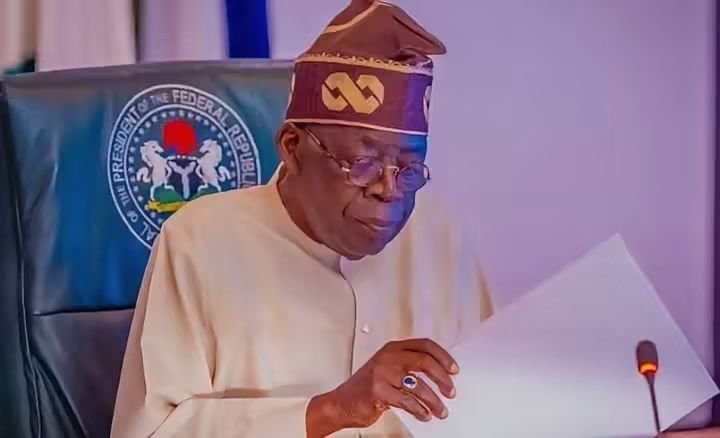
Nigeria’s opposition political parties are preparing to formalise a cooperation agreement in Abuja on November 23, 2026, as political groups intensify efforts to build a stronger alliance against President Bola Ahmed Tinubu and the ruling All Progressives Congress (APC) ahead of the 2027 general elections.
The proposed agreement is expected to bring together six opposition parties under a common framework designed to strengthen political cooperation, protect electoral integrity and establish a shared programme for democratic and institutional reforms.
The development represents another attempt by opposition politicians to overcome longstanding divisions and establish a coordinated political alternative capable of challenging the APC in the next presidential election.
However, the planned agreement does not yet mean that the opposition has agreed on a single presidential candidate. Questions surrounding political leadership, presidential ambitions, party interests and the distribution of power remain important challenges for the emerging alliance.
The November 23 summit could therefore become an important moment in determining whether Nigeria’s opposition parties can transform their discussions into a sustainable political partnership.
What is the opposition trying to achieve?
The central objective is to reduce political fragmentation among Nigeria’s opposition parties before the 2027 elections.
Nigeria operates a multiparty democratic system, meaning several political parties can contest elections. However, when opposition parties compete against one another rather than coordinate their strategies, they can divide votes among competing candidates.
The opposition coalition believes that greater cooperation could make it easier to challenge the APC, which currently controls the presidency.
The proposed alliance is not necessarily intended to dissolve the participating parties or force them to abandon their individual identities. Instead, the plan is to establish a common framework through which they can cooperate on important political and democratic issues.
This distinction is important: political parties can retain their identities while agreeing to work together on selected national objectives.
Which political parties are involved?
The Coalition for Democracy emerged from the first opposition summit held in Abuja on August 31, 2026.
The six parties identified as pioneers of the platform are:
- African Democratic Congress (ADC)
- Allied Peoples Movement (APM)
- Nigeria Democratic Congress (NDC)
- Peoples Democratic Party (PDP)
- Peoples Redemption Party (PRP)
- Social Democratic Party (SDP)
The coalition has also indicated that its membership remains open to other political parties willing to support its proposed democratic and electoral reforms. Punch Newspapers +1
What will happen at the November 23 summit?
The second summit of Nigeria’s Opposition Political Parties is scheduled to take place at the NAF Conference Centre in Abuja.
According to the Coalition for Democracy, three major documents will be presented for adoption and signing.
1. National Covenant for Democratic Renewal
This document is intended to establish common democratic principles and commitments among participating parties.
It is expected to provide a foundation for cooperation on constitutional governance, political pluralism and the protection of democratic institutions.
2. Framework for Opposition Unity
This framework is designed to establish how the participating parties will cooperate, coordinate their activities and manage their relationship.
Its importance lies in providing a more organised structure for political cooperation rather than depending entirely on informal discussions and personal agreements.
3. National Reform Programme
This document is expected to outline policy priorities and institutional reforms that the coalition believes are necessary to address Nigeria’s major challenges.
It could become particularly important because voters will want to understand not only who the opposition wants to replace but also what it intends to do differently if elected.
The documents were developed by working groups established after the first opposition summit in August.
The coalition says the November meeting will move the process from discussions towards written commitments. Punch Newspapers +1
Who are the major political figures expected?
Several prominent political figures are expected to feature in the developing opposition arrangement.
Atiku Abubakar
African Democratic Congress (ADC)
The former Nigerian vice-president remains an influential figure in opposition politics. His participation could be significant because of his political experience, national network and previous presidential campaigns.
Peter Obi
Nigeria Democratic Congress (NDC)
The former Anambra State governor and 2023 Labour Party presidential candidate remains an important political figure, particularly because of the support he attracted during the 2023 election.
Seyi Makinde
Allied Peoples Movement (APM)
The Oyo State governor is another prominent figure expected to participate in the November 23 meeting.
The Guardian reported that Atiku, Obi and Makinde are among the political figures expected to attend the summit. Their attendance and willingness to cooperate will be important to the coalition’s credibility. guardian.ng +1
Why is opposition unity difficult in Nigeria?
Although the idea of a united opposition appears politically attractive, bringing several parties and influential politicians together is not an easy task.
Nigeria’s political environment is shaped by competing presidential ambitions, regional interests, party structures and disagreements over leadership.
One of the biggest challenges is deciding who will represent the coalition if it eventually chooses to field a single presidential candidate.
Atiku Abubakar, Peter Obi and other influential politicians have their own political supporters and ambitions. Agreeing on a common candidate could therefore become one of the most difficult negotiations.
There is also the question of which political party would provide the platform for a joint presidential campaign, how other parties would participate and what positions their members might receive in a possible administration.
These questions cannot be resolved simply by signing a document supporting political cooperation.
Previous divisions have already affected opposition unity
Nigeria’s opposition has experienced difficulties maintaining political alliances.
In May 2026, Reuters reported that Peter Obi and Rabiu Kwankwaso had left an emerging African Democratic Congress-led alliance following internal disagreements and political tensions.
The departures weakened an earlier attempt to establish a common presidential platform.
Reuters also reported that disagreements over leadership and competing political ambitions were major obstacles to opposition unity.
The experience demonstrates that securing an agreement between political leaders is one challenge, while maintaining that agreement throughout an election campaign is another. Reuters
The new Coalition for Democracy is attempting to address this problem by placing its commitments in written documents and establishing structures for continued cooperation.
Whether this approach will prevent another breakdown remains to be seen.
What happened in Nigeria’s 2015 presidential election?
The proposed opposition alliance has attracted attention partly because of Nigeria’s political experience in 2015.
During that election, opposition parties came together under the All Progressives Congress (APC), which successfully challenged the then-ruling Peoples Democratic Party (PDP).
The coalition helped bring together different political interests behind one presidential candidate, Muhammadu Buhari.
Buhari defeated incumbent President Goodluck Jonathan, marking the first time an incumbent Nigerian president lost a presidential election through the ballot box.
That election demonstrated the potential political influence of opposition cooperation.
However, the circumstances surrounding the 2015 alliance were different, and its success does not automatically mean that the current opposition arrangement will achieve the same outcome.
The political parties, personalities, electoral environment and interests involved in the 2027 contest are not identical to those of 2015.
Nevertheless, the experience remains an important reference point for politicians seeking to build a stronger opposition against the APC. Reuters +1
Does this mean Tinubu could lose the 2027 election?
Not necessarily.
The planned opposition agreement could create a more organised challenge to President Tinubu, but it does not establish that the President will lose the next election.
Several factors will influence the outcome.
First, opposition unity: The parties must demonstrate that they can cooperate beyond public announcements and political meetings.
Second, candidate selection: If the coalition eventually agrees on a common presidential candidate, it will need to manage disagreements among politicians who may have their own ambitions.
Third, public confidence: Nigerians will assess whether the opposition offers credible solutions to the country’s economic, security, unemployment and governance challenges.
Fourth, party organisation: Political parties need functioning structures, campaign networks, credible candidates and the ability to mobilise supporters across the country.
Fifth, electoral credibility: The conduct of the election, the protection of voters’ rights and public confidence in the electoral process will remain important.
President Tinubu also has the advantages associated with incumbency and the organisational structure of the ruling APC.
Former Ekiti State Governor Ayodele Fayose has questioned whether the opposition can easily defeat an incumbent president in 2027. He has argued that political alliances alone are insufficient without strong party structures. The Guardian reported his position on November 17. guardian.ng +1
These competing considerations show why the November summit should be understood as a political development rather than evidence of an assured election outcome.
Why does the opposition alliance matter to ordinary Nigerians?
The significance of the proposed agreement extends beyond the political ambitions of individual politicians.
In a democratic system, a strong opposition provides an alternative to the government in power.
Opposition parties can question government decisions, challenge policies, scrutinise public spending and present alternative approaches to national problems.
For ordinary Nigerians, the quality of political competition matters because elections should provide voters with meaningful choices.
Nigeria continues to face important national challenges, including economic pressures, insecurity, unemployment, infrastructure gaps and concerns about public accountability.
A credible opposition alliance would therefore need to explain how its proposed reforms would address these problems.
For example, Nigerians would want to know:
- How would the coalition address the cost of living?
- What economic policies would it introduce?
- How would it improve national security?
- What would it do about unemployment and poverty?
- How would it strengthen public institutions?
- What measures would it introduce to improve accountability in government?
These are questions that cannot be answered by political unity alone.
The proposed National Reform Programme could provide an opportunity for the opposition to present a more detailed policy direction.
Ultimately, voters will judge the coalition not simply by the number of politicians involved but by the credibility of its proposals and its ability to demonstrate that it can govern effectively.
What happens next?
The next major development is the November 23, 2026, summit in Abuja.
The meeting is expected to bring together national chairmen, party officials, presidential candidates, their running mates, members of the National Assembly, civil society representatives and other stakeholders.
The major issues to watch include:
- Whether the participating parties formally adopt and sign the three proposed documents.
- Whether Atiku Abubakar, Peter Obi, Seyi Makinde and other influential politicians attend and publicly support the agreement.
- Whether the coalition establishes a clear leadership and decision-making structure.
- Whether discussions about a possible common presidential candidate advance.
- Whether the parties agree on practical strategies for protecting electoral integrity and coordinating their political activities.
The coalition has also emphasised that its objective is to establish a lasting framework for democratic cooperation rather than an arrangement that depends on individual political relationships.
However, the November 23 meeting has not yet taken place, and its eventual resolutions will determine how far the alliance has progressed.
Weng Global Analysis: Can Nigeria’s opposition build a winning coalition?
The proposed opposition agreement represents an important development in Nigeria’s preparations for the 2027 general elections.
Its greatest significance is the attempt to turn political cooperation into an organised arrangement supported by written commitments, shared principles and a common reform agenda.
However, the opposition faces a difficult balancing act.
It must bring together politicians with different ambitions, parties with different interests and supporters with different political expectations.
The coalition must also convince Nigerians that it represents more than an alliance formed primarily to remove an incumbent president.
A successful opposition movement needs a credible national programme, clear leadership, internal discipline and a convincing explanation of how it intends to govern.
The 2015 election demonstrated that political cooperation can change Nigeria’s political direction. But the difficulties experienced by opposition alliances in 2026 also show that unity cannot be sustained by announcements alone.
The real test will not be how many political leaders gather in Abuja on November 23. It will be whether they can maintain their commitments, agree on difficult political questions and present Nigerians with a credible alternative in 2027.
For now, President Tinubu remains the incumbent, while the opposition’s proposed alliance is still taking shape.
Nigeria’s next presidential election could become a major test of both the ruling party’s political strength and the opposition’s ability to organise itself into a competitive national movement.
Weng Global – Stories beyond borders
Sources
- Punch – Opposition plots alliance against Tinubu at Abuja summit.
- The Guardian – Atiku, Obi, Makinde, others meet in Abuja to sign pact.
- Reuters – Nigeria opposition alliance falters as two leading figures quit, clouding 2027 unity push.
- Trust Radio – Opposition coalition announces second summit and National Reform Programme.
- THISDAY – Opposition parties discuss recreating the 2015 political alliance experience.