Reported by Weng Patrick Atokor l Journalist at Weng Global
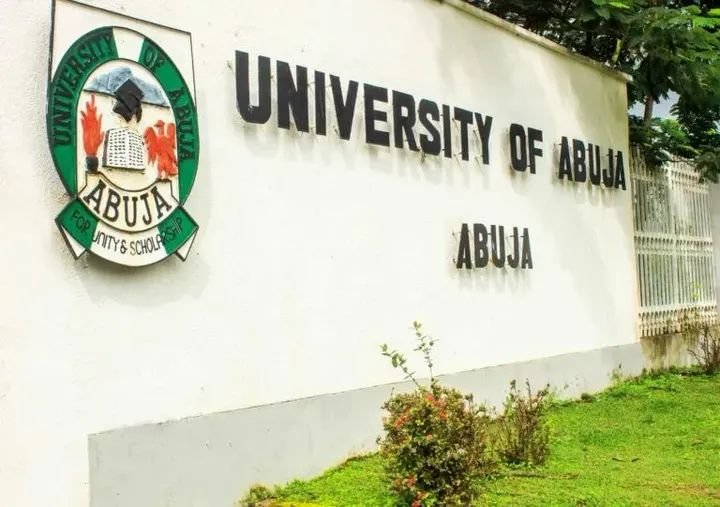
Academic staff, students and alumni of the University of Abuja on Monday, November 16, staged a protest against the Federal Capital Territory (FCT) Administration’s decision to reduce the institution’s landholding, accusing FCT Minister Nyesom Wike of undermining the university’s future development.
The protesters called on President Bola Tinubu to intervene in the dispute and direct the minister to reverse the disputed land reallocation, which they said could affect the institution’s expansion plans, research activities and provision of essential facilities.
The demonstration brought together five university groups: the Academic Staff Union of Universities (ASUU), Senior Staff Association of Nigerian Universities (SSANU), Non-Academic Staff Union of Educational and Associated Institutions (NASU), the Students’ Union Government (SUG) and the university’s alumni association.
The protesters argued that land originally allocated to the institution should remain available for its academic and infrastructural development rather than being transferred to private individuals and organisations.
The demonstration also intensified pressure on the FCT Administration to resolve a dispute that has remained contentious since 2025.
University Unions Accuse FCT Minister of Undermining Institutional Development
During the protest in Abuja, ASUU chairman at the University of Abuja, Sylvanus Ugoh, accused the FCT minister of disregarding the rule of law and attempting to take away land allocated to the university when it was established in 1988.
Ugoh maintained that the institution’s land was intended to support its long-term development and should not be transferred to private interests at the expense of public education.
He urged President Tinubu to intervene and ensure that the disputed allocations were reversed.
The ASUU chairman also warned that the university community would not remain passive if land reserved for future generations was taken away.
According to the unions, the disputed property is important to the institution’s ability to expand its academic programmes, accommodate its growing student population and establish additional research facilities.
The protest followed earlier warnings by the university’s ASUU chapter that the dispute could threaten industrial harmony if the FCT Administration failed to reconsider its position.
The union had previously indicated that it was considering legal action to prevent further transfers of the disputed property.
SSANU Raises Concerns Over Research and Academic Expansion
SSANU chairman at the University of Abuja, Nurudeen Yusuf, also opposed the reduction of the university’s landholding, arguing that sufficient land was necessary for the development of specialised academic programmes.
He identified the institution’s Nuclear Engineering and Aeronautical Engineering departments as examples of programmes that require adequate space for practical training, research and specialised infrastructure.
Yusuf explained that nuclear engineering research requires appropriate buffer zones and supporting facilities, making the availability of sufficient land important to the department’s activities.
The unions maintained that the university’s development requirements should not be assessed solely on the basis of the number of buildings currently constructed on its land.
They argued that universities require room for future expansion, particularly as academic programmes, research activities and student enrolment increase.
The protesters therefore called for a resolution that would protect the institution’s long-term interests while addressing the government’s concerns about land administration in the Federal Capital Territory.
FCTA Defends Land Reduction, Cites Previous Administration
The FCT Administration has rejected the allegations against Wike, insisting that the decision to reduce the university’s landholding was not independently initiated by the current minister.
In a statement issued on Monday through the minister’s Senior Special Assistant on Public Communications and Social Media, Lere Olayinka, the administration said the decision followed recommendations made by a joint committee established in 2016 under former FCT Minister Mohammed Bello.
According to the FCTA, the committee was inaugurated on November 10, 2016, to examine the university’s landholding, encroachment by indigenous settlers, illegal developments around its Gwagwalada mini-campus and the issuance of title documents for its campuses.
The administration said the committee included representatives of both the FCTA and the university, with five of its 12 members drawn from the institution.
The committee reportedly recommended reducing the university’s landholding of more than 11,000 hectares to 100 hectares, citing the National Universities Commission’s recommended land requirement for universities.
The FCTA maintained that the recommendation was approved by Bello before Wike assumed office.
However, the administration said the current FCT minister approved approximately 4,519.80 hectares for the university, significantly more than the 100 hectares recommended by the committee.
The administration also questioned why the university needed to retain such an extensive land area, arguing that large portions had remained undeveloped despite the institution’s establishment several decades ago.
It further accused the university of allocating portions of its land to individuals and corporate organisations without adequate consultation with the FCT Administration.
The FCTA’s position presents the dispute as a disagreement over land administration, documentation and urban development rather than an attempt to undermine public education.
How the University of Abuja Land Dispute Began
The disagreement between the university and the FCT Administration became more prominent in June 2025, when Wike announced plans to recover approximately 7,000 hectares of land originally allocated to the institution.
At the time, the minister argued that the university had occupied and fenced off extensive portions of land without sufficient documentation.
He subsequently directed relevant FCT agencies to reduce the institution’s landholding and make the recovered portions available for other developments in the Giri District.
The university’s original allocation was reported to cover approximately 11,824 hectares, while the FCT Administration’s proposed reduction would leave it with roughly 4,000 to 4,600 hectares, depending on the figures cited in different reports.
Wike defended the decision as part of efforts to improve land administration, promote development and make more land available for planned infrastructure projects within the FCT.
However, the university’s management and academic unions have consistently challenged the justification for the reduction.
The institution’s Pro-Chancellor, Olanrewaju Tejuoso, previously maintained that the university possessed documents supporting its claim to the land.
He also questioned the practical value of the remaining land, arguing that significant portions consisted of rocky hills that could limit the institution’s development opportunities.
The disagreement has therefore extended beyond the question of how much land the university should retain to include concerns about the validity of its allocation documents, the government’s authority over the property and the institution’s future expansion requirements.
Land Dispute Takes a Legal Dimension
The disagreement has also moved into the courts, adding another layer of complexity to the confrontation between the university and the FCT Administration.
The University of Abuja instituted a case before the High Court of the Federal Capital Territory in Maitama, identified as Suit No. FCT/HC/CV/3500/2026.
According to reports, Justice F.E. Messiri issued an order on August 18, 2026, directing parties involved in the dispute to maintain the status quo ante bellum concerning Plot No. 1 in the Giri District pending the determination of the substantive case.
ASUU subsequently accused the FCT Administration of violating the court order through alleged allocations of portions of the disputed property to private individuals and companies on September 26, 2026.
The union has maintained that the alleged allocations should be reversed to protect the university’s interests and uphold the authority of the court.
However, the allegations of a breach remain disputed and should not be treated as an established judicial finding.
The outcome of the court proceedings could become particularly important in determining the legal rights of the parties and the future management of the disputed property.
Students and Staff Warn of Consequences for University Development
The latest demonstration highlights growing concern within the university community over the possible implications of the land dispute.
For students and academic staff, the availability of land is closely connected to the institution’s ability to provide adequate infrastructure and accommodate future growth.
University expansion involves more than constructing lecture halls and administrative buildings. It also requires student accommodation, laboratories, research facilities, specialised training centres, libraries, recreational facilities and supporting infrastructure.
The unions argue that reducing the university’s landholding could constrain its ability to develop these facilities in the coming years.
Their concerns are particularly significant given the specialised requirements of departments such as Nuclear Engineering and Aeronautical Engineering.
The students’ participation also demonstrates that the disagreement is no longer limited to negotiations between university management and government officials.
It has become a wider institutional issue involving workers, students and alumni who believe the outcome could affect the university’s long-term academic development.
The protesters have consequently called for presidential intervention to prevent the dispute from escalating into a wider confrontation capable of disrupting academic activities.
Why the University of Abuja Land Dispute Matters
The controversy raises important questions about the relationship between government land administration and the autonomy and development needs of public universities in Nigeria.
The Federal Capital Territory Administration has a responsibility to manage land within Abuja and ensure that development follows applicable planning and regulatory requirements.
However, public universities also require adequate resources and infrastructure to fulfil their educational and research responsibilities.
The central challenge is determining how these competing interests can be addressed without undermining the legitimate rights of either party.
For Nigeria’s education sector, the dispute could have implications beyond the University of Abuja.
Public universities require long-term infrastructure planning, particularly as student populations increase and institutions introduce specialised programmes that demand additional facilities.
If land allocated to educational institutions becomes a subject of prolonged disagreement, it could create uncertainty around future expansion projects and institutional development.
The controversy also highlights the importance of transparent land documentation, clear allocation procedures and effective dispute-resolution mechanisms between government authorities and public institutions.
A resolution based on verified records, applicable laws and judicial decisions would help prevent similar disputes from emerging elsewhere.
What Happens Next?
The immediate focus is on whether the FCT Administration and the university can reach an agreement that addresses the competing claims over the disputed land.
The university unions are demanding presidential intervention and reversal of the contested allocations, while the FCTA continues to defend the decision as an implementation of recommendations made by a previous administration.
The legal proceedings also remain an important part of the dispute, particularly following the reported court order directing the parties to maintain the existing position concerning the disputed property.
Meanwhile, the students’ union had announced a three-day peaceful protest scheduled to run from November 16 to November 18, 2026, indicating that demonstrations could continue as the university community presses its demands.
As of November 17, there was no confirmed announcement of a negotiated settlement or presidential directive reversing the disputed land decision.
The next developments will therefore depend on the position taken by the Federal Government, the FCT Administration, the university’s management and the court handling the matter.
For now, the protest has brought renewed attention to a dispute that touches on public education, land governance, institutional development and the responsibilities of government authorities.
The central question remains whether the government and the university can resolve their disagreement without compromising the institution’s future or the lawful administration of land in the Federal Capital Territory.
Weng Global – Stories beyond borders
Sources
- The Punch – Protests Rock UniAbuja Over FCTA Land Cuts
- Channels Television – Uni Abuja Staff, Students Protest Over Alleged Land Grabbing by Wike
- The Guardian – UniAbuja Land Dispute: Five Unions Rally Against Wike, Urge Tinubu to Intervene
- The Punch – UniAbuja Land Cut Approved by Wike’s Predecessor, FCTA
- Premium Times – ASUU Threatens Industrial Action Over Wike’s Allocation of UniAbuja Land
- TheCable – ASUU, SSANU Protest Wike’s Encroachment of UniAbuja Land