Reported by Weng Patrick Atokor l Journalist at Weng Global
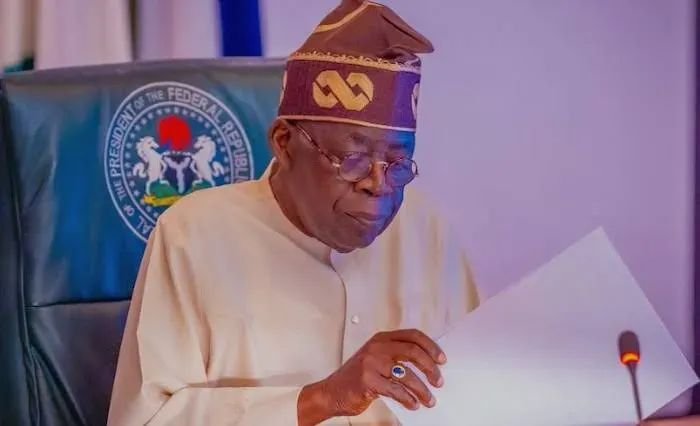
President Bola Ahmed Tinubu has asked the House of Representatives to approve the implementation of Nigeria’s N10.79 trillion external borrowing plan contained in the 2026 national budget, reopening discussions about government borrowing, public debt and the country’s ability to finance critical infrastructure without placing additional pressure on the economy.
The request, presented in a letter addressed to Speaker of the House of Representatives Tajudeen Abbas and read during Wednesday’s plenary on November 11, 2026, seeks authorisation for the Federal Government to raise approximately $7.71 billion through international borrowing arrangements.
The proposed financing is intended to cover part of the Federal Government’s budget deficit and support projects and programmes already included in the 2026 Appropriation Act.
However, the request is not simply a proposal to introduce another N10.79 trillion loan into the national budget. The President says the external borrowing allocation has already been provided for in the approved 2026 budget, while the latest request seeks the legislative authorisation required to implement the borrowing under Nigeria’s existing debt management laws.
The distinction is important because it separates the approval of a borrowing allocation in the national budget from the additional statutory process required before the government can access external loans.
What Exactly Is Tinubu Asking the House to Approve?
According to the President’s letter, the Federal Government wants permission to implement the external borrowing component of the 2026 budget, valued at N10,790,366,835,481.
At the budget exchange rate of N1,400 to one US dollar, the amount is equivalent to approximately $7.707 billion.
Tinubu explained that the borrowing forms part of the N29.22 trillion in new borrowing already provided for in the 2026 Appropriation Act.
The approved borrowing arrangement is divided into two major components:
- Domestic borrowing: N18.28 trillion, to be sourced within Nigeria.
- External borrowing: N10.79 trillion, to be obtained from foreign lenders and international financial markets.
Together, these amounts represent the government’s planned new borrowing to help finance expenditure that cannot be covered by projected revenue.
The President is therefore seeking legislative clearance to proceed with the foreign component of the financing arrangement.
The request also asks lawmakers to authorise the government to access funds through different international financing channels, depending on the cost, availability and conditions attached to each option.
Why Does Nigeria Need to Borrow More Money?
To understand the latest development, it is necessary to examine how government budgets work.
A national budget is an annual financial plan outlining how much a government expects to spend and how much money it expects to generate.
Governments receive revenue from sources such as taxes, customs duties, oil and gas earnings, company-related payments and other public income.
However, when planned expenditure exceeds expected revenue, the government records a budget deficit.
In simple terms, a budget deficit means the government intends to spend more money than it expects to earn within a particular financial year.
To cover the difference, governments may borrow money, increase revenue, reduce expenditure or combine these approaches.
Nigeria’s 2026 budget includes a substantial financing gap, making borrowing an important part of the Federal Government’s strategy to fund its spending commitments.
The N29.22 trillion borrowing provision is intended to contribute to financing the deficit, while the N10.79 trillion external component represents the portion the government intends to raise from international sources.
This means the government is relying on borrowed funds to support its budget commitments rather than depending entirely on revenue generated within the country.
However, borrowing is not automatically harmful to an economy. Its long-term value depends on how the money is obtained, what it finances, the cost of repayment and whether the investments generate sufficient economic and social benefits.
Why Is the Borrowing Called External Borrowing?
External borrowing refers to money a government obtains from lenders or financial institutions outside its domestic financial system, usually through international financing arrangements.
Unlike domestic borrowing, which involves raising funds within Nigeria, external borrowing exposes the government to international lending conditions, foreign interest rates and, in many cases, foreign currency repayment obligations.
Nigeria can obtain external financing through several channels, including:
1. Multilateral institutions
These are international organisations that provide loans and financial assistance to member countries. They include institutions such as the World Bank and the African Development Bank.
Some loans from multilateral institutions carry relatively favourable interest rates and longer repayment periods, particularly when they are designed to support development projects.
2. Bilateral loans
These are loans provided directly by one country to another.
For example, Nigeria may obtain financing from a foreign government to support infrastructure, energy, transportation or other development programmes.
3. Eurobonds
A Eurobond is a debt instrument issued by a government or company in an international financial market, usually denominated in a currency different from that of the country issuing it.
For Nigeria, Eurobonds provide an opportunity to raise substantial amounts of foreign currency from international investors.
However, they come with repayment obligations, including interest payments, and their borrowing costs depend on investor confidence and prevailing market conditions.
4. Commercial and international lending facilities
Governments can also obtain financing from commercial banks, international financial institutions and other private lenders.
The terms of these arrangements vary depending on the lender, the borrower’s creditworthiness, the loan duration and the prevailing financial environment.
The Tinubu administration intends to explore several of these financing channels rather than depend on a single source.
Why Is the Government Giving Greater Attention to Eurobonds?
In his letter to the House of Representatives, Tinubu indicated that the government would place greater emphasis on Eurobond issuance because it can provide access to substantial financing within a relatively shorter period.
The President explained that the government would consider the cost and benefits of available borrowing options, alongside the time required to secure the funds.
Eurobond issuance can allow Nigeria to raise large amounts of foreign currency from international investors without negotiating an individual government-to-government loan for the entire amount.
However, this does not mean Eurobonds are automatically cheaper or better than other borrowing arrangements.
The interest rate depends on several factors, including Nigeria’s credit rating, international interest rates, investor confidence and prevailing economic conditions.
Tinubu acknowledged that the final interest rates, repayment periods and other conditions would be determined when the bonds are priced.
The Federal Ministry of Finance and the Debt Management Office are expected to work together to secure favourable borrowing terms.
This is particularly important because expensive foreign loans can increase the amount of public money required for debt servicing in subsequent years.
What Will the N10.79 Trillion Be Used For?
The President said the proposed external financing would support projects and programmes already captured in the 2026 national budget.
The priority sectors identified include:
- Defence and security: Supporting efforts to strengthen national security and address threats affecting communities and economic activities.
- Transportation: Financing infrastructure intended to improve connectivity and movement of goods and people.
- Agriculture: Supporting agricultural development, food production and related investments.
- Power: Improving electricity infrastructure and supporting the country’s energy sector.
- Education: Financing government programmes and investments aimed at improving educational development.
- Healthcare: Supporting health infrastructure and programmes designed to strengthen healthcare delivery.
These sectors are important to Nigeria’s economic development because weaknesses in infrastructure, electricity, security, education and healthcare can limit productivity and discourage investment.
For instance, inadequate electricity supply increases operating costs for businesses, while poor transportation infrastructure makes it more expensive for farmers and manufacturers to move products to markets.
Similarly, insecurity can disrupt agricultural activities, discourage investment and affect economic development in affected communities.
The government’s argument is that financing these sectors can support economic growth and improve the conditions necessary for businesses and citizens to become more productive.
However, the actual benefits will depend on whether the borrowed money is properly allocated, projects are completed and public resources are managed transparently.
What Does the Law Say About the Borrowing?
The President cited Sections 21(1) and 27(1) of the Debt Management Office (Establishment, etc.) Act, 2003, as the legal basis for seeking the additional legislative authorisation.
These provisions form part of Nigeria’s statutory framework for managing external borrowing.
In particular, Section 21(1) requires the terms and conditions of external loans to be presented to the National Assembly for approval before the relevant borrowing can proceed.
Section 27(1) also provides for legislative approval of standard terms and conditions governing the negotiation and acceptance of external loans.
This explains why the inclusion of external borrowing in an approved national budget does not necessarily remove the need for the required legislative authorisation before implementation.
The distinction is important for accountability because lawmakers have a responsibility to examine the conditions under which public debt is obtained.
They must consider not only the amount being borrowed but also the interest rates, repayment arrangements and obligations the loans will create for the country.
Is This a New N10.79 Trillion Loan?
One of the most important issues surrounding the latest request is whether the President is seeking approval for an entirely new borrowing arrangement.
According to Tinubu and the clarification provided by House Speaker Tajudeen Abbas, the N10.79 trillion external borrowing allocation is already contained in the 2026 Appropriation Act.
The latest request concerns the statutory authorisation required to implement that existing allocation.
Abbas explained that the request should not be confused with a separate presidential request for additional borrowing, which remains subject to consideration on its own merits.
He also clarified that the latest request does not replace or withdraw that separate proposal.
This distinction is particularly important because the Federal Government’s borrowing plans have attracted public attention following earlier proposals for substantial external financing.
On November 4, 2026, the President submitted a revised external borrowing request of approximately $7.7 billion to the National Assembly, replacing an earlier proposal involving $20.5 billion and €1.05 billion.
The latest House communication concerns the implementation of the N10.79 trillion external borrowing allocation in the 2026 budget.
The two developments should therefore be understood within their respective legislative and budgetary contexts rather than automatically treated as identical borrowing requests.
Sources: Punch Newspapers; Channels Television; Premium Times.
What Are the Concerns About Nigeria’s Growing Debt?
Although borrowing can help governments finance development, excessive dependence on loans can create serious economic challenges.
One of the biggest concerns is debt servicing.
Debt servicing refers to the money a government spends to meet its debt obligations, including interest payments and principal repayments when they become due.
When a large proportion of government revenue is used to service existing debts, fewer resources may remain for infrastructure, healthcare, education, security and other essential public services.
This creates a difficult situation in which governments may need to borrow more money to finance expenditure while simultaneously spending substantial amounts repaying previous loans.
Nigeria has faced persistent concerns about this challenge.
The debate has become particularly important because the country is also implementing major economic reforms, including changes to its foreign exchange system and the removal of petrol subsidies.
Although these reforms are intended to improve public finances and economic efficiency, their effects on households and businesses have increased the importance of responsible government spending.
There are several issues Nigerians should watch.
1. Rising debt-servicing obligations
If the government continues borrowing without generating sufficient revenue, future administrations may face increasing pressure to meet repayment obligations.
This could reduce the amount available for public investment and essential services.
2. Foreign exchange exposure
External loans are often denominated in foreign currencies, particularly the US dollar.
This means that when the naira weakens against the dollar, repaying foreign-currency debt can become more expensive in naira terms.
For example, a government that borrows $1 billion must repay the agreed dollar obligation regardless of how much the naira depreciates in the meantime.
Consequently, exchange-rate movements can affect the domestic cost of external debt.
3. Interest rate risks
International borrowing costs can change depending on global financial conditions.
If Nigeria obtains loans at relatively high interest rates, the cost of servicing those obligations could place additional pressure on public finances.
4. Project implementation and accountability
Borrowing for infrastructure and development is more defensible when the government can demonstrate measurable results.
If funds are poorly managed, projects are abandoned or costs increase without corresponding improvements, the country could be left with substantial debt but limited economic benefits.
This makes transparency, procurement oversight and independent monitoring essential.
How Could the Borrowing Affect the Naira and Nigeria’s Economy?
The Federal Government has also argued that the external financing could support Nigeria’s foreign exchange reserves.
According to the President, the funds would be received by the Central Bank of Nigeria on behalf of the Federal Government.
Foreign currency entering the country’s financial system can help strengthen external reserves, depending on how the funds are managed and used.
External reserves are assets held by a country’s central bank, usually in foreign currencies and other internationally recognised instruments.
They are important because they help a country meet international payment obligations, manage external financial pressures and support confidence in its economy.
A stronger reserve position can also improve the Central Bank’s capacity to manage foreign exchange pressures.
However, it is important to understand that borrowing foreign currency does not automatically guarantee a stronger naira.
The long-term effect will depend on several factors, including the amount of foreign currency entering the economy, the country’s import requirements, foreign exchange demand, investor confidence and broader economic performance.
There is also a repayment consideration.
Foreign loans may initially increase available foreign currency, but the government will eventually need to meet interest and principal repayment obligations.
Therefore, the economic value of the borrowing must be assessed over the entire loan period, not simply by the immediate increase in available financing.
What Does This Mean for Ordinary Nigerians?
For ordinary Nigerians, the most important question is whether the borrowed money will translate into improvements in living conditions.
Government borrowing may appear to be a financial and political issue, but its consequences can extend into everyday life.
If the funds are used effectively, improved roads could reduce transportation costs, better electricity infrastructure could support businesses, and investments in agriculture could strengthen food production.
Improved healthcare and education infrastructure could also expand access to essential public services.
However, if borrowing increases without corresponding improvements in productivity and government revenue, the country could face greater financial pressure in the future.
This is why Nigerians should pay attention to the projects being financed, their implementation timelines and the results delivered.
The government must demonstrate that borrowing is supporting productive investments rather than merely covering recurring expenditure without a sustainable financing strategy.
There is also a question of intergenerational responsibility.
Public debt creates obligations that may extend beyond the administration that obtains the loans.
Future governments and taxpayers will ultimately be responsible for meeting those obligations.
Consequently, the benefits of borrowing should be sufficiently significant to justify the financial commitments being created.
What Happens Next?
Following the presentation of Tinubu’s letter on Wednesday, November 11, Speaker Tajudeen Abbas referred the request to the relevant joint committees of the House of Representatives dealing with loans, debt management and finance for further legislative consideration.
The committees are expected to examine the request and report their findings to the House.
The legislative process is important because the government cannot treat the requested authorisation as automatically granted simply because the borrowing allocation appears in the national budget.
Lawmakers must consider the request and the applicable statutory requirements before the Federal Government can proceed with the proposed external financing arrangements.
If the necessary approval is secured, the Ministry of Finance and the Debt Management Office will be expected to coordinate the implementation of the borrowing plan.
The government will then pursue the identified financing channels, with particular attention to the cost and conditions attached to the loans.
As of November 11, 2026, the House had referred the request for further consideration. Final legislative approval of the implementation request had not been established in the reports available for this article.
Weng Global Analysis: The Bigger Question Is What Nigeria Will Gain From Borrowing
The latest borrowing request highlights a fundamental challenge facing Nigeria’s economy: how to finance development while maintaining sustainable public finances.
Nigeria needs investment in infrastructure, electricity, security, agriculture, healthcare and education. These sectors are essential to economic growth, job creation and improved living standards.
However, the ability to obtain international loans should not be confused with the ability to manage debt sustainably.
The government must demonstrate that every major borrowing arrangement has a clear economic purpose, reasonable financing conditions and measurable outcomes.
There must also be adequate public disclosure of how borrowed funds are allocated and spent.
For the National Assembly, the responsibility goes beyond granting approval. Lawmakers must ensure that the executive provides sufficient information about the borrowing conditions and that implementation is subject to effective oversight.
For Nigerians, the central issue is whether the proposed financing will deliver tangible improvements or create additional financial obligations without sufficient economic returns.
Ultimately, the success of the N10.79 trillion external borrowing plan should not be measured by how quickly Nigeria secures international financing.
It should be measured by the infrastructure delivered, economic opportunities created, public services improved and the country’s ability to repay the loans without undermining future development.
Nigeria’s borrowing strategy will therefore require a careful balance between financing present development needs and protecting the financial interests of future generations.
Weng Global – Stories beyond borders
Sources
1. Punch Newspapers – Tinubu Seeks Reps’ Approval to Implement N10.79tn External Borrowing Plan. Punch Newspapers
2. Channels Television – Tinubu Writes Reps to Approve Implementation of N10.8tn External Loan. Channels Television
3. Premium Times – Tinubu Seeks NASS Approval for New $7.7bn Loan. Premium Times Nigeria
4. Reuters – Nigeria’s Tinubu Seeks New $7.7 Billion Borrowing. Reuters